

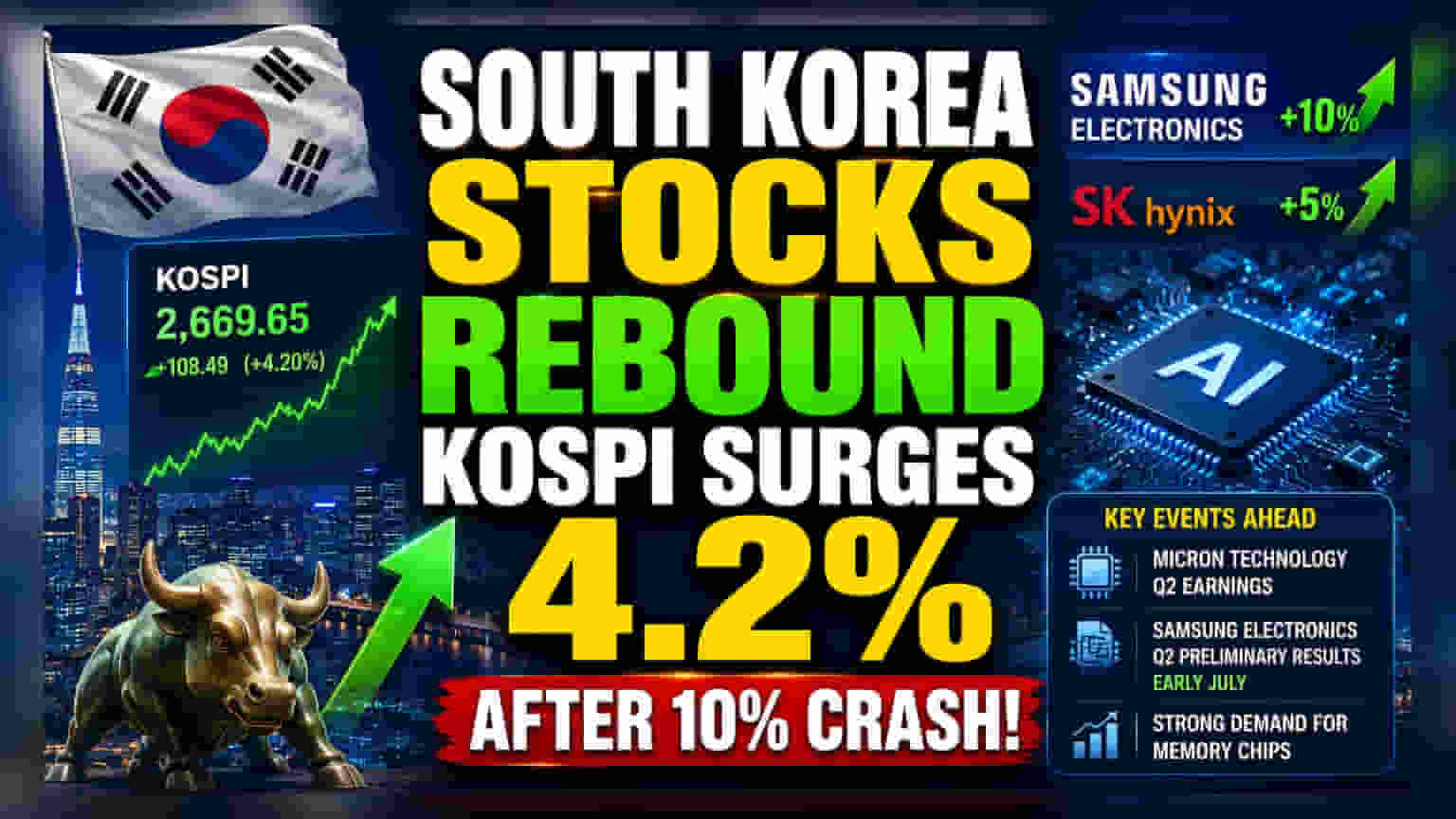
South Korea’s Kospi index rose 4.2% on Wednesday, recovering from a sharp 10% drop the previous day. Heavyweights like Samsung Electronics led the gain with a 10% jump. The rebound marks a shift back to focusing on corporate earnings, though uncertainty regarding global AI infrastructure demand remains a point of debate for investors.
What Happened
South Korea's stock market staged a significant recovery on Wednesday, with the Kospi index climbing 4.2%. This move comes just a day after the market suffered a severe 10% sell-off, which ranks among some of the most intense downturns in its recent history.
Major technology stocks were at the center of this volatility. Samsung Electronics surged 10%, while SK Hynix saw gains of more than 5%. The rebound indicates that sentiment shifted back toward fundamental company performance, moving away from the panic that triggered the sudden drop on Tuesday.
The Reason Behind The Volatility
The sharp drop on Tuesday was largely linked to a sudden change in sentiment regarding the future of artificial intelligence (AI) infrastructure. This created a domino effect, where investors who had borrowed money to trade—often called leveraged positions—were forced to sell their holdings to cover losses. This rapid, automatic selling contributed to the 10% fall.
Many analysts now view that plunge as a technical correction rather than a sign of a structural business failure. By Wednesday, the market appeared to stabilize as domestic investors increased their exposure, counteracting the selling seen from foreign institutional investors earlier in the session.
Upcoming Key Events
With the immediate panic subsiding, market attention is turning toward upcoming corporate performance reports. Investors are currently monitoring the quarterly results of U.S.-based chipmaker Micron Technology. Because Micron is a major global player in the memory chip space, its earnings often serve as a reliable indicator for the health of the entire semiconductor sector.
Closer to home, Samsung Electronics is scheduled to release its preliminary second-quarter earnings in early July. These figures will be critical for investors to understand whether demand for memory chips remains strong, as many analysts expect favorable market conditions for this segment.
Why Global Investors Watch Korea
South Korea’s market acts as a bellwether for the global technology industry because it is a home base for some of the world’s largest memory chip producers. When these stocks move, it often signals changing views on global demand for electronics and AI infrastructure.
Adding a layer of stability, MSCI Inc. recently confirmed it would keep South Korea in its emerging-market classification. This decision helps prevent large-scale capital outflows that typically occur when a country's status changes in global investment indices.
What Investors Should Track
For those watching these developments, the next important focus is whether semiconductor companies can maintain their profit margins. While analysts note that the recent price dip looks like a pause rather than a breakdown, the key monitorable will be actual demand for chips over the coming quarters. Investors may track upcoming earnings reports from major chipmakers to see if they match the positive long-term outlook held by market analysts.