

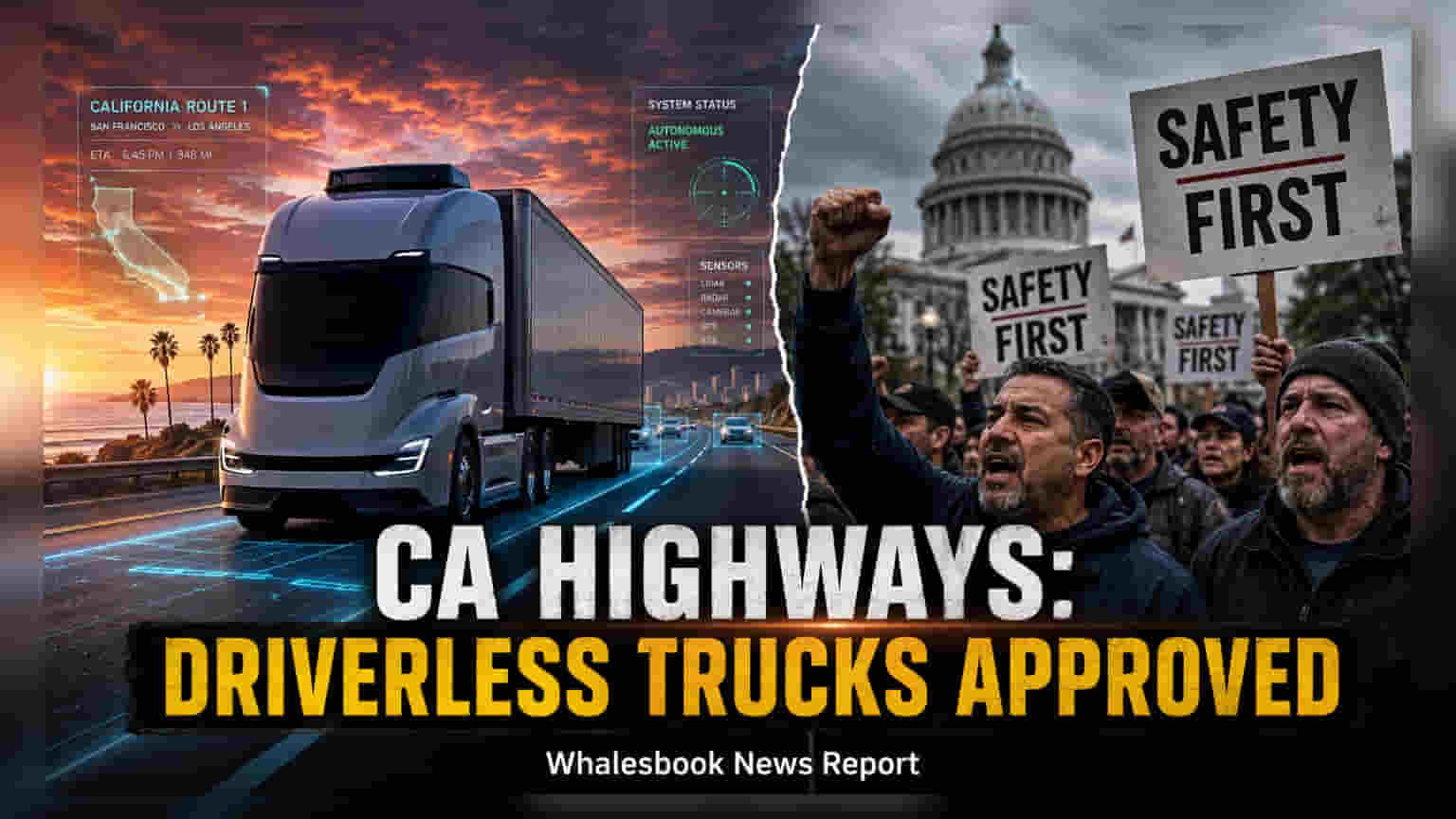
Kodiak AI and Aurora Innovation have received permits from the California DMV to test heavy-duty autonomous trucks on state highways. This move follows recent regulatory changes but currently requires a human safety operator in the vehicle. Investors should note that the autonomous trucking sector remains in a high-cash-burn commercialization phase, and the companies face ongoing legal opposition from the Teamsters union regarding safety and economic impacts.
The California Department of Motor Vehicles has officially authorized Kodiak AI and Aurora Innovation to begin testing their heavy-duty autonomous trucks on public highways. This move follows updated state regulations approved on April 28, 2026, which removed the previous prohibition against testing driverless-capable vehicles weighing over 10,000 pounds within the state.
For companies like Kodiak AI and Aurora Innovation, which have built their commercial operations primarily in states like Texas and Arizona, this approval marks a significant shift back to their home state of California. For Kodiak AI (Nasdaq: KDK), this milestone comes shortly after its second-quarter 2026 financial report, which detailed $3.5 million in revenue and a fleet of 35 customer-owned autonomous vehicles. However, investors should note that the company—and the broader autonomous trucking sector—is still in a pre-revenue commercialization phase. This means these firms are currently spending significant capital to develop their technology and scale their fleets, with reaching positive profit margins remaining a key long-term execution challenge.
It is important to clarify the current operational status of these permits. While the news marks a regulatory breakthrough, the California DMV has mandated that all testing currently requires a human safety operator to remain in control of the vehicle at all times. This is part of a phased approach, and moving to fully unmanned or "driver-out" testing will require further rigorous safety validations and regulatory approvals.
The industry path, however, remains subject to external pressures. The Teamsters union has filed a lawsuit in the Alameda County Superior Court, challenging the DMV’s permitting process. The union has raised concerns regarding the potential economic impact on traditional trucking jobs and the safety risks that autonomous heavy-duty vehicles may pose to the general public. These legal and regulatory hurdles are central to the risk profile of these companies.
Looking ahead, the primary monitorables for investors include the companies' ability to successfully transition from human-supervised testing to fully driverless operations, their safety records during the testing phase, and their ability to manage cash burn as they work toward mass commercialization. The ongoing legal climate and future regulatory updates in California will continue to be critical factors impacting the long-term viability of their autonomous trucking models.