

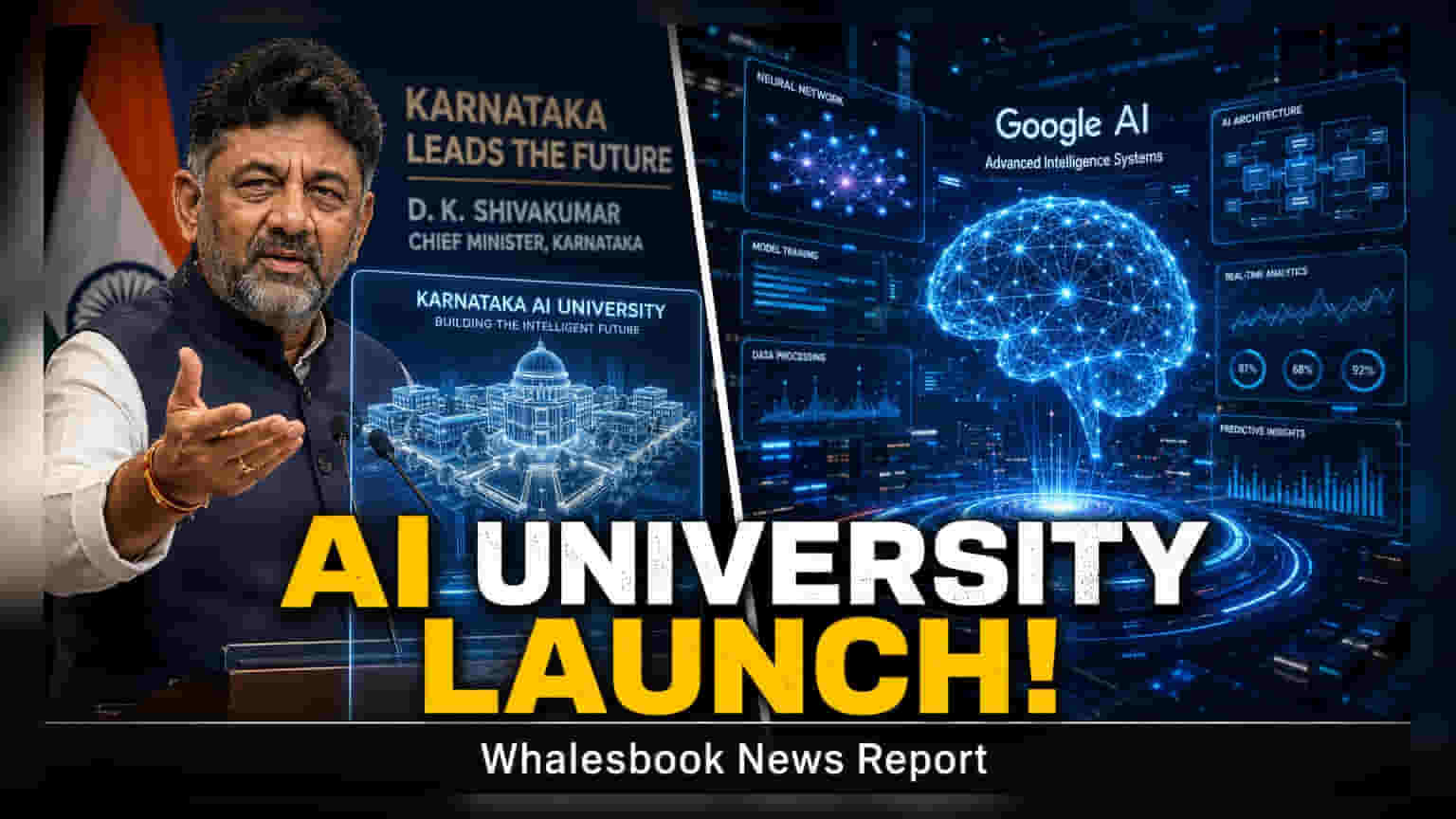
Karnataka has announced the launch of India's first state-run artificial intelligence university to create an AI-native workforce. The project includes a 100-acre campus in Bengaluru and an AI Innovation Hub, reflecting the state's push to become a hub for technology research.
The Karnataka government has unveiled an ambitious plan to establish India's first government-run university dedicated to artificial intelligence. Chief Minister D.K. Shivakumar announced that the state aims to transform itself into an AI-native region by integrating specialized education, research, and infrastructure. The flagship project will center on a 100-acre campus located in Bengaluru, with additional satellite campuses planned to expand the reach of the initiative across the state.
Beyond formal education, the state plans to launch an AI Innovation Hub to provide resources for early-stage startups and researchers. The government's roadmap also includes introducing AI-focused learning modules at the primary school level to prepare students for a technology-driven future. Additionally, the state intends to promote the development of green data centers, which are designed to be more energy-efficient than traditional computing facilities.
This announcement was made during the Google I/O Connect India 2026 event, highlighting a deepening collaboration between the state and global technology firms. Google also detailed its own expansion plans within the country, including the introduction of 'ATL Saathi,' a Gemini-powered virtual assistant designed for teachers working in Atal Tinkering Labs. Furthermore, the company announced that it would allow Indian enterprises to deploy Gemini models on local Google Distributed Cloud infrastructure, an effort aimed at addressing data sovereignty and security concerns for domestic businesses.
For investors and industry observers, this initiative signals a shift toward state-backed investment in high-end technology infrastructure. While the project is in its early stages, the success of such an initiative will depend on the government's ability to secure long-term funding, attract specialized faculty, and build meaningful partnerships with the private sector. The state's focus on green data centers is also a significant monitorable, as these facilities require substantial capital spending and stable electricity access. Investors will likely watch for further details regarding the project's budget, the timeline for campus construction, and the structure of public-private partnerships that will define how this university functions alongside existing private tech institutions.