

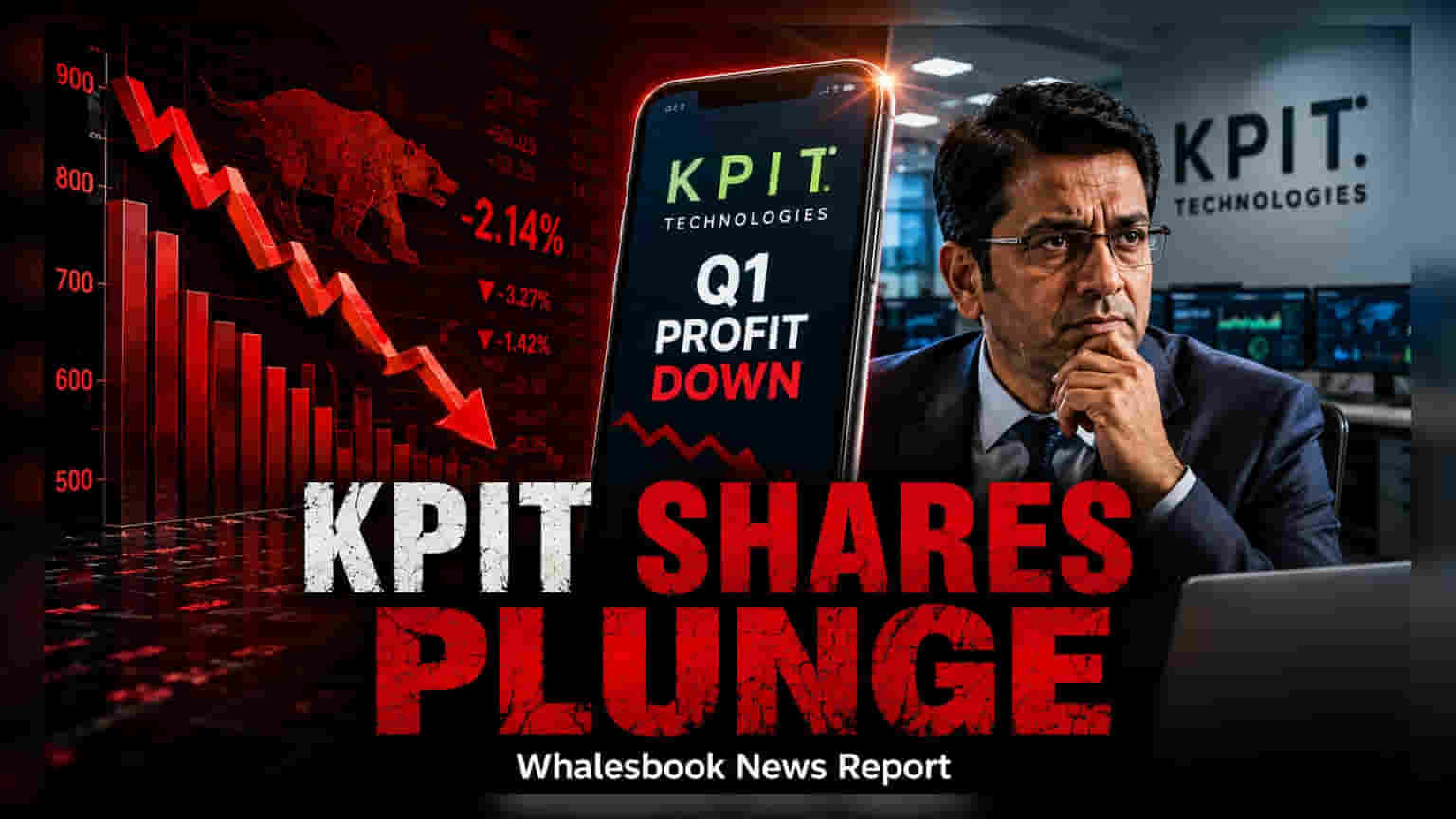
KPIT Technologies shares fell over 2% on Wednesday following a sequential decline in revenue and net profit for the June 2026 quarter. August 12, 2026, marks the record date for the company's final dividend payout of Rs 5.25 per share. Investors are weighing the impact of client budget cuts in the automotive sector on the company's near-term profitability.
Shares of KPIT Technologies saw a decline of 2.14% on Wednesday, trading at Rs 613.60. This market movement follows the company's latest financial update for the quarter ending June 30, 2026, which revealed a sequential cooling in performance metrics. The company also marked August 12, 2026, as the record date for its final dividend of Rs 5.25 per share for the fiscal year 2025-26, an event that typically influences trading volume on the ex-dividend date.
Financial Performance and Revenue Trends
The June 2026 quarter results showed a consolidated revenue of Rs 1,674.99 Crore, down from the Rs 1,711.00 Crore reported in the previous quarter ending March 2026. Profitability also faced pressure, with the company’s net profit declining to Rs 130.46 Crore from Rs 168.49 Crore in the prior quarter. The earnings per share (EPS) for the period also reflected this, dropping to Rs 4.30 from Rs 5.99 in the March quarter.
Sector Pressure and Client Spending
The software-focused firm, which serves the mobility and automotive industry, has encountered headwinds linked to client-side budget adjustments. Reports indicate that major automotive clients, particularly those based in Europe, have been recalibrating their spending, which has temporarily slowed revenue momentum. This cautious spending environment is a critical factor for investors to track, as the company’s growth trajectory is closely tied to the capital expenditure and digital transformation budgets of global auto manufacturers.
Risks and Investor Monitorables
The primary challenge currently impacting the company is the pressure on profit margins. As revenue growth slows, maintaining operational efficiency becomes more difficult, and any inability to offset costs can lead to a contraction in profit margins. Investors are looking for signs of stability in client demand and consistent execution. Moving forward, the key monitorable for the stock will be management’s commentary on demand recovery and whether the company can sustain its long-term growth targets despite the current caution in the automotive software sector.