

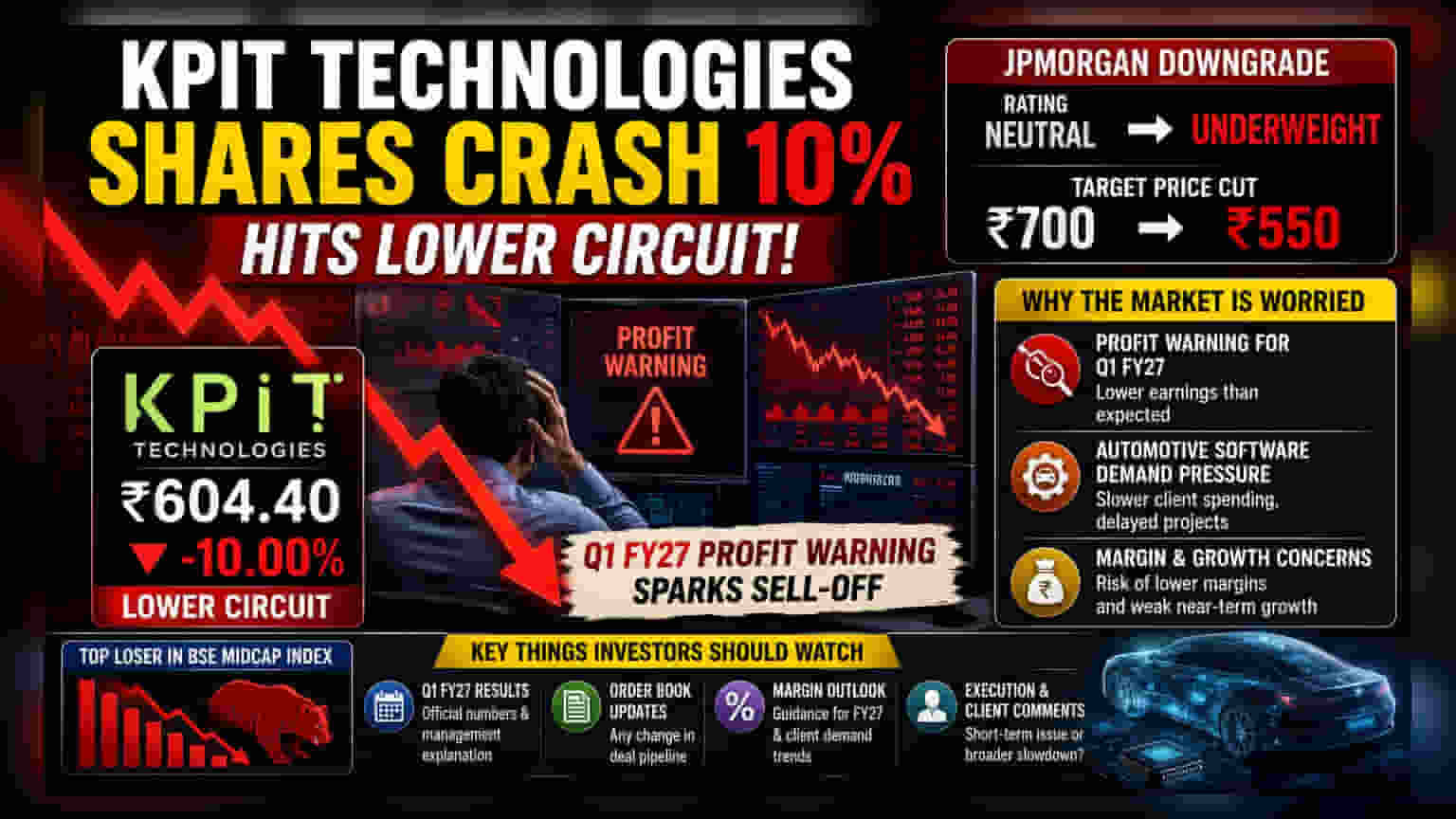
KPIT Technologies shares hit the 10% lower circuit on July 1, 2026, following a downgrade by JPMorgan to 'Underweight' and a profit warning for the June quarter. The brokerage slashed its target price to Rs 550 from Rs 700, citing a weaker-than-expected earnings outlook for the automotive software firm.
What Happened
KPIT Technologies shares experienced a sharp sell-off on Wednesday, falling 10% to hit the lower circuit. This drop followed a downgrade from global financial services firm JPMorgan, which shifted its rating on the stock from 'Neutral' to 'Underweight'. Alongside the rating change, the brokerage also cut its target price for the stock significantly, moving it down to Rs 550 from the previous target of Rs 700. The stock was trading at Rs 604.40 following the decline, making it one of the top losers in the BSE Midcap index.
Why The Profit Warning Matters
The primary driver behind this negative sentiment is a profit warning issued by the company for the first quarter of the fiscal year 2027. In the world of stock investing, a profit warning is a serious signal. It indicates that the company expects its earnings to be lower than what it had previously told investors or what the market was expecting. For a company like KPIT, which specializes in automotive software and engineering services, this suggests that the business may be facing unforeseen challenges. These could range from delays in project execution, slower-than-expected software development, or a pullback in spending by its global automotive clients.
The Business Context
KPIT Technologies operates in the Engineering, Research, and Development (ER&D) sector, where it focuses heavily on software for the automotive industry. This business model relies on large-scale technology spending by global car manufacturers and automotive suppliers. When these clients tighten their budgets or delay new software projects, it directly impacts the revenue and profit margins of companies like KPIT. JPMorgan's decision to lower the target price and downgrade the stock suggests that analysts believe the company's near-term growth path is under pressure, potentially due to these sector-wide challenges or company-specific execution issues.
Risks and Financial Sensitivity
Investors often look at companies in this space for their ability to maintain high profit margins while growing their order book. When a profit warning occurs, it tests investor confidence in the company's ability to manage costs and deliver on its promised growth. The market reaction—a 10% fall—reflects the fear that the earnings hit might not be a one-time event but could persist for a few quarters. Investors who held the stock have reacted to the potential for lower-than-anticipated cash flow and profit, which are the fundamental drivers of a stock's long-term value.
What Investors Should Track Next
The most important monitorable for shareholders is the company's official financial report for the first quarter of fiscal year 2027. Investors will be looking for management's detailed explanation regarding the profit warning. Key factors to watch will be whether this is a short-term issue related to specific client contracts, or if there is a broader slowdown in demand for automotive software. Additionally, updates on the order book and the company's commentary on its margin targets for the remainder of the financial year will be essential for assessing whether the current price drop is an overreaction or a reflection of changing business fundamentals.