

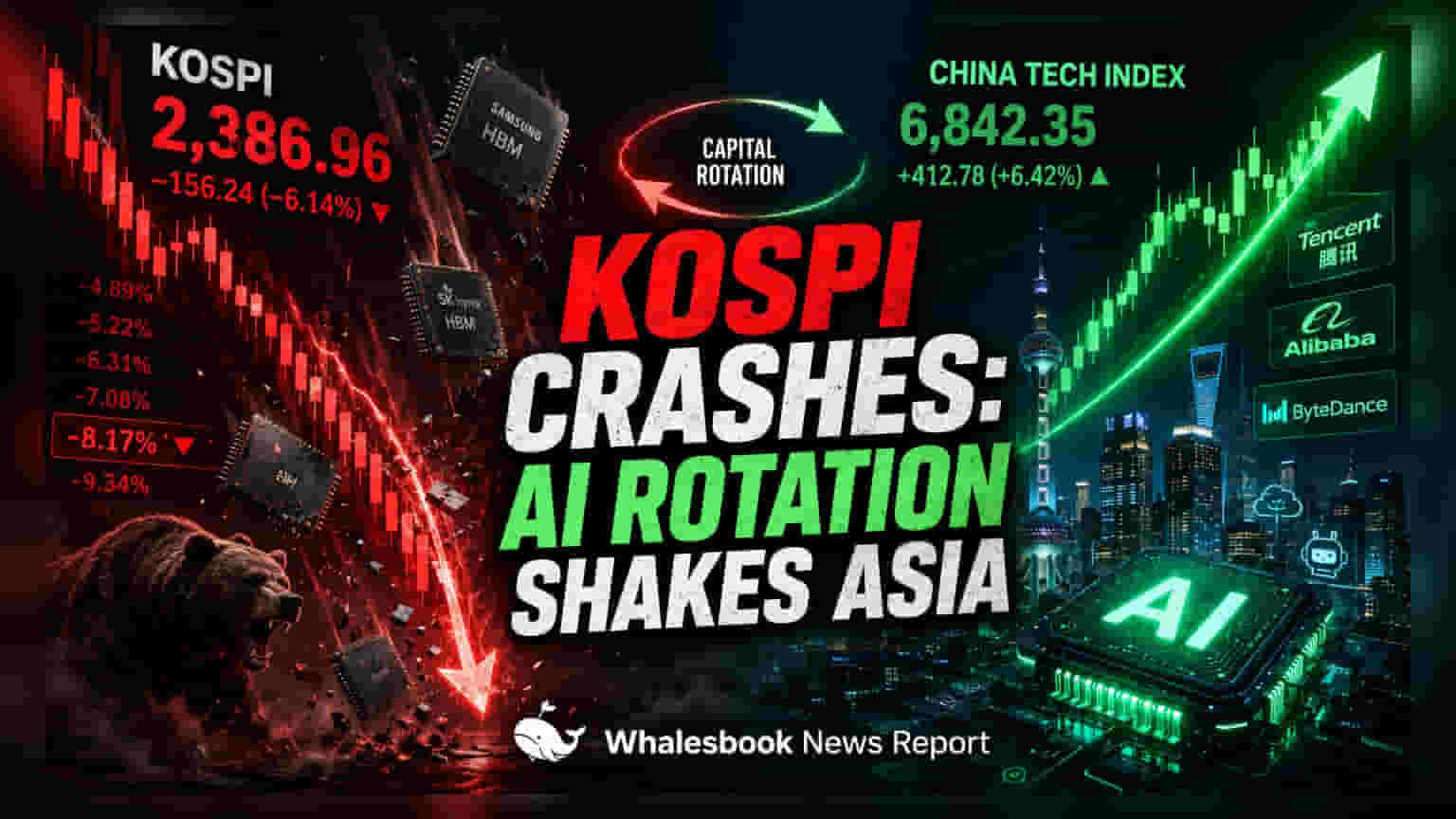
South Korea's KOSPI index has fallen 20% from its recent peak, entering a technical bear market. The decline is driven by a shift in capital as investors move away from semiconductor chipmakers toward Chinese technology firms. This marks a sharp reversal for the index, which had previously been one of the year's top global performers.
The KOSPI, the benchmark index of the South Korean stock market, has officially entered a technical bear market after dropping 20% from its recent all-time high. This significant decline follows a period where the index had surged over 100% year-to-date, making it a standout performer globally. The recent sharp reversal, which included a single-session fall of up to 6.1%, highlights a major change in how international investors are allocating their money across Asian markets.
Shift From Chipmakers to Chinese Tech
Investors are actively reducing their positions in South Korea and Taiwan, which had been the primary centers of growth during the recent artificial intelligence boom. This capital is now moving toward Chinese equities, which many market participants view as undervalued after a long period of underperformance. On the Hong Kong exchange, the Hang Seng China Enterprises Index recently posted its largest daily gain since April 2025, with major tech companies like Alibaba and Tencent recording double-digit and mid-single-digit gains, respectively.
Impact on Semiconductor Giants
The KOSPI’s heavy concentration in the semiconductor sector has made it particularly vulnerable to this rotation. Shares of industry giants, including Samsung Electronics and SK Hynix, have faced heavy selling pressure. This trend has persisted even as Samsung Electronics recently reported a near nineteenfold increase in quarterly profit. The disconnect between these strong financial results and the falling share prices suggests that investors are worried that the future earnings of chipmakers may not be able to justify the high valuations reached earlier in the year.
Market Risks and Future Outlook
A primary concern for market observers is the concentration of demand within the semiconductor sector. Much of the growth in this industry is tied to a small group of large technology firms, creating a risk that any cooling in their capital spending could hurt chip demand. Additionally, the use of leveraged exchange-traded funds has likely made the market swings more intense. While the KOSPI still holds a substantial year-to-date gain of approximately 72%, the current downward momentum is forcing a re-evaluation of growth expectations.
Investors will now closely monitor whether the demand for AI-related chips remains sustainable or if the market is entering a phase of correction for semiconductor valuations. Another key factor will be whether the recovery in Chinese equities can continue, or if concerns regarding China's overall economic outlook will return to dampen sentiment. The next important updates for shareholders will be upcoming quarterly earnings reports and management guidance from major chip manufacturers to see if profit margins can be maintained despite the cooling market interest.