

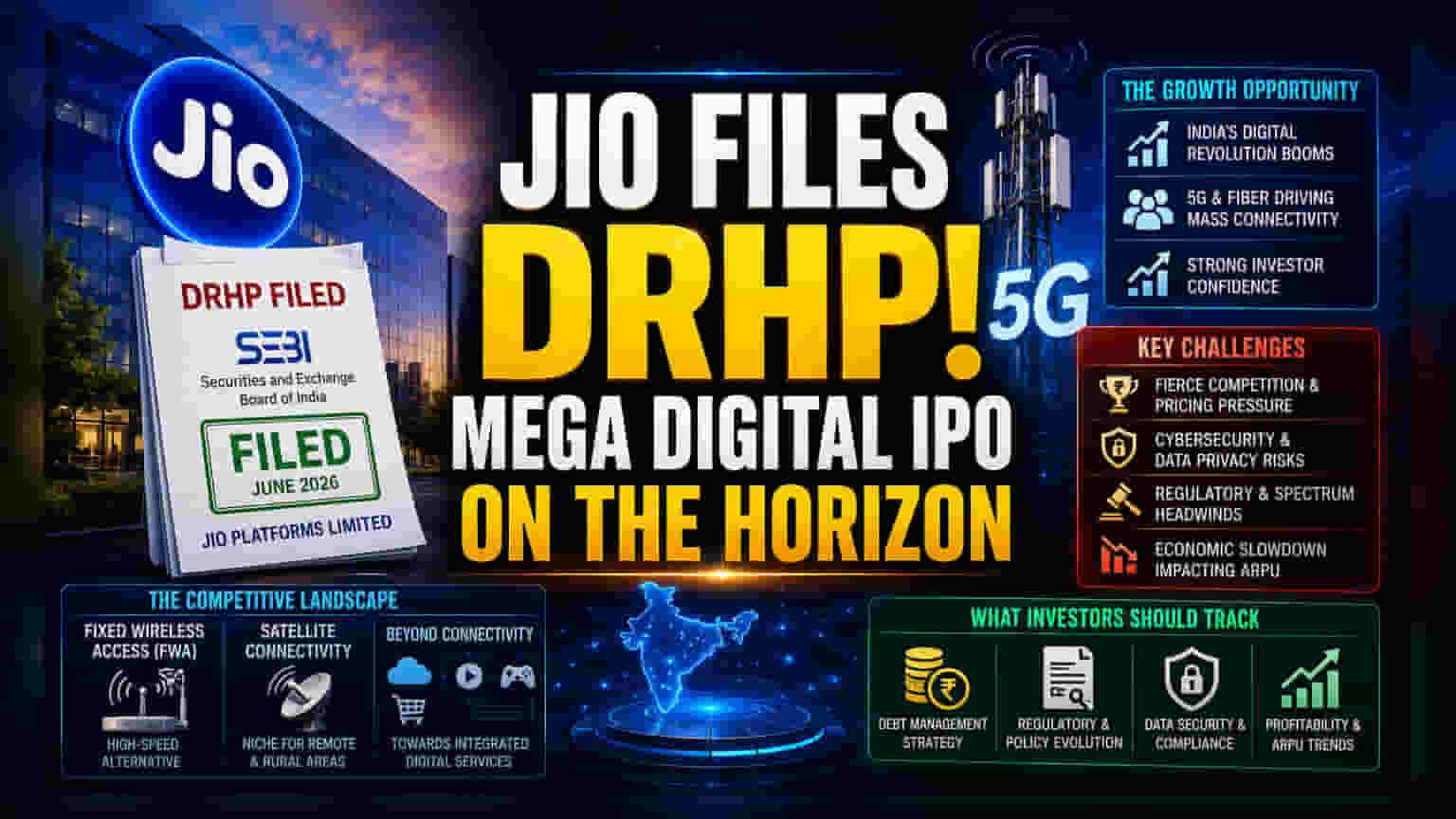
Reliance Industries’ digital arm, Jio Platforms, has officially filed its Draft Red Herring Prospectus (DRHP) for a public listing. While this marks a landmark moment for India’s digital ecosystem, the broader telecom and digital services sector continues to face significant challenges, including intense market competition, cybersecurity risks, and the need for high infrastructure investment.
What Happened
Jio Platforms Limited, the digital services subsidiary of Reliance Industries, has officially filed its Draft Red Herring Prospectus (DRHP) with the Securities and Exchange Board of India (SEBI). This move sets the stage for one of the most anticipated public listings in the Indian technology and telecom space. The filing comes at a time when India’s digital connectivity sector is experiencing rapid expansion but is simultaneously grappling with a complex set of operational and competitive challenges.
The Growth Versus Risk Balance
While the filing signals investor confidence in the digital economy, the broader sector faces persistent pressures. Industry assessments highlight that despite the massive scale achieved through 5G and fiber-to-the-home services, companies must contend with fierce competition. Aggressive pricing strategies from major players and the entry of global tech giants into service segments continue to keep margins under pressure. For investors, the key monitorable remains how these digital players maintain profitability while continuing to spend heavily on infrastructure.
The Competitive Tech Landscape
Technology is evolving rapidly, and the battleground is shifting from simple mobile connectivity to advanced services. Fixed Wireless Access (FWA) has emerged as a major focus for operators, offering high-speed alternatives where fiber installation is costly. While satellite-based connectivity is also being introduced, experts suggest it remains a niche solution, primarily targeting remote areas where terrestrial networks are difficult to build. The ability of companies to effectively deploy these technologies will be a critical factor in determining long-term market share and customer retention.
Cybersecurity and Regulatory Pressures
Beyond competitive and technological hurdles, the digital sector is under increased scrutiny regarding cybersecurity and data privacy. As digital adoption grows, companies must invest heavily in securing user data and upgrading infrastructure to defend against sophisticated cyber threats. Furthermore, evolving regulatory norms concerning telecom licensing, spectrum allocation, and data localization continue to shape the operating environment. A potential economic slowdown could also impact premium digital service demand, potentially cooling the growth in Average Revenue Per User (ARPU).
What Investors Should Track Next
Investors should look beyond the headline news of the IPO filing and monitor several operational metrics. Key areas of interest include the company’s plans for debt management, as capital-intensive expansion remains necessary. Additionally, the evolution of regulatory policies regarding spectrum and data security will be critical. Tracking how effectively companies manage the transition from being pure-play connectivity providers to integrated digital powerhouses will define the sector's performance in the coming quarters.