 Whalesbook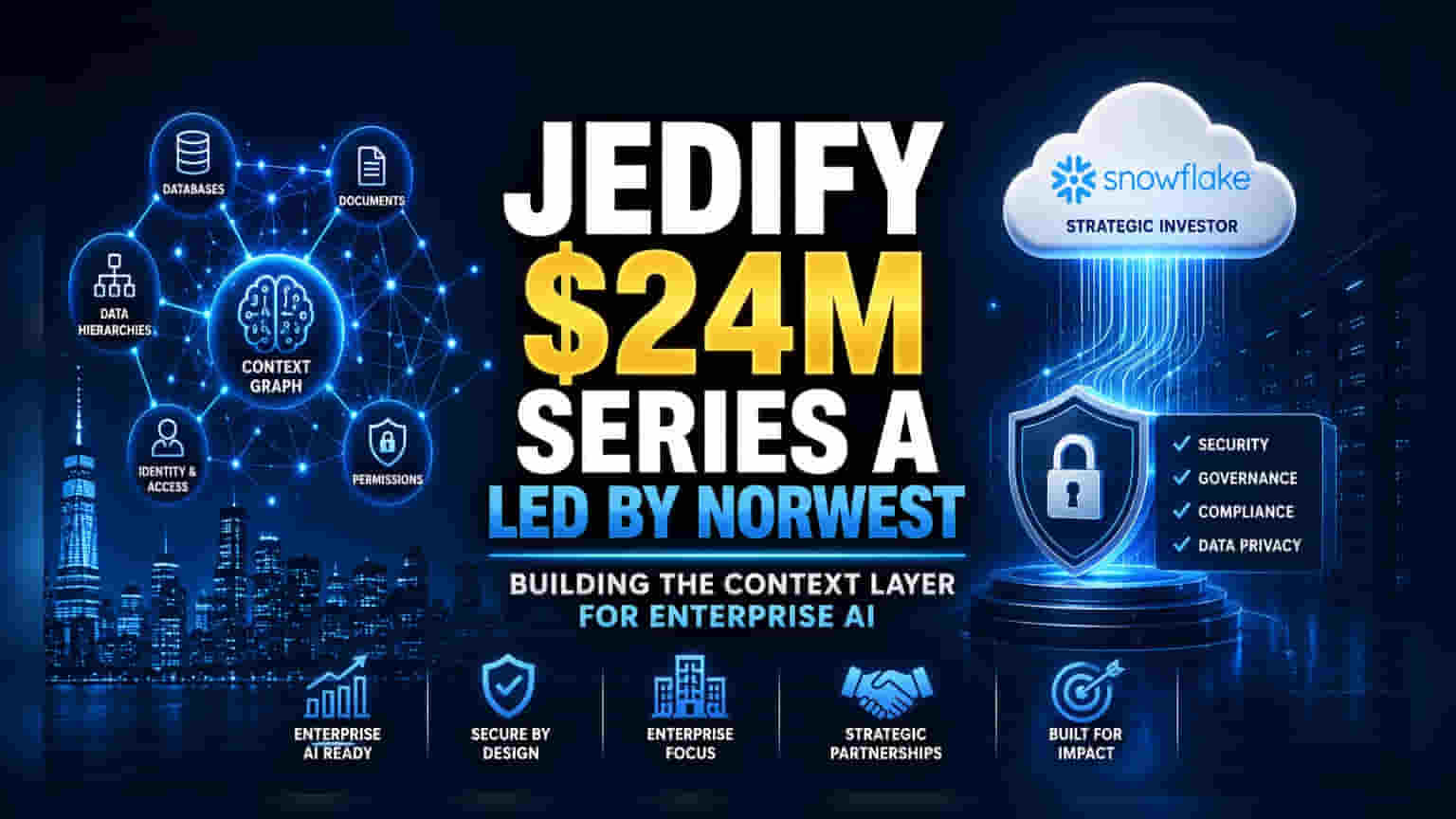


AI startup Jedify has secured $24 million in Series A funding to build 'context graphs' that help AI agents understand internal business data, permissions, and relationships. Led by Norwest Venture Partners with strategic participation from Snowflake, this funding highlights the shift toward solving data governance and accuracy issues for enterprise AI. Investors watching the sector are seeing a trend where companies are moving beyond basic AI models to focus on the 'plumbing' required to make these tools safe and functional within large organizations.
What Happened
New York-based startup Jedify has closed a $24 million Series A funding round, bringing its total capital raised to approximately $33 million. The funding round was led by Norwest Venture Partners, with support from investors including S Capital, Cerca Partners, and Oceans Ventures. The company is developing a platform designed to solve a specific problem in the enterprise artificial intelligence space: the lack of business-specific context in AI agents.
Why This Matters For Investors
The AI sector is moving from a phase of general experimentation to a phase of enterprise integration. While many companies have access to powerful AI models, these tools often fail when tasked with specific internal business operations. A primary reason is that AI models are usually trained on broad, public data and lack understanding of a specific company’s internal rules, data hierarchies, and permission structures. Jedify attempts to solve this by building a 'context graph.' This system connects to an organization's databases and documents, allowing AI agents to understand exactly what they are looking at, how it relates to other data, and who is authorized to see it.
The Strategic Role of Snowflake
Notably, the data cloud giant Snowflake participated in this funding round as a strategic investor. This partnership is significant because it aligns Jedify’s technology with the broader ecosystem of data platforms. For investors tracking the AI infrastructure space, this move signals that larger, established tech companies are actively looking for solutions to make their data products 'AI-ready.' By integrating Jedify’s context-mapping technology, platforms like Snowflake aim to make their AI products, such as Cortex, more capable for corporate users who require high accuracy and strict security.
The Security and Governance Challenge
One of the biggest hurdles for AI adoption in large companies is the risk of data leakage and unauthorized access. If an AI agent can read sensitive payroll or legal documents that it shouldn't access, it becomes a liability rather than an asset. Jedify’s approach involves mapping existing company access rules and identity systems directly into the AI’s understanding. By ensuring that the AI agent inherits the same security and permission constraints as a human employee, the company aims to reduce the risk of compliance failures. This focus on governance is a major monitorable for the industry, as regulatory scrutiny over AI data usage is expected to rise.
Enterprise Implementation Risks
While the technology addresses a clear pain point, investors should be aware of the inherent risks in this space. Enterprise software sales cycles can be long and complex. Companies are often hesitant to adopt new layers of AI infrastructure due to concerns about vendor lock-in, the cost of implementation, and the complexity of integrating these tools with legacy IT systems. Additionally, the market for enterprise AI tools is becoming crowded. The company will need to demonstrate that its 'context graph' is superior to the internal solutions being developed by massive incumbents or other specialized startups in the knowledge management sector. There is also the risk that enterprise demand for these tools may slow if economic conditions tighten and IT budgets are prioritized for more essential services.
What Investors Should Track
Market participants tracking the broader AI infrastructure trend may want to monitor how effectively the company executes its go-to-market strategy with large enterprises. The company has already highlighted clients like The Weather Company, and its future growth will depend on whether it can replicate this success in other high-data industries like finance, manufacturing, or healthcare. Another key metric will be the depth of its technical integration with major data clouds. Continued validation from partners like Snowflake, and the ability to maintain strong data security standards as the company scales, will be essential for its long-term viability in the competitive enterprise software market.