

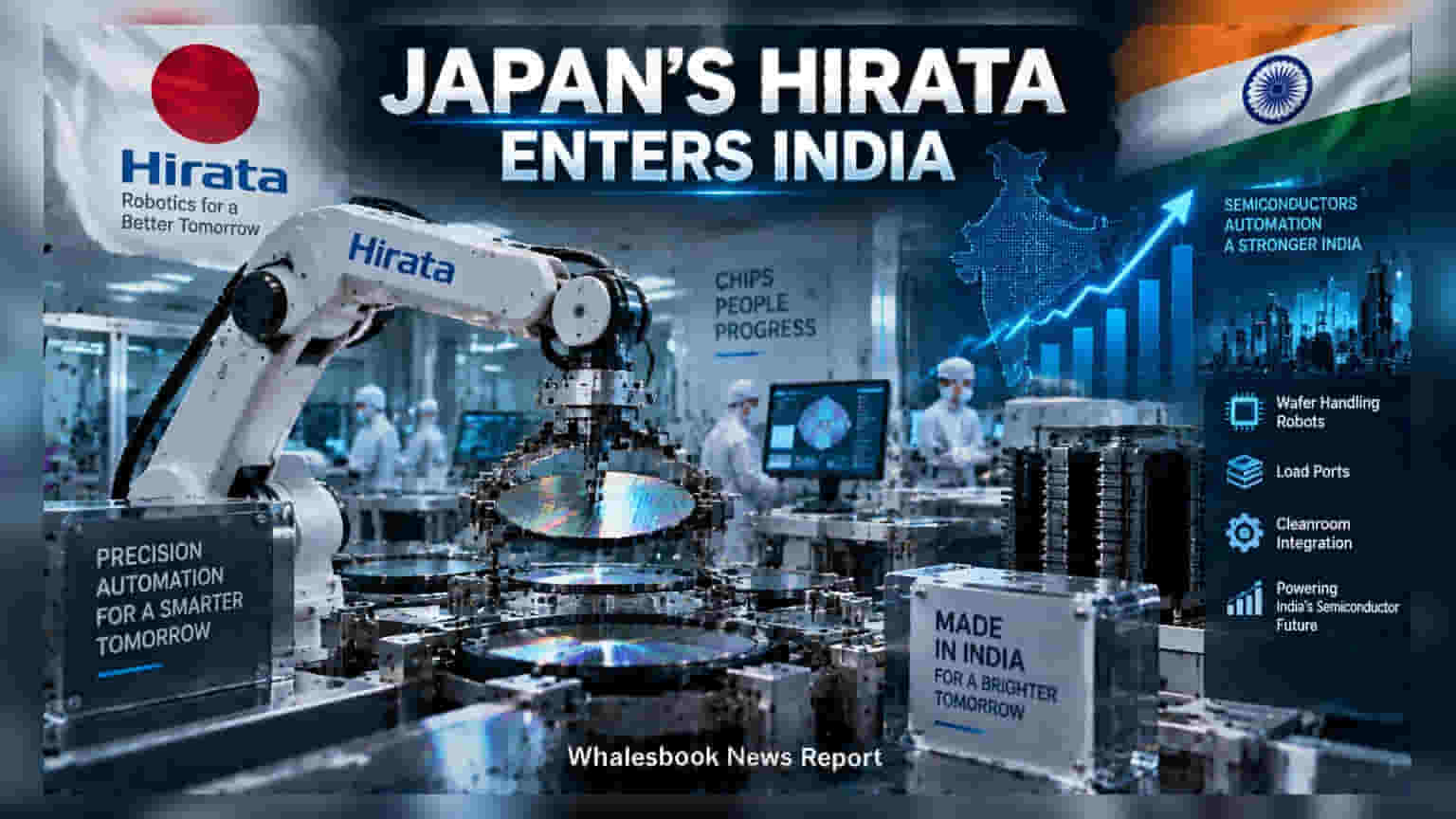
Japan’s Hirata Corporation has entered India’s semiconductor market through an exclusive distribution partnership with ATS India. The collaboration aims to supply high-precision robotic and material-handling equipment to the country's growing Outsourced Semiconductor Assembly and Test (OSAT) facilities. This move signals a strategic pivot by the Japanese automation specialist to capitalize on India's expanding electronics manufacturing supply chain.
Japan’s Hirata Corporation, a Tokyo-listed automation specialist, is expanding its footprint in India by partnering with ATS India. This exclusive distribution agreement marks the Japanese firm’s formal entry into the Indian semiconductor equipment market. The collaboration will focus on supplying critical automation tools, such as wafer-handling robots, load ports, and cleanroom integration systems, which are essential for high-precision chip manufacturing.
The partnership builds on a ten-year business relationship between the two companies, primarily in the automotive manufacturing sector. By moving into semiconductors, both firms are looking to tap into the demand generated by India’s growing emphasis on localizing chip assembly and packaging. In the semiconductor industry, companies known as OSAT providers—or Outsourced Semiconductor Assembly and Test facilities—are responsible for the final steps of chip production. These facilities require highly standardized and precise equipment to ensure high yield rates, which is where Hirata’s specialized robotics come into play.
From a strategic perspective, this move is a direct response to the government-led India Semiconductor Mission, which aims to build a domestic supply chain for electronics and chips. For Hirata, the partnership allows it to enter the Indian market without the immediate need for heavy capital investment in local manufacturing infrastructure, relying instead on ATS India's existing distribution and systems integration capabilities.
However, for investors, it is important to balance this growth story with the realities of the sector. Semiconductor manufacturing is a long-term, capital-intensive business. The actual demand for Hirata’s equipment will depend on the speed at which new semiconductor plants and OSAT facilities in India are commissioned and become operational. If large-scale infrastructure projects face delays or if local chip demand remains lower than projected, the uptake for high-end automation equipment could be slower than anticipated.
Additionally, the Indian semiconductor landscape is currently in its early development phase. Success in this market involves significant execution risks, including the availability of skilled labor for maintaining complex cleanroom robotics and the competitive pressure from established global suppliers who already dominate the chip equipment market in Southeast Asia. Hirata’s ability to capture meaningful market share will likely depend on its ability to offer competitive pricing and after-sales service compared to these incumbents.
Investors looking for the next phase of this development should monitor updates regarding the actual commissioning of new semiconductor assembly plants in India. Future order announcements or expansions by major OSAT players in the country will be key indicators of how quickly this partnership converts into tangible business revenue.