

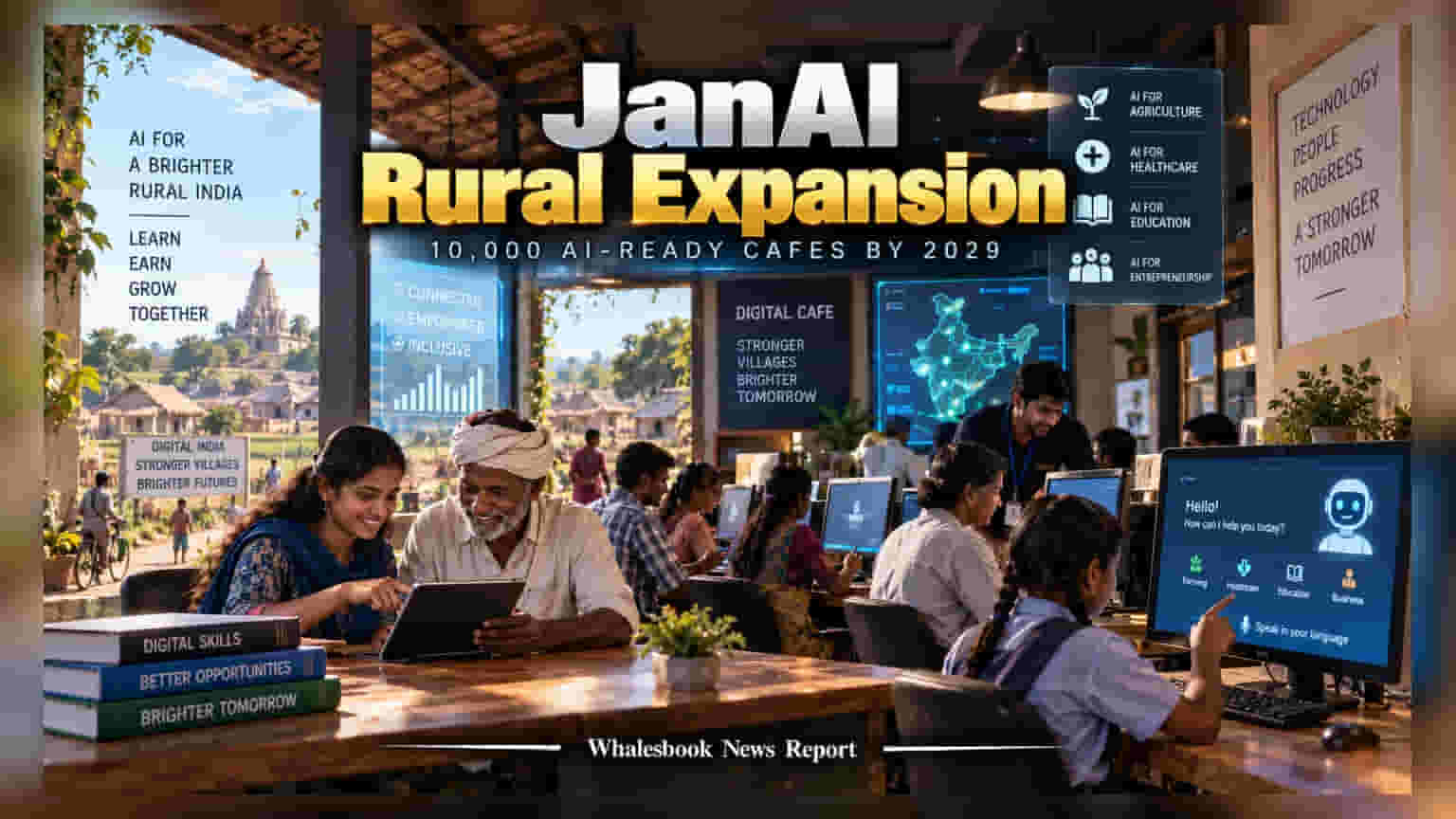
JanAI, a social impact initiative under the Head Held High Foundation, aims to establish 10,000 rural AI-ready cafes by 2029. This philanthropic project focuses on bridging the digital divide through voice-first, local-language AI tools. It is a non-profit effort backed by global foundations and corporations, not a listed commercial company.
JanAI, a social impact initiative led by the Head Held High Foundation, has announced an ambitious roadmap to launch 10,000 rural AI-ready cafes across India by 2029. The program is designed to act as a bridge for the rural digital divide, providing local communities with access to voice-first AI tools, digital training, and support for micro-entrepreneurship.
It is important for readers to note that JanAI is a philanthropic and collaborative social project, not a publicly traded commercial corporation. There is no stock price, exchange listing, or quarterly financial result associated with this initiative. Its primary objective is to drive social change and digital adoption in rural regions rather than to generate commercial market returns.
Scaling Through Technology and Partnerships
The initiative focuses on delivering practical economic results using Small Language Models (SLMs). These are designed to function on standard, college-level computer hardware, which allows the organization to bypass the need for expensive, high-end GPU infrastructure that often limits AI deployment. By tailoring these models for sectors like agriculture, healthcare, and education, the project aims to help rural users interact with technology through local languages and voice commands.
The project has secured support from various institutional partners, including the Bill & Melinda Gates Foundation, The/Nudge Foundation, Wipro, PwC, and the Karnataka Digital Economy Mission. This collaborative structure is essential to the project's strategy, as it relies on philanthropic grants and institutional backing rather than self-sustaining market profits to fund its expansion.
Operational Monitorables
While the project holds significant potential for rural job creation and digital literacy, the long-term sustainability of such a large-scale initiative carries specific operational monitorables. As a social impact effort, the continuity of the 10,000-cafe network will depend on sustained funding and the effectiveness of long-term institutional partnerships.
Additionally, the success of the initiative rests on its ability to ensure that the AI tools drive meaningful, day-to-day adoption among populations that may currently have limited digital fluency. The project’s reliance on existing rural digital infrastructure also means that implementation speed and quality may vary significantly depending on the local connectivity and resources available in different states. Investors and observers interested in the rural digital economy may monitor how the organization navigates these scalability challenges as it moves toward its 2029 target.