 Whalesbook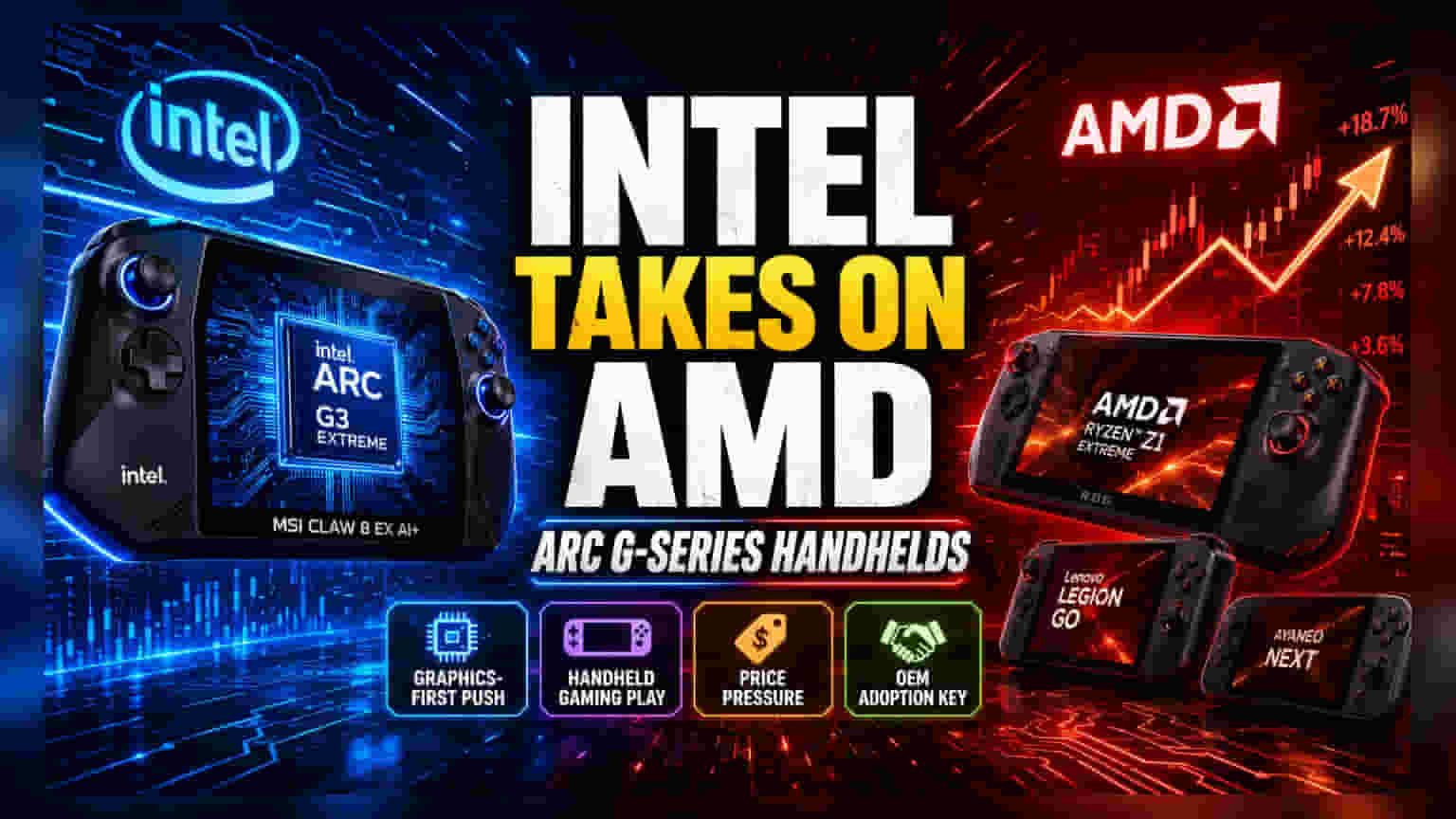


What Happened
Intel has officially entered the race to power the next generation of portable gaming devices with the introduction of its Arc G-Series processors. The company’s new Arc G3 Extreme chip, designed using its Panther Lake architecture, is specifically engineered for handheld consoles. The MSI Claw 8 EX AI+ is the first major device to feature this new hardware. Early testing of this device has shown high-performance capabilities, including smooth frame rates that aim to compete directly with existing, established handhelds powered by AMD.
Why This Matters For Investors
For years, the market for portable gaming handhelds—like the Steam Deck and the ASUS ROG Ally—has been almost entirely dominated by Advanced Micro Devices (AMD). Intel is now attempting to break this cycle. By focusing on a 'graphics-first' design, Intel is trying to capture a share of the gaming hardware market, which is a growing niche within the broader consumer electronics sector. If Intel can successfully convince device makers (OEMs) to switch from AMD to its new Arc G-Series, it could create a new revenue stream for the company's client computing business.
How Investors May Read This
Intel is marketing these chips as high-performance, power-efficient units that use AI-driven features like XeSS 3 to improve graphics. For investors, the key question is whether this technology can translate into mass-market adoption. While the performance benchmarks on the MSI Claw 8 EX AI+ are promising, the gaming handheld market is price-sensitive. Intel’s success will not only depend on the chip's speed but also on whether it can offer a better cost-to-performance ratio than the current market leader, AMD.
The Cost And Pricing Pressure
While the new technology is advanced, there are potential hurdles that could impact the bottom line. The gaming hardware industry is currently sensitive to the rising costs of essential components like memory and storage. Any significant increase in these input costs could push the final retail price of handheld gaming consoles higher. Higher prices might limit demand, particularly in price-conscious markets like India, where such premium gaming devices are often considered non-essential luxury items. Investors should watch if these cost pressures affect the margins for device makers, which could in turn influence how many manufacturers choose to adopt Intel’s chips.
Competitive Landscape
AMD currently holds a significant advantage with its established ecosystem. Its Ryzen processors are widely used in the most popular handhelds on the market, meaning developers have already optimized many games for the AMD platform. For Intel, the challenge is not just the hardware, but also the software. Ensuring that the Arc G-Series integrates smoothly with Windows and works perfectly with thousands of games will be critical to competing with AMD’s existing dominance.
What Investors Should Track
The most important factor to watch is the adoption rate of these chips by other major hardware manufacturers. If Intel can win over other brands besides MSI, it would signal a broader shift in the market. Additionally, updates regarding the availability and pricing of these devices in India will be important, as this will determine the addressable market size. Investors should also monitor management commentary in future earnings calls regarding the 'Client Computing Group' to see if this new segment begins to contribute meaningfully to overall revenue.