

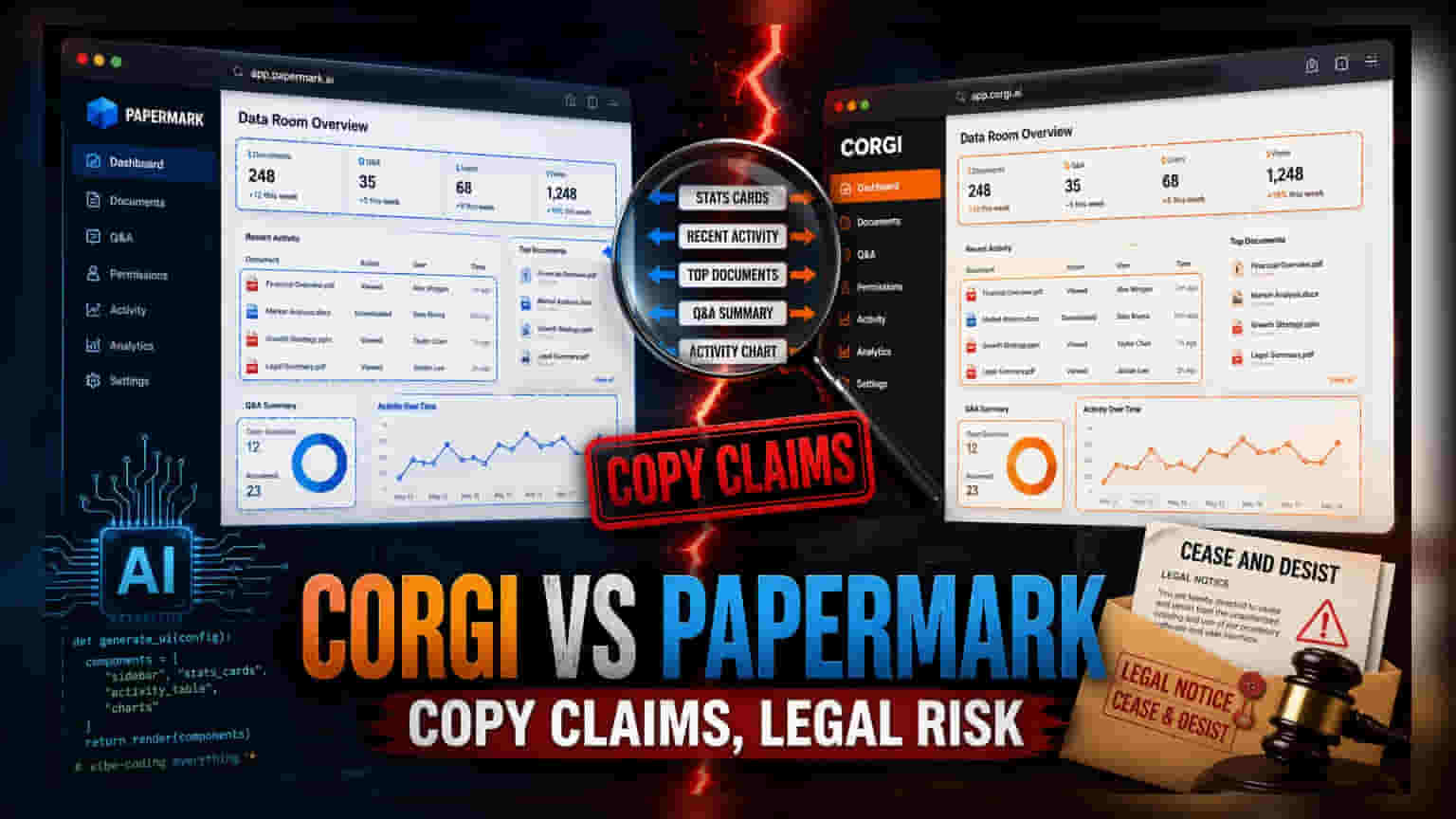
Corgi, a Y Combinator-backed insurance tech firm, is under fire after rival Papermark accused it of stealing software code for its new product. While Corgi denies these claims and blames 'vibe-coding' for design similarities, the controversy raises broader questions regarding the startup's legal strategy and reputation in a competitive market.
What Happened
Corgi, an insurance technology startup backed by Y Combinator, is currently involved in a public dispute with Papermark, a developer of open-source data room software. Papermark’s co-founder, Marc Seitz, recently alleged on social media that Corgi copied its software for a new product called Dataroom. To support the claim, Seitz posted screenshots showing what appear to be identical language and feature sets across both platforms. This incident has drawn attention within the tech community regarding the ethical and legal boundaries of software development, particularly when companies are accused of using competitor products as a blueprint.
The 'Vibe-Coding' Defense
Corgi’s leadership has firmly rejected the allegations of code theft. CEO Nico Laqua stated that the company did not use any code from Papermark, asserting that the underlying technology is distinct. The company attributed the noticeable similarities in appearance to a practice it describes as 'vibe-coding.' This process involves using AI-assisted tools to mimic the look, feel, and functionality of existing products. While the company acknowledged that it should have prioritized more original design choices, it maintains that the issue was limited to minor visual elements on two peripheral pages, which have since been updated.
Corporate Governance and Litigation History
For investors and market observers, this incident is significant not only for the software dispute but also for what it reveals about Corgi’s corporate culture. Reports indicate that Corgi has a documented history of being litigious, including past legal actions against former employees. This aggressive approach to managing internal and external conflicts can be a signal of potential governance risks. Furthermore, CEO Nico Laqua has previously attracted public attention for controversial statements, including advocating for a seven-day work week, a stance that diverges from standard productivity and employee management practices.
Legal Strategy and Reputational Risk
In response to the accusations, Corgi has taken a strong legal stance. The company has reportedly issued cease and desist letters to Papermark’s co-founder and to individuals who commented on the controversy. While defending the company's intellectual property and reputation is a standard business procedure, an aggressive legal response can sometimes exacerbate public perception issues. Investors often view high levels of litigation and public hostility as indicators of potential management instability, which could affect the company’s ability to build trust with customers and partners in the long term.
What Investors Should Track
Moving forward, the primary concern for stakeholders is the impact on Corgi’s market position and customer trust. If allegations of improper competitive practices persist, they could lead to difficulty in acquiring new enterprise clients who prioritize intellectual property security. Key monitorables include the resolution of the dispute with Papermark, any potential escalation in legal costs, and whether the company shifts its strategy toward more transparent product development to mitigate reputational damage.