

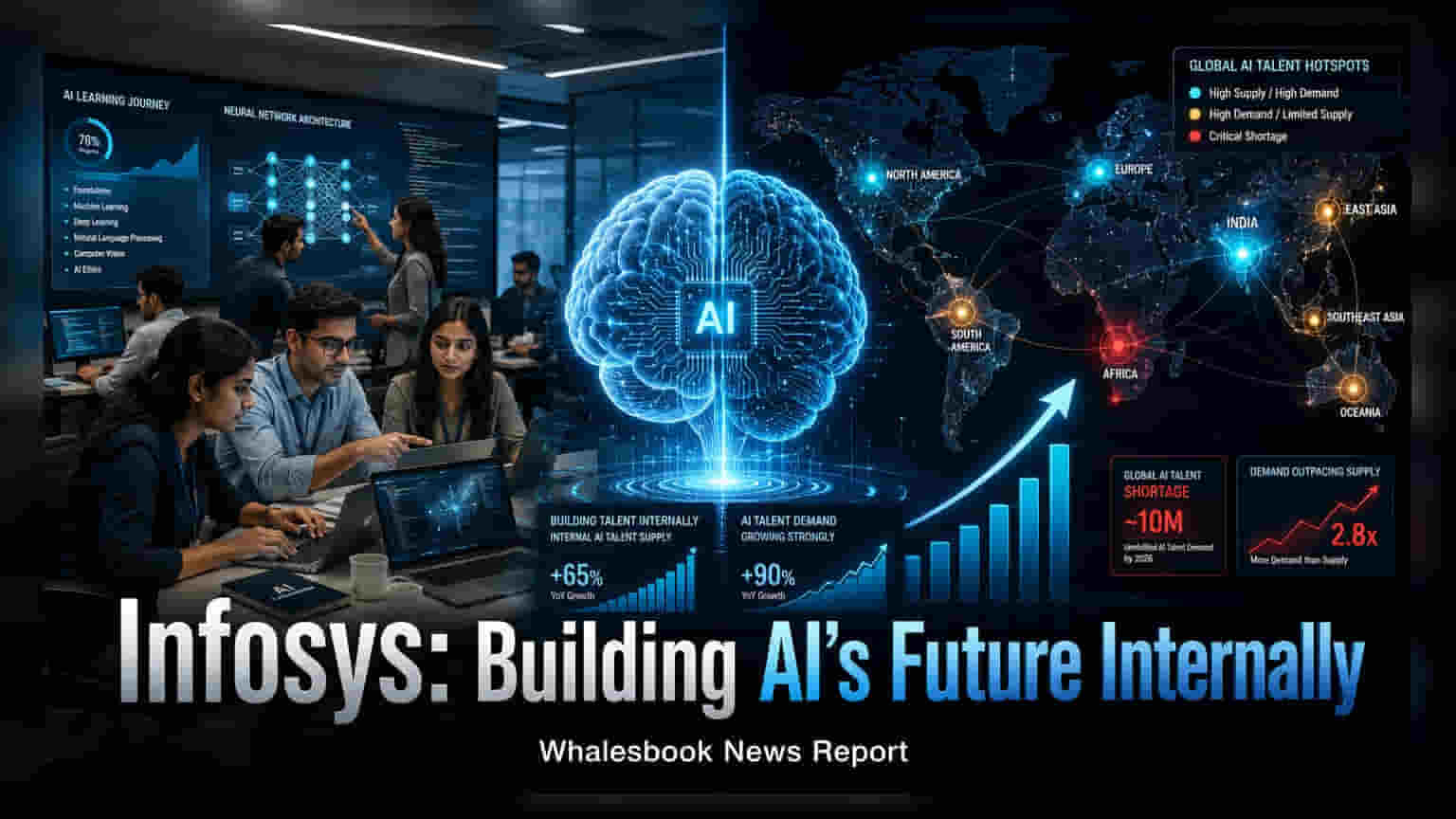
Infosys is doubling down on internal upskilling to bridge the global shortage of AI professionals. By training existing staff and graduates rather than relying solely on external hiring, the company aims to sustain its growth, evidenced by a 14% revenue increase in Q1 FY27. Investors will watch how this strategy impacts future profit margins amidst intense competition for specialized talent.
Infosys is shifting its recruitment and development strategy to address the global shortage of skilled Artificial Intelligence professionals. Rather than depending entirely on a highly competitive external job market, the company is prioritizing internal upskilling programs to build the AI expertise required to deliver its technology services.
Balancing Talent Needs and Costs
Shaji Mathew, Chief Human Resources Officer at Infosys, noted that the intense global demand for AI talent makes reliance on external hiring difficult and expensive. By cultivating talent internally, the company aims to secure a workforce capable of executing AI-driven projects while managing the cost pressures associated with hiring specialized, high-wage professionals from the open market. This focus on internal growth is a key component of the company's broader operational strategy.
Financial results for the first quarter of fiscal year 2027 show that this approach is operating alongside steady business performance. The company reported a 14% year-on-year revenue growth, highlighting continued demand for its services. However, this growth comes with operational costs. The company maintained an operating margin of 21.1% in the recent quarter, and the success of the current talent strategy will be measured by the ability to maintain these margins while heavily investing in training infrastructure and digital tools like the 'Lex' platform.
Operational Scale and Client Demand
The scale of this workforce development is significant. Infosys manages a massive team of over 325,000 employees and recruited more than 20,000 fresh graduates in the fiscal year 2026. Integrating this volume of new talent into complex AI-augmented work requires substantial training capabilities, such as their large facility in Mysore. These efforts are not theoretical; they are aimed at supporting real-world contracts. For instance, in early August 2026, the company announced a ten-year strategic partnership with Crocs, Inc. to lead its AI-driven IT transformation, underscoring the practical application of these technical skills.
Risks and Market Context
While the internal development strategy is designed to create a sustainable talent pipeline, the company faces distinct challenges. The primary risk remains the fierce global competition for AI-specialized staff, which continues to drive up wage costs and may impact retention if not managed effectively. Additionally, the technology sector is currently navigating broader macroeconomic uncertainties and shifting client spending patterns, which can influence business execution.
Investors should monitor how these investments in AI capabilities affect future profitability. While revenue growth has been resilient, with the stock closing at approximately ₹1,169.20 on the NSE on August 14, 2026, the company's ability to protect profit margins against the costs of continuous training and global wage inflation will be a key factor to watch in upcoming quarters.