 Whalesbook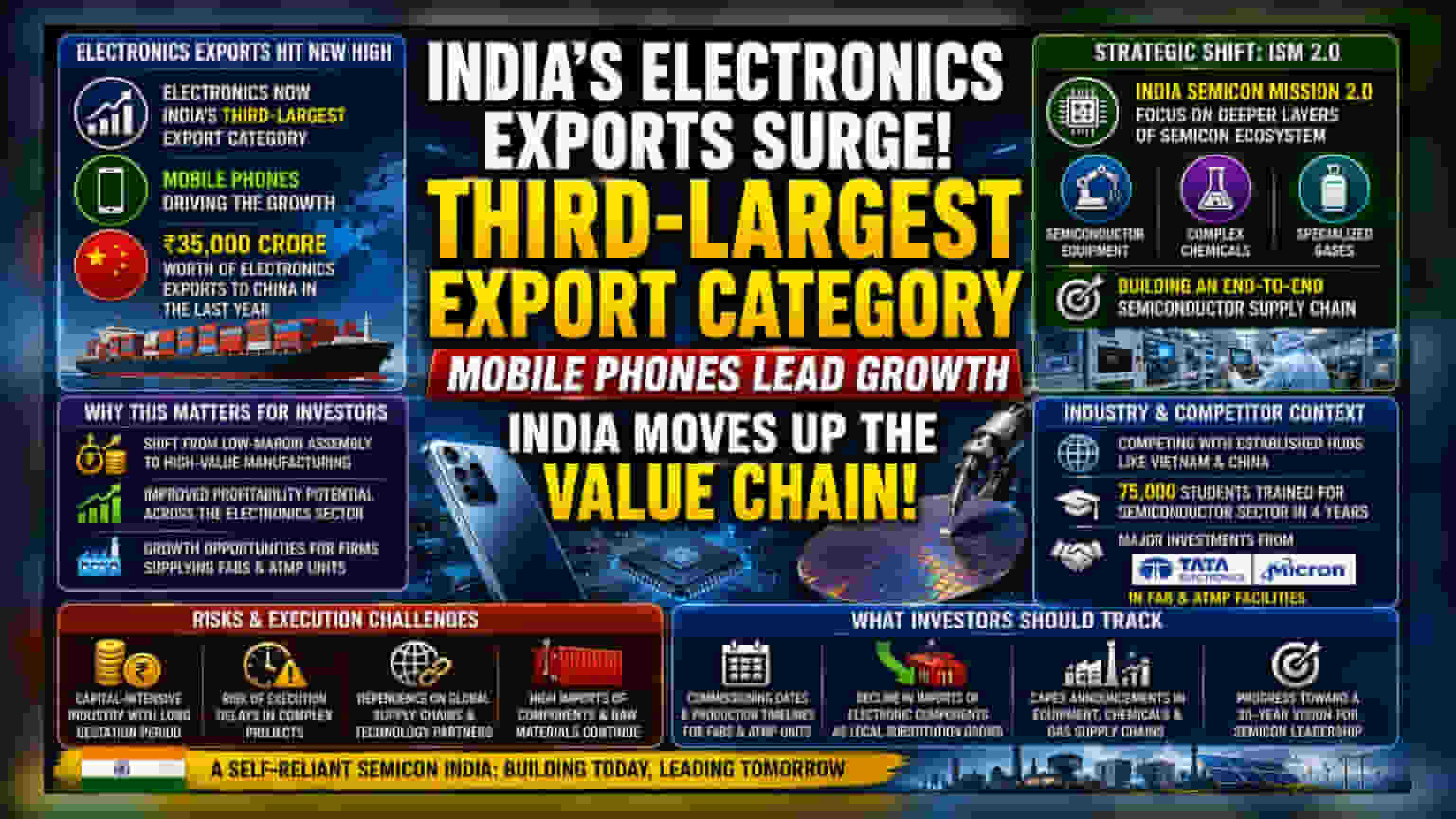


India’s electronics exports have hit record levels, with the government now launching the second phase of the India Semicon Mission. The focus is moving from simple assembly to high-value areas like chip design and semiconductor equipment manufacturing. This shift aims to reduce import dependence and boost the domestic supply chain, presenting new long-term opportunities in the electronics sector.
What Happened
India has officially moved up the value chain in global electronics manufacturing. Latest government data shows that electronics have become the third-largest export category for India, with mobile phones leading this growth. A notable milestone is the substantial volume of exports to major global markets, including the United States and China. Specifically, India exported approximately ₹35,000 crore worth of electronics products to China in the last year. This trend signals a major change for the country, which was previously a heavy importer of finished electronics.
The Strategic Shift: ISM 2.0
The government has launched the second phase of the India Semicon Mission (ISM 2.0), marking a shift in focus. While the first phase prioritized attracting basic assembly and packaging units, ISM 2.0 is targeting the deeper layers of the semiconductor ecosystem. This includes manufacturing semiconductor production equipment, complex chemicals, and specialized gases required for chip fabrication. The plan is to create an end-to-end supply chain rather than just assembling parts brought in from abroad.
Why This Matters For Investors
For investors, this shift is significant because it potentially changes the revenue profile of the Indian electronics sector. Moving from simple assembly (which often has low profit margins) to high-value manufacturing like chip design and equipment production could improve profitability across the industry over time. If successful, local manufacturing of chemicals, gases, and precision equipment could benefit domestic companies supplying to these major semiconductor fabs (fabrication plants) and ATMP (Assembly, Testing, Marking, and Packaging) units. Firms that can master these niche technical inputs may see long-term demand growth as the country builds its semiconductor ecosystem.
Industry and Competitor Context
India is competing with established manufacturing hubs like Vietnam and China. While these countries have deep-rooted electronics ecosystems, India is leveraging a large pool of trained engineering talent. In just four years, the government reports that 75,000 students have been trained for the semiconductor sector. Furthermore, major domestic and global players, such as Tata Electronics and Micron Technology, have already committed to significant investments in fab and ATMP facilities. These investments are essential to building the scale required to compete globally.
Risks and Execution Challenges
The semiconductor industry is notoriously capital-intensive with long gestation periods. Building fabrication plants requires massive spending on infrastructure and technology, which can pressure balance sheets. There is also the risk of execution delays, as these projects are highly complex and require advanced global supply chain partnerships. Additionally, while exports are rising, India remains a significant importer of electronic components and raw materials. Investors should closely monitor whether the domestic industry can effectively replace these imports, which is necessary to improve the nation's trade balance in the technology sector.
What Investors Should Track
Investors may want to watch for a few key developments: First, look for actual commissioning dates and commercial production timelines for the new fab and ATMP units, as project delays can impact profitability. Second, track the import data for electronic components; a sustained decline in these imports would be a sign that domestic manufacturing is successfully replacing foreign supply. Finally, watch for capital expenditure (capex) announcements from companies entering the semiconductor equipment, chemical, and gas supply chains, as this will indicate whether the private sector is fully backing the government's 20-year vision.