

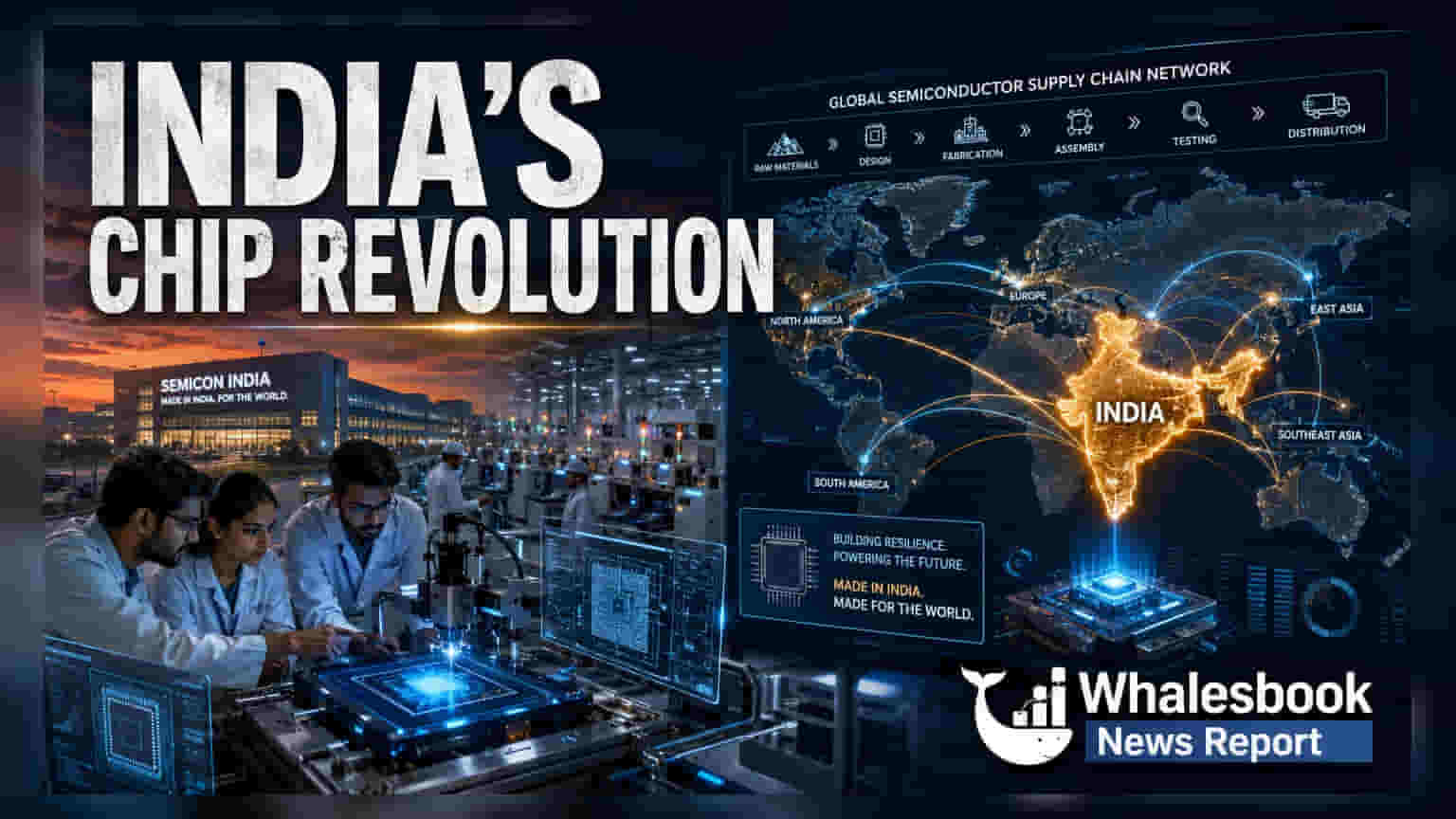
India is shifting from chip design to full-stack semiconductor manufacturing, supported by $21 billion in approved investments across 12 units. This transition targets a $1.6 trillion global market by 2030, though the nation remains dependent on imported equipment and specialized materials.
What Happened
India is aggressively expanding its semiconductor footprint, moving beyond its established design industry toward full-stack manufacturing—covering fabrication, assembly, testing, and packaging (ATMP). According to brokerage reports, India is positioning itself as a strategic node in the global supply chain, a shift accelerated by global geopolitical realignments and the nation's 2025 accession to the Pax Silica framework. The government's India Semiconductor Mission (ISM) has already approved 12 distinct units, representing over $21 billion in planned capital spending. These projects are supported by a co-investment subsidy model where state and central support can cover up to 60-75% of total project costs.
Current Project Landscape
Visible progress is being made on the ground. Facilities such as Micron’s Sanand ATMP unit and the Kaynes Semicon OSAT plant are already operational. A major milestone in this build-out is the $11 billion Tata PSMC fabrication plant in Dholera, which is currently scheduled to produce its first chips by December 2026. These initiatives are heavily focused on mature nodes—ranging from 28nm to 110nm—which are essential for the automotive, consumer electronics, and industrial sectors that dominate India’s domestic chip consumption. India aims to serve this growing demand locally, as domestic chip consumption is projected to reach $155 billion by 2031.
The Strategic Value
For investors, this shift represents a long-term structural change in India's industrial sector. Unlike some regional peers that relied on massive state-controlled monopolies, India is utilizing its existing ecosystem of roughly 300,000 chip designers and a more open, policy-driven approach to attract global technology partners. By incentivizing the entire value chain—including materials, intellectual property, and equipment—the government is attempting to reduce the nation's reliance on high-cost imports for critical technology infrastructure.
Structural Risks and Constraints
While the momentum is clear, the path to becoming a global semiconductor hub faces structural hurdles. India currently imports more than 90% of the complex equipment, specialty gases, and chemicals required for chip manufacturing. This dependence creates a long-term pressure point on the trade balance and leaves projects vulnerable to global supply chain disruptions. Furthermore, India’s current strategy focuses on mature nodes rather than leading-edge manufacturing (below 7nm). Investors should recognize that chip fabrication is a complex, capital-intensive business with long gestation periods. The risk of project delays or cost overruns remains a standard concern for large-scale manufacturing endeavors of this nature.
What Investors Should Track
Moving forward, the primary monitorables for the sector will be the commissioning timelines of major fab projects like Dholera, the success of domestic assembly and testing units in achieving steady-state utilization, and the government's ability to maintain subsidy support. Additionally, observers should track whether the domestic ecosystem can successfully localize the manufacturing of the specialty chemicals and equipment currently being imported, as this will be the true test of India's long-term semiconductor viability.