

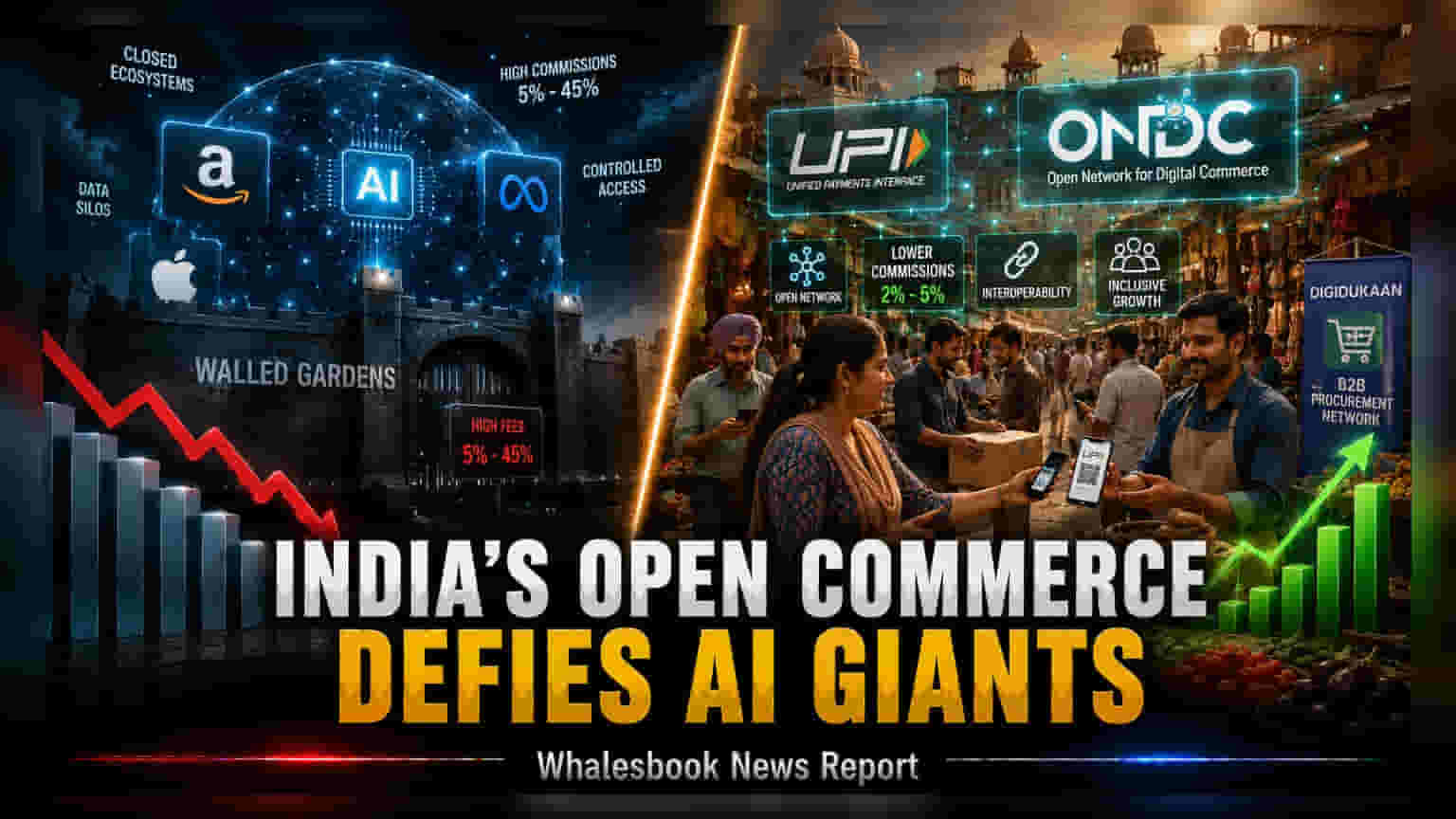
India is positioning open digital infrastructure, such as ONDC and the Beckn protocol, as an alternative to proprietary, closed AI marketplaces. By enabling interoperability, this model aims to lower transaction costs and break the dominance of global e-commerce giants, though it faces significant competition and regulatory hurdles.
India is increasingly distinguishing its digital commerce strategy by prioritizing open-source, interoperable infrastructure over the closed, proprietary systems known as 'walled gardens.' While global technology giants are aggressively building AI-integrated marketplaces that control the entire user journey, India is leveraging its experience with the Unified Payments Interface (UPI) to extend this model into retail commerce through the Open Network for Digital Commerce (ONDC) and the Beckn protocol.
The core objective of this digital public infrastructure is to democratize e-commerce. Currently, many large, proprietary platforms operate as centralized silos where consumers and merchants are locked into a single ecosystem. These platforms often charge commission fees ranging from 5% to 45%. In contrast, the open-network approach powered by the Beckn protocol seeks to standardize how products are discovered, ordered, and delivered, aiming to bring these transaction costs down to a 2% to 5% range. This interoperability allows diverse applications—whether a small logistics provider, a local grocery app, or a large procurement platform—to interact seamlessly, theoretically widening market access for smaller merchants.
However, the path to shifting market share is fraught with practical challenges. While the open model promises efficiency, established global marketplaces hold significant advantages in terms of deep capital, advanced foundational AI models, and user loyalty. A primary concern for industry watchers is a potential shortage of frontier AI talent and risk capital in India, which could limit the country’s ability to build and scale advanced AI agents at the pace of global competitors. Furthermore, small businesses may find the integration process for this experimental infrastructure more complex than using the plug-and-play features of established, albeit closed, ecosystems.
Regulatory and execution risks also loom over this initiative. The industry is currently monitoring developments such as the stalled CLARITY Act, which highlights the ongoing uncertainty regarding standardized AI agent identity and compliance frameworks. Investors and observers should also track the competitive pressure from well-funded foreign entities, which remains a substantial barrier to the network's long-term goal of capturing 25% of total e-commerce transactions by 2030. Success will likely depend on the network's ability to maintain a reliable user experience while scaling, as any gaps in service quality compared to incumbent platforms could hamper adoption among price-sensitive Indian consumers.
Going forward, the key monitorable for the market will be the real-world adoption metrics of initiatives like the 'DigiDukaan' B2B procurement network in major hubs like Mumbai and Delhi. Clearer regulatory guidance on AI compliance and the stability of the open-source infrastructure will be critical factors in determining whether this alternative model can successfully dilute the influence of proprietary marketplaces.