

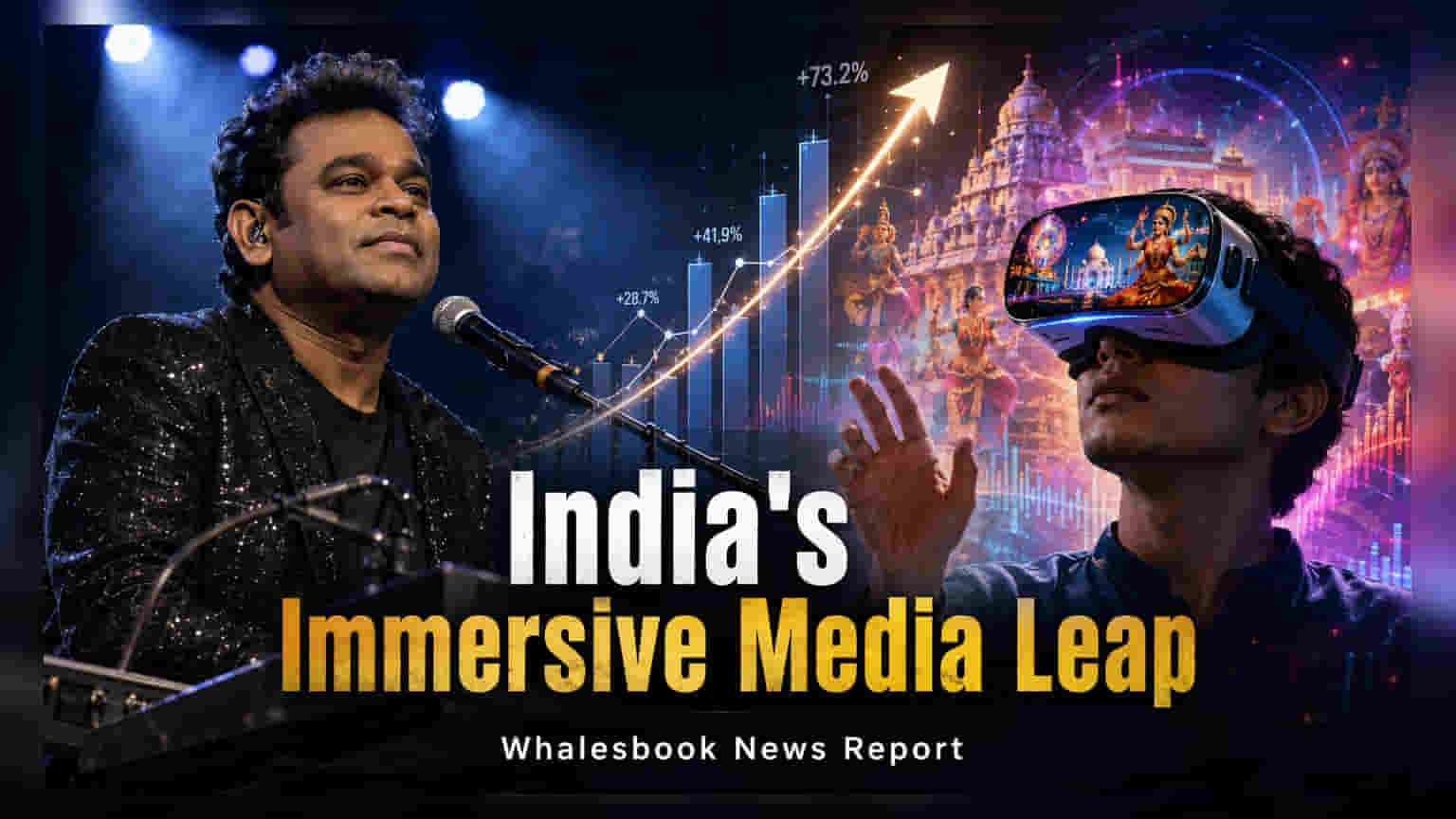
India's immersive media sector is moving beyond novelty, with creators like A.R. Rahman and production houses exploring AR and VR for narrative storytelling. While brands are adopting these tools to drive engagement, monetization remains challenging due to high hardware costs and complex legal requirements. The industry is currently favoring integration into broader ecosystems over standalone platforms.
The Indian immersive media sector—encompassing augmented reality (AR), virtual reality (VR), and spatial computing—is transitioning from a novelty-driven phase to a serious storytelling medium. High-profile projects, such as musician A.R. Rahman’s 'ARR Immersive' app for Apple Vision Pro and production house Equinox Virtual’s focus on Indian cultural narratives, signal a shift in how creators view and deploy the technology.
Brand Integration Strategy
Businesses are increasingly using these tools as engagement levers rather than standalone products. Brands such as IKEA India, Myntra, and Tanishq have integrated AR to enhance the customer shopping experience, while sports platforms are utilizing 360-degree viewing to deepen fan engagement. These companies are positioning immersive tech as a complementary layer to their core services, using it to foster community and project a forward-thinking image.
Monetization and Hardware Challenges
The financial path for immersive media in India remains complex. Industry experts point out that the high cost of VR headsets limits the potential audience, making it difficult for creators to build business models reliant solely on direct consumer payments for VR content. Instead, the focus has shifted toward integration. Successful commercial strategies currently involve adding immersive technology to existing entertainment frameworks—such as spatial concert experiences for select audiences or virtual product showrooms—rather than expecting the technology to generate market demand on its own.
Legal and Operational Risks
Beyond production costs, legal and operational complexities are emerging as significant factors. Immersive media requires more intricate licensing agreements than traditional media, covering 3D assets, software, and interactive performances. Legal experts are increasingly highlighting concerns regarding personality rights, such as the use of photorealistic avatars or synthetic voices, which require clear consent and usage boundaries. Additionally, because these experiences often involve the collection of extensive user data, companies must navigate strict compliance requirements for data privacy and content moderation. Failure to manage these risks could lead to potential accountability and liability issues, making regulatory compliance a critical monitorable for any business entering this space.
The Path Forward
For investors and industry participants, the key monitorable is how firms scale these experiences while managing the high capital requirement of VR production. The sector is moving toward a hybrid model where immersive technology supports, rather than replaces, traditional media. Future success will likely depend on whether companies can manage the high costs of development and the complex legal frameworks surrounding digital rights and data privacy.