

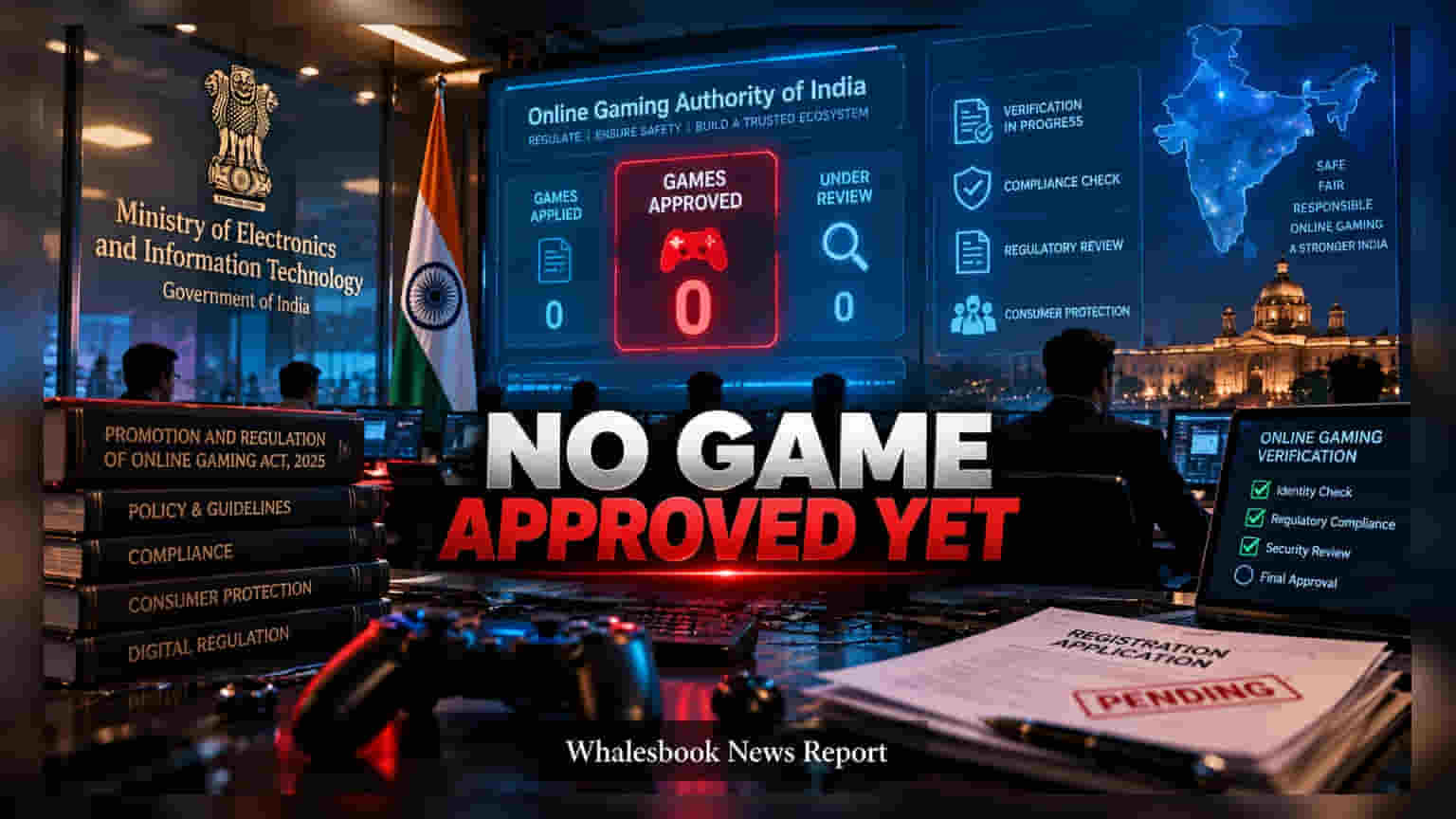
India's online gaming sector remains in a state of regulatory transition, with no games registered under the new 2025 Act as of September 2026. The Ministry of Electronics and Information Technology has received 201 complaints, highlighting the ongoing implementation challenges for the new legal framework.
The formal approval regime for India's online gaming industry is taking shape slowly, with no official registrations recorded under the current framework as of September 1, 2026. The Ministry of Electronics and Information Technology (MeitY) confirmed this status to the Central Information Commission, indicating that the Online Gaming Authority of India has yet to register a single game under the Promotion and Regulation of Online Gaming Act, 2025.
This development comes after the formal rollout of the new gaming rules in May 2026. While the Online Gaming Authority of India was established in April 2026 to oversee the sector, the absence of registered games suggests that the industry is still navigating the initial implementation phase of the new legislation. The shift represents a major change from previous years, as the government moves away from the older Information Technology (Intermediary Guidelines and Digital Media Ethics Code) Rules of 2021, which officials have clarified are no longer enforceable for this sector.
For investors and companies in the gaming space, this period of transition introduces a new regulatory environment. The primary focus for the industry is now the compliance requirements set by the new Act. The government also reported receiving 201 complaints related to online gaming by September 2026. While the nature of these complaints was not detailed, the volume of feedback received by the ministry underscores the high level of regulatory scrutiny currently applied to the sector.
The regulatory landscape is critical for the long-term viability of gaming businesses in India. Companies are operating under a framework that aims to bring structure to the industry, but the slow pace of registration implies that the licensing process remains rigorous. As the regulatory architecture continues to settle, investors may monitor whether the government provides clearer guidelines on the approval timeline and how platforms handle the ongoing flow of consumer complaints.
The next phase for the industry will depend on how quickly gaming companies can align their operations with the new authority's requirements. Future updates from the Online Gaming Authority of India regarding the registration process and enforcement actions will be important indicators of how the new regulatory framework impacts market access and operational costs for gaming platforms.