

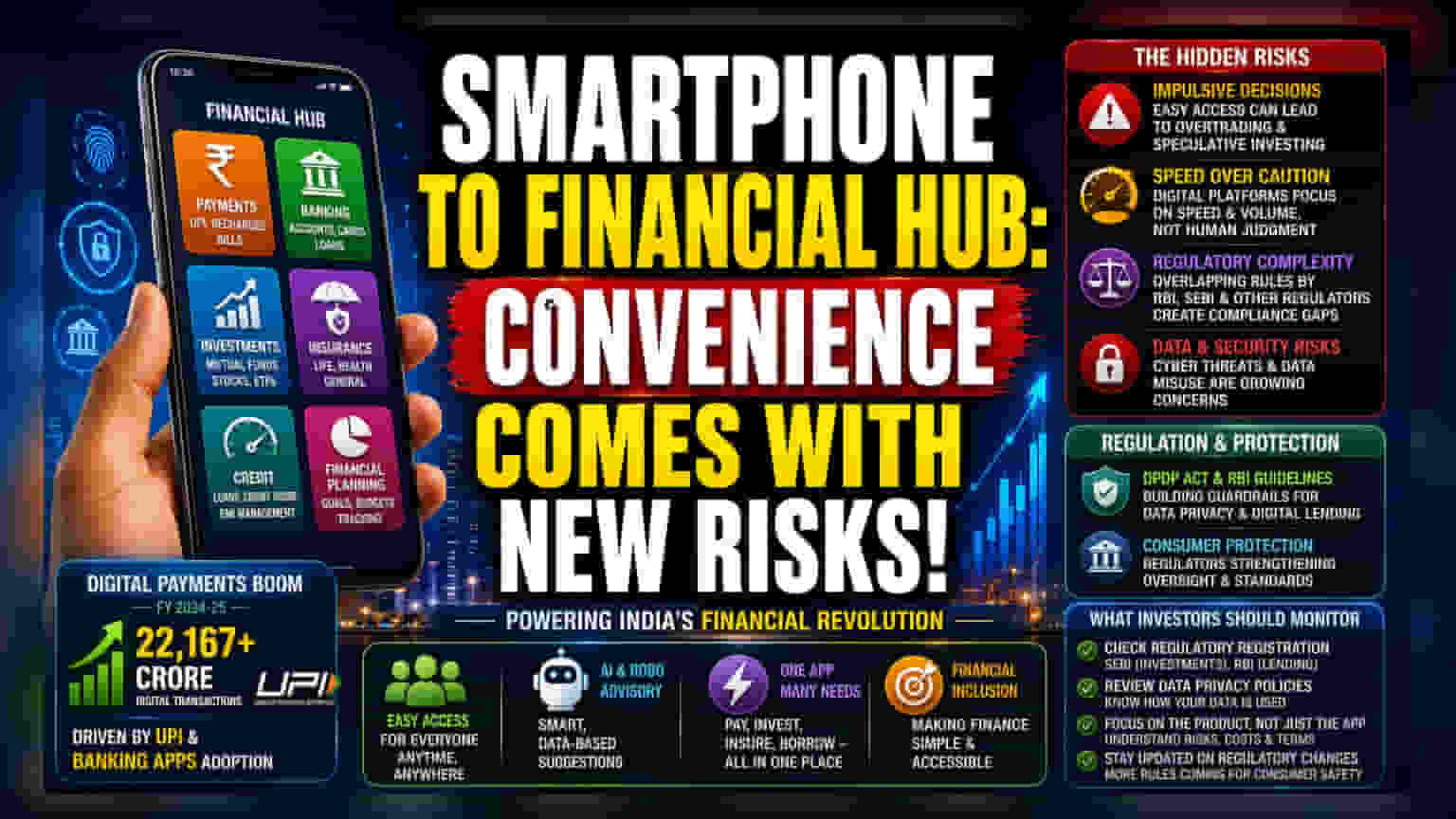
Smartphones have become the primary financial hub for millions of Indians, shifting control from traditional advisors to self-managed digital apps. While this integration streamlines banking and investing, it also brings new risks, including impulsive decision-making and data security concerns that users must navigate.
What Happened
The way Indians manage money has undergone a rapid change, with smartphones evolving from simple communication devices into comprehensive financial hubs. For millions, the traditional model of seeking guidance from family, bank managers, or human financial advisors is being replaced by digital interfaces. Users are now seamlessly integrating payments, credit, and investment planning into a single screen experience. This shift is mirrored by the massive growth in digital transactions; in the 2024-25 financial year, India saw over 22,167 crore digital payment transactions, driven by the widespread adoption of UPI and banking applications.
The Shift to Digital-First Advice
Financial institutions and fintech startups are aggressively pushing "super apps" that allow customers to bank, invest in mutual funds, manage insurance, and apply for credit within the same platform. This convergence is designed to reduce the friction of financial planning. Instead of separate processes for different needs, the smartphone acts as an always-on advisor. Algorithms and robo-advisory tools now provide automated, data-based suggestions based on a user's risk profile and spending habits. This move makes financial products accessible to those who previously found the system intimidating or too complex to navigate.
The Hidden Risks for Investors
While this digital convenience is a benefit, it introduces new challenges that investors must recognize. The ease of access can lead to impulsive financial behavior, such as frequent trading or speculative investing, often triggered by digital notifications. Unlike traditional advisory, where a human adds a layer of caution, digital platforms operate on speed and volume. Furthermore, the regulatory landscape is still catching up. Multiple regulators, including the Reserve Bank of India (RBI) and the Securities and Exchange Board of India (SEBI), oversee different parts of this ecosystem. When a single app offers both lending and investment advice, it creates complex compliance requirements, and users may not always know if their data and funds are protected by the highest safety standards.
Why Data and Regulation Matter
As users migrate their entire financial life to smartphone apps, the risk of cyber threats and data misuse becomes a significant monitorable. The Digital Personal Data Protection Act (DPDP) and RBI's guidelines on digital lending reflect the government's attempt to build guardrails around this sector. Investors using these platforms should be aware that while the technology makes life easier, it does not remove the need for personal financial literacy. Opaque algorithms and complex pricing models on some platforms can sometimes mask the true cost of an investment or loan. Trusting an app solely for its user interface without verifying its regulatory standing or the underlying product risk can be a pitfall.
What Investors Should Monitor
For those relying on smartphone apps for their financial journey, the key monitorable is the platform’s transparency and regulatory compliance. It is important to check if the app is registered with the relevant financial regulator (like SEBI for investment advice or RBI for lending) and to review the data privacy policies. As regulators continue to frame policies to manage the growth of fintech, expect more updates on consumer protection and cyber-resilience. The focus for a smart investor should remain on understanding the investment product itself, rather than just the convenience of the platform delivering it.