 Whalesbook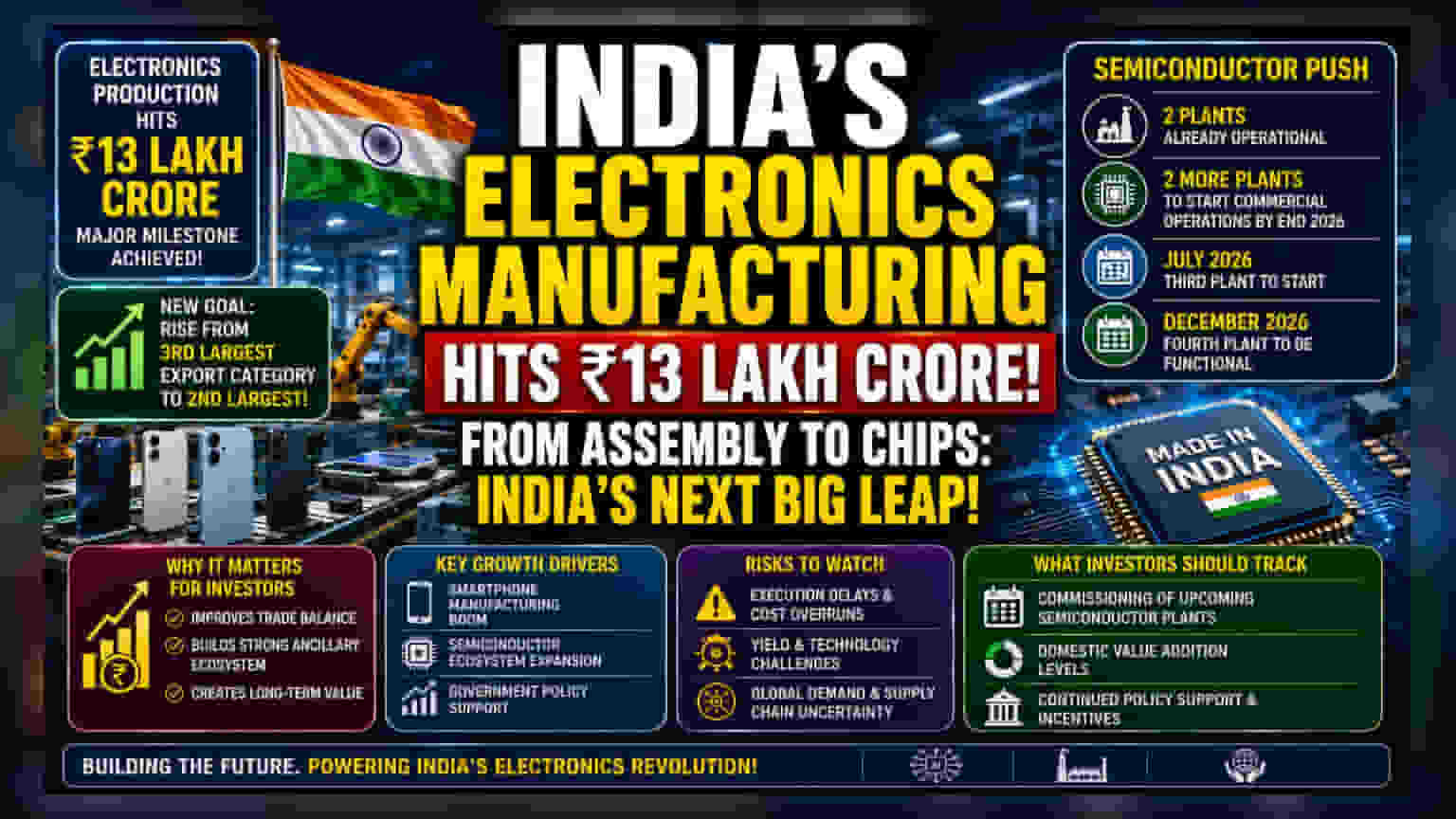


India’s electronics production has surged to ₹13 lakh crore, with the government aiming for the sector to become the country's second-largest export category. Supported by smartphone manufacturing and the upcoming launch of two more semiconductor plants, the sector is seeing significant momentum. Investors may monitor how this shift in manufacturing capability influences long-term industrial growth and local value addition.
What Happened
India has reported a significant milestone in its electronics manufacturing sector, with total production reaching approximately ₹13 lakh crore. During an event in Pune, Union Electronics and IT Minister Ashwini Vaishnaw outlined a new goal for the industry: to rise from its current position as the third-largest export category to become the second-largest.
The sector’s growth is currently being driven by large-scale smartphone assembly and manufacturing. The government is now placing a renewed focus on expanding the domestic semiconductor ecosystem, which is considered vital for deepening the local manufacturing base.
The Semiconductor Expansion
Beyond smartphone assembly, the government confirmed that the semiconductor manufacturing push is advancing. Two semiconductor facilities are already operational, and two additional plants are scheduled to begin commercial operations before the end of 2026. According to the announcement, one of these new facilities is expected to start in July, while the fourth plant should be functional by December. This is part of a broader strategy to reduce reliance on imported chips, which are essential components in electronics, automobiles, and industrial machinery.
Why This Matters For Investors
For investors, this shift represents a move toward structural changes in the Indian manufacturing sector. Moving from importing finished goods to local manufacturing generally helps in improving the trade balance and creates a larger base of ancillary industries. The push for semiconductor fabrication is particularly capital-intensive. Investors typically monitor these capital-heavy projects closely, as they require significant investment upfront and take time to become profitable.
The Execution and Demand Risk
The electronics and semiconductor sector faces specific risks that investors should be aware of. Setting up semiconductor plants, or 'fabs,' is technically complex and requires high precision. Projects of this scale can face execution delays, cost increases, or challenges in achieving stable production levels, which are commonly known as yield issues.
Additionally, the sector is heavily dependent on global demand for consumer electronics like smartphones. If global demand slows down or if competitors from other countries increase production capacity, it could put pressure on the utilization of these new Indian facilities. Furthermore, while the current trend is positive, the sector remains sensitive to global supply chain disruptions and fluctuations in the price of raw materials.
What Investors Should Track
As the industry grows, there are several factors for investors to watch. First, the actual commissioning dates of the upcoming semiconductor plants will be a key signal of execution capability. Second, investors may look for data on 'domestic value addition.' This refers to how much of the final product is actually made in India versus how much is just assembled from imported parts. A higher level of domestic value addition usually implies a stronger and more sustainable business model. Finally, tracking the government's continued policy support, such as subsidies or production-linked incentives, remains important, as these are significant factors influencing the profitability and viability of such large-scale manufacturing projects.