

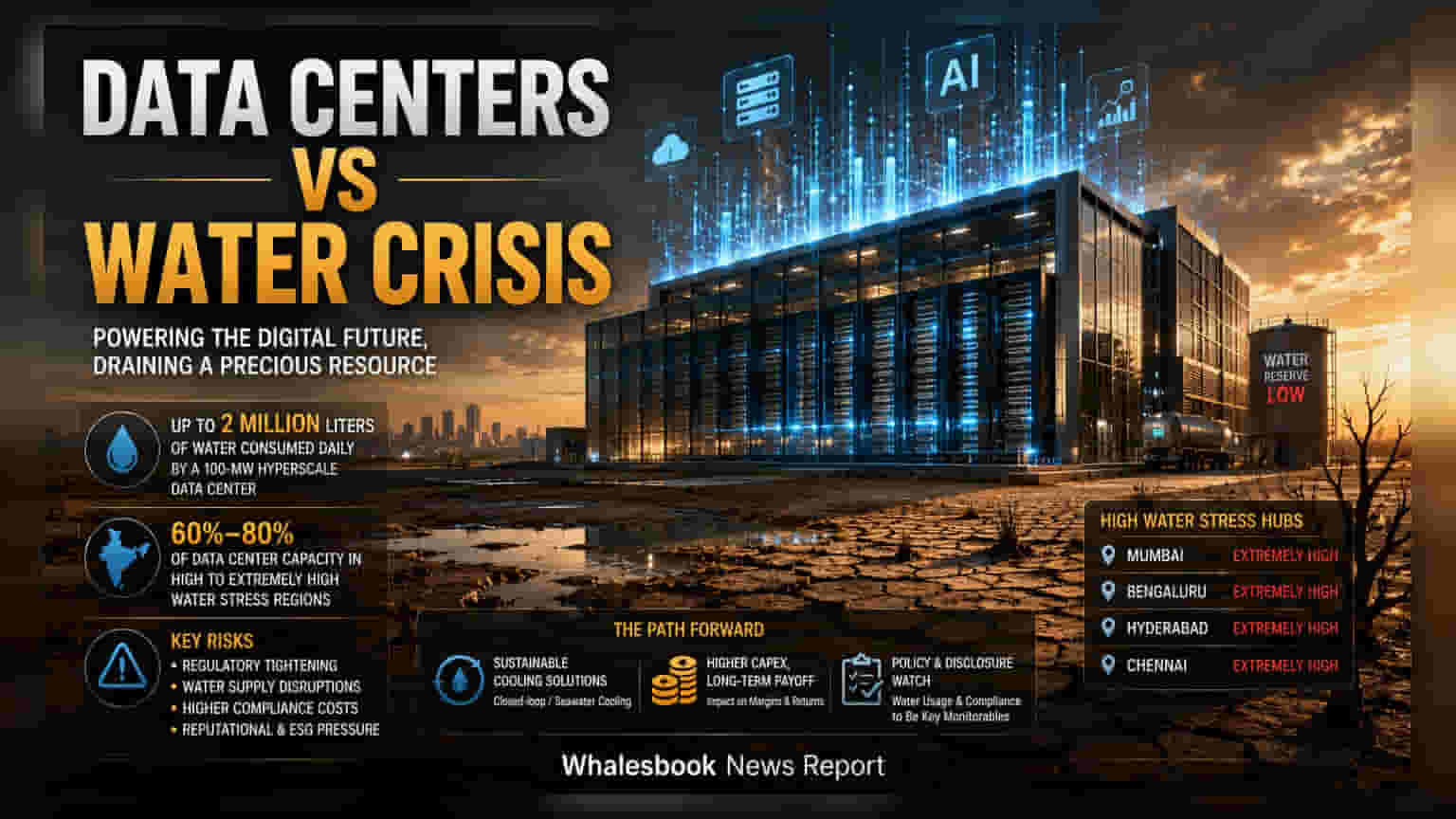
India’s rapid data center expansion, crucial for the AI and digital push, is meeting rising water scarcity concerns. With most facilities located in water-stressed regions, investors may monitor potential regulatory shifts, rising operational costs, and the necessity for investments in advanced cooling technology.
India’s ambition to establish itself as a global digital hub relies on the rapid development of large-scale data centers. As companies scale their cloud and artificial intelligence infrastructure, these facilities are becoming essential to the nation's economic framework. However, a significant operational challenge is emerging: the massive water consumption required to keep servers cool, which is increasingly colliding with water scarcity in India's major industrial corridors.
Data centers utilize evaporative cooling systems, which consume vast amounts of water to maintain stable server temperatures. Research indicates that a single 100-megawatt hyperscale data center can consume up to 2 million liters of water daily. This resource demand creates direct competition with agricultural and domestic needs, particularly in regions already struggling with low water tables. Data indicates that approximately 60% to 80% of India’s current and planned data center capacity is situated in regions classified as having high to extremely high water stress, including major hubs like Mumbai, Bengaluru, Hyderabad, and Chennai.
Currently, the regulatory landscape for data centers is relatively flexible. These facilities are often categorized as general building or township projects for environmental clearance purposes, which avoids the more stringent oversight typically applied to heavy industrial infrastructure. This has allowed for rapid expansion, but industry analysts suggest that this status may change as policymakers look to address the broader impact on local resources.
For major players in the sector, including conglomerates like Reliance Industries and Adani (via AdaniConneX), along with global technology giants, this situation presents a multi-layered risk profile. The primary investor concern is the potential for future regulatory tightening. If the government mandates stricter water consumption limits or requires separate environmental clearances for data center sites, operators could face increased compliance costs and project delays. Furthermore, reliance on water-intensive cooling makes these facilities vulnerable to local supply disruptions in areas where water security is fragile, which could impact the 24/7 uptime required for data services.
To mitigate these issues, the industry may need to shift toward more sustainable cooling solutions, such as closed-loop systems or seawater cooling technologies. While these alternatives reduce the reliance on freshwater, they typically require significant capital spending. This raises the question of how these costs will affect profit margins and long-term return ratios for infrastructure developers as they balance expansion plans with environmental requirements.
Investors may monitor for updates on national policy, specifically any moves toward mandatory water usage disclosures or updated environmental clearance norms for the sector. Tracking how companies communicate their water management strategies in future annual reports or investor presentations will also be important for gauging how they are positioning themselves against these long-term operational and reputational risks.