

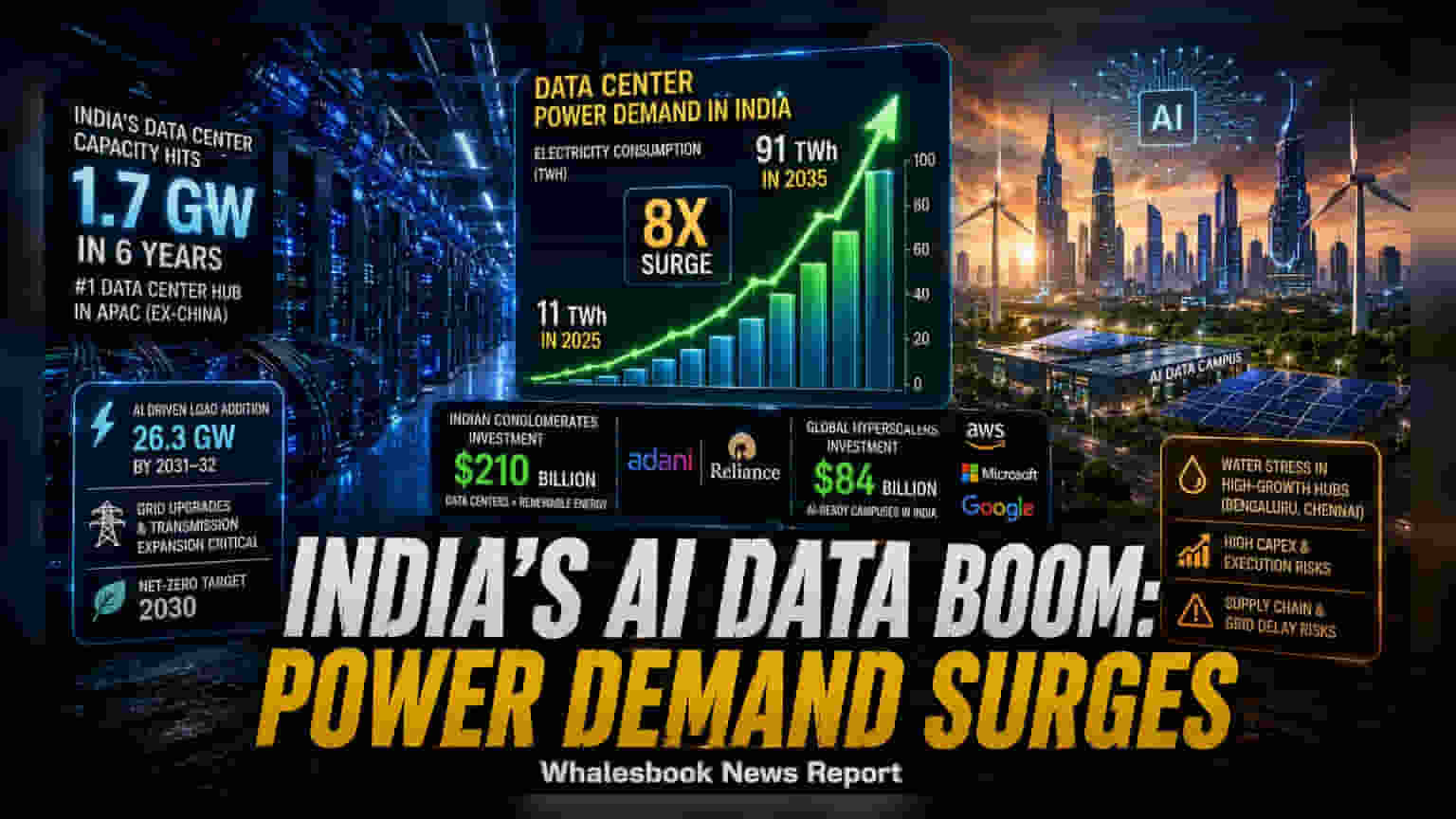
India's live data center capacity has reached 1.7GW, with an 8x surge in electricity demand projected by 2035. Massive investments from conglomerates like Adani and Reliance, alongside global hyperscalers, are driving this expansion, shifting focus toward power infrastructure and renewable energy integration.
India’s data center sector has experienced rapid expansion, with live IT capacity reaching 1.7 gigawatts (GW) over the past six years. This growth marks India as the leading data center hub in the Asia-Pacific region, excluding China. Looking ahead, this momentum is expected to continue, driven largely by the massive adoption of artificial intelligence (AI) and cloud computing services.
The infrastructure required to support this digital growth is significant. According to projections by BloombergNEF, India's data center electricity consumption is forecast to rise from an estimated 11 terawatt-hours (TWh) in 2025 to approximately 91 TWh by 2035. This represents an eightfold increase, placing substantial pressure on the country's power infrastructure.
Investment Pipeline and Key Players
The scale of investment in the sector is vast. Indian conglomerates Adani and Reliance have committed a combined $210 billion toward data center and renewable energy projects. Meanwhile, global hyperscalers, including Amazon, Microsoft, and Google, have pledged around $84 billion to develop AI-ready campuses in India. These investments highlight confidence in India's digital ecosystem, with approximately 95% of the capital targeting hyperscale AI facilities.
While the capital influx is high, the ability of the power grid to handle this demand is a primary focus. The Ministry of Power has estimated that AI-driven data centers could add 26.3 GW of load to the power grid by the 2031–32 period. This requires significant upgrades to transmission and distribution networks to ensure reliable supply.
Infrastructure and Environmental Risks
For investors monitoring the sector, the focus extends beyond simple server capacity. The operational viability of these centers depends heavily on access to sustainable and reliable power. Integrating large-scale renewable energy is now a priority, driven by net-zero emission targets set for 2030. However, this transition carries execution risks, including the potential for delays in grid interconnection and the high capital expenditure required for green energy infrastructure.
Additionally, geographical concentration poses challenges. While Maharashtra accounts for 55% of the existing capacity, the sector is diversifying into states like Telangana, Karnataka, Tamil Nadu, Gujarat, Andhra Pradesh, and Uttar Pradesh. Resource management remains a critical concern, particularly water availability in high-growth hubs like Bengaluru and Chennai, where cooling systems for data centers could strain local supplies.
What Investors Should Monitor
Moving forward, the primary monitorables for the sector involve infrastructure readiness. Investors may track the progress of grid upgrades, the successful commissioning of large-scale renewable energy projects tied to these facilities, and the regulatory environment regarding resource usage. Delays in infrastructure, supply chain constraints for essential hardware, and the ability of companies to manage high capital intensity will be key factors determining the long-term profitability of these massive data center projects.