 Whalesbook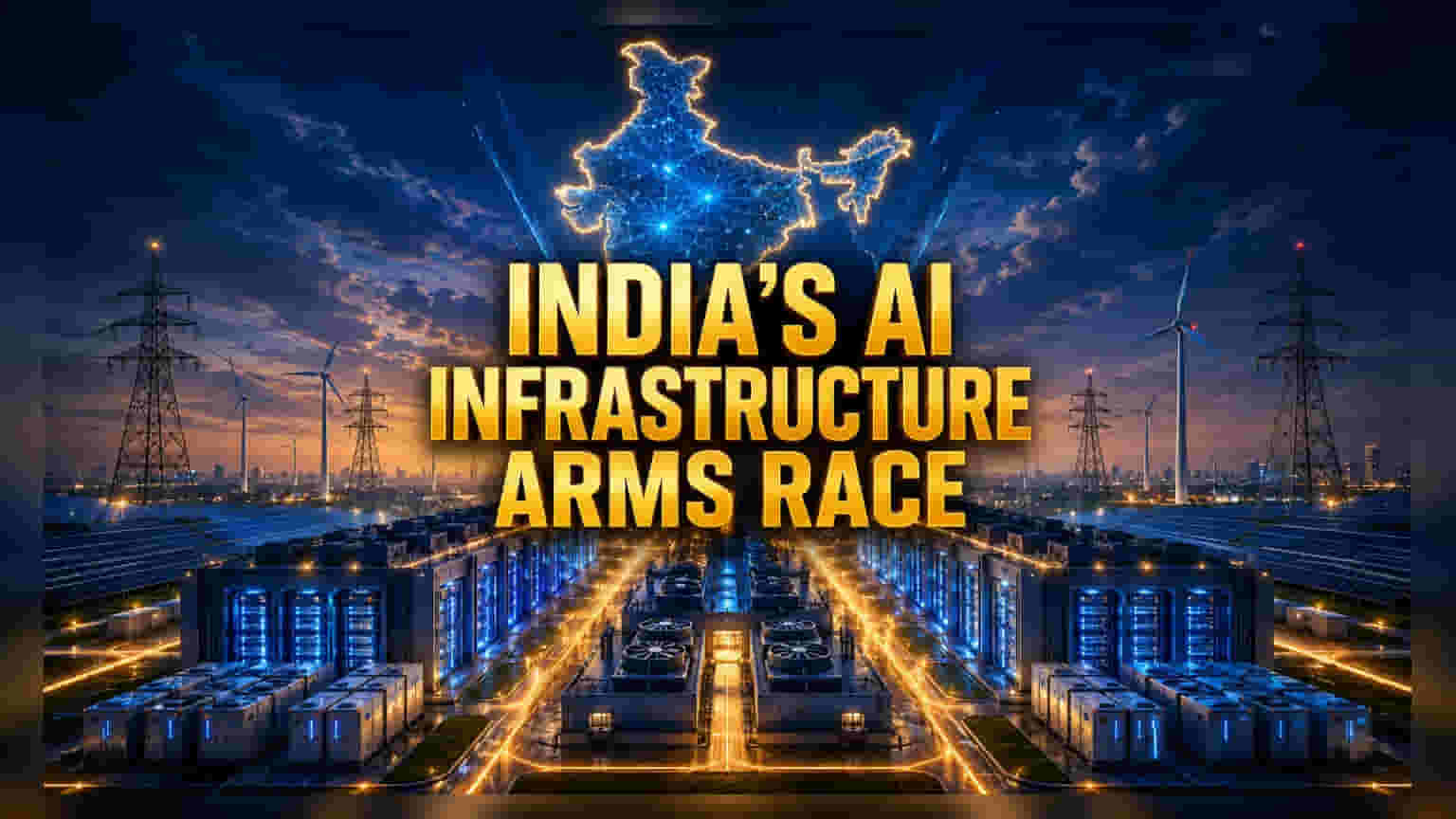


The Infrastructure Transition
India's digital transformation has shifted from simple cloud hosting to a massive, energy-intensive buildout of AI-ready infrastructure. With live IT capacity expanding from roughly 375 MW in 2020 to over 2.4 GW by the end of 2025, the market is no longer a localized real estate play. It has matured into a sophisticated infrastructure asset class where capital deployment is directly correlated to captive green energy generation. This shift is essential, as modern AI racks now demand 50–150 kW—a tenfold increase in density compared to legacy enterprise servers—necessitating a move away from standard grid reliance toward integrated, self-sufficient energy campuses.
The Corporate Arms Race
Market leadership is currently being contested by deep-pocketed conglomerates. Adani Enterprises, through its AdaniConneX platform, has committed to a $100 billion investment program by 2035, aiming to scale from its current 2 GW footprint to a 5 GW target. Complementing this, Reliance Industries has initiated a ₹10 lakh crore, seven-year capital deployment strategy. Reliance’s focus on its Jamnagar complex, which leverages 150 billion units of annual electricity potential from its Kutch land bank, underscores a strategy to monetize its green energy transition through high-performance compute infrastructure. Unlike traditional colocation providers, these conglomerates are building vertically integrated moats, controlling everything from renewable power generation to the final compute delivery.
The Forensic Bear Case
Despite the rapid growth, the sector faces profound structural weaknesses. The primary risk is the "Power-Water Paradox": data centers operate on a 24/7 base load, yet they are increasingly forced to compete with urban and industrial centers for scarce, high-quality power. While national installed capacity exceeds 530 GW, the bottleneck is not supply but distribution-node reliability. Furthermore, there is no unified national data center policy, leaving projects vulnerable to state-level regulatory variances and permitting delays. Environmental scrutiny is also intensifying; facilities in water-stressed regions like Visakhapatnam face potential litigation or regulatory hurdles regarding their massive liquid cooling requirements. Investors should also note the risk of technology obsolescence, as the rapid evolution of GPU efficiency could render current infrastructure designs inefficient within a single market cycle.
The Path Forward
Brokerage consensus suggests that the next phase of value creation will move from the data centers themselves to the companies controlling the energy and cooling ecosystem. As AI workload demand continues to drive capacity utilization above 90%, the focus will likely shift to operational efficiency and PUE (Power Usage Effectiveness) metrics. Reliance and Adani appear well-positioned, but their success hinges on the execution of multi-year projects under evolving environmental mandates. The sector remains in a high-capex, high-barrier-to-entry phase, favoring players with pre-existing, large-scale land banks and integrated energy value chains.