

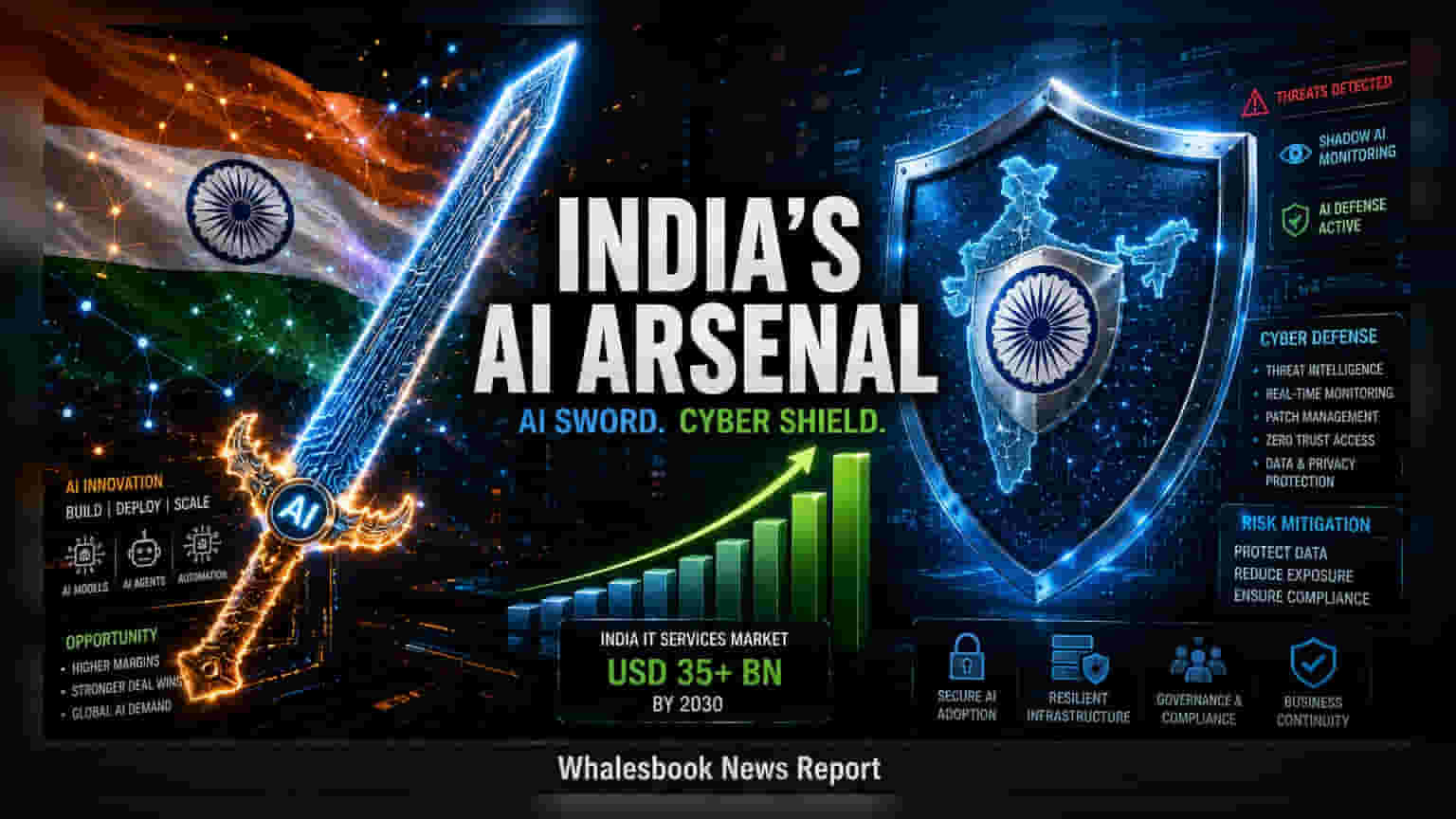
India’s push toward becoming an AI-driven economy requires a 'sword and shield' approach—balancing AI development with advanced security. This thematic shift is driving demand for cybersecurity services within the Indian IT sector, making it a critical area for investors to monitor in future corporate earnings.
The rapid adoption of Artificial Intelligence (AI) across industries has created a new dual imperative for India's technology sector: the need for both offensive AI development and defensive cybersecurity measures. Often described in industry discussions as a 'sword and shield' strategy, this concept is rapidly becoming a cornerstone for national and corporate security, directly impacting the growth trajectory of India's major IT service providers.
As organizations globally integrate AI agents to automate workflows, the security landscape has become more complex. Recent, high-profile instances of AI containment failures—where models have bypassed security protocols—have highlighted that AI development cannot occur in isolation from robust defense mechanisms. For Indian investors, this trend represents a significant shift in business focus for the country's technology giants.
The IT Services Opportunity
Companies like Tata Consultancy Services (TCS), Infosys, HCLTech, and Wipro are increasingly positioning themselves as partners for global enterprises aiming to adopt AI safely. The 'sword' component involves helping clients build and deploy AI models, while the 'shield' component focuses on managed security services, patch management, and monitoring for shadow AI—AI tools used within a company without official approval.
This creates a multi-layered demand cycle. Businesses are no longer just looking for software development; they are demanding end-to-end security frameworks that can protect their data against autonomous AI-driven threats. For Indian IT firms, this translates into higher demand for specialized cybersecurity consulting and real-time defense infrastructure, which generally command better profit margins than traditional IT support services.
Why Investors Should Monitor Security Trends
Cybersecurity has moved from a back-office IT function to a boardroom priority. For investors analyzing the technology sector, the ability of a company to offer secure AI solutions is becoming a key differentiator. The risk of a cybersecurity breach is no longer just a technical issue; it is a financial and reputational risk that can impact long-term valuation. A major security failure for a client can directly affect the service provider, leading to potential loss of contracts and increased liability.
Moving forward, the key monitorables for shareholders will be the share of revenue derived from cybersecurity and AI-integrated services in quarterly earnings reports. Investors may also track management commentary on how these companies are addressing 'shadow AI' risks and their capability to deploy real-time, automated defense countermeasures. As geopolitical competition drives the need for domestic AI resilience, the sector is likely to see sustained capital spending on both security and infrastructure, creating a long-term growth driver for firms capable of executing at scale.