 Whalesbook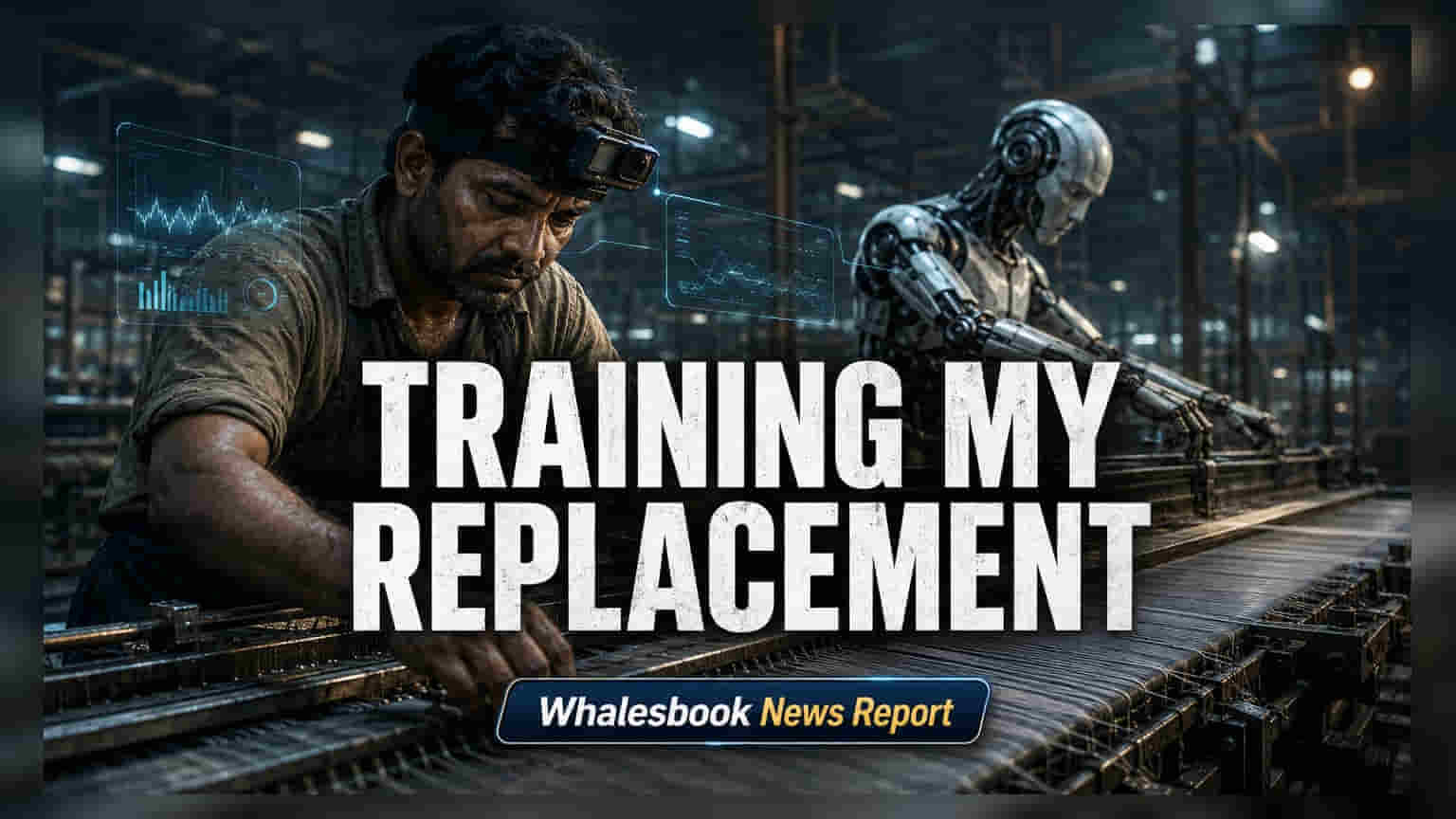


The Paradox of Training Automation
Workers in India's textile industry are actively participating in their own potential redundancy, meticulously recording their movements and skills to train artificial intelligence and robotic systems. This practice, often referred to as "egocentric data" collection, involves individuals wearing head-mounted cameras to capture detailed first-person perspectives of their tasks. The data is then used to imbue machines with the nuanced physical intelligence required for adaptable automation, moving beyond simple repetitive actions. This first-person perspective, while critical for AI development, evokes significant unease among the workforce, with one technician describing the process as "working in your own grave, while you make your own casket."
Demand for Embodied Intelligence
The development of sophisticated, human-like AI necessitates enormous datasets, potentially ranging from 100 million to over a billion hours of recorded human activity. While industrial robots have long been capable of routine tasks, the next generation of AI requires the ability to navigate dynamic and unpredictable environments. Capturing this "physical intelligence" through human behavioral data is paramount. However, the collection process frequently reveals a power imbalance, as workers often lack transparency regarding the ultimate use and destination of their recorded expertise. This raises ethical questions about the commodification of human labor and skills in the pursuit of advanced automation.
A Global Network of Data Contributors
Companies like Objectways, a US-based entity specializing in AI data solutions, are at the forefront of this data acquisition. They are contracting individuals across India and other nations to record a wide spectrum of activities, from intricate factory floor operations to mundane household chores such as preparing food and folding laundry. India has emerged as a primary source for this specialized data, with workers compensated between ₹250 to ₹350 per hour for their contributions, often facilitated through dedicated mobile applications for home-based recordings. The scale of demand is immense, with one firm, Humyn Labs, committing $20 million to fund global data collection initiatives.
Valid Concerns and Counter-Narratives
Executives involved in this sector acknowledge the legitimacy of workers' anxieties regarding job displacement. However, a counter-narrative suggests that robots could assume hazardous or undesirable roles, thereby creating opportunities for humans to transition into more fulfilling or less perilous jobs. Despite this optimistic outlook, the immediate reality for many workers is one of profound uncertainty, with the looming prospect that their recorded actions will be used to develop systems that will eventually supplant them. The collection of such intimate data raises the unsettling possibility that "The machine will eventually know who I am."