 Whalesbook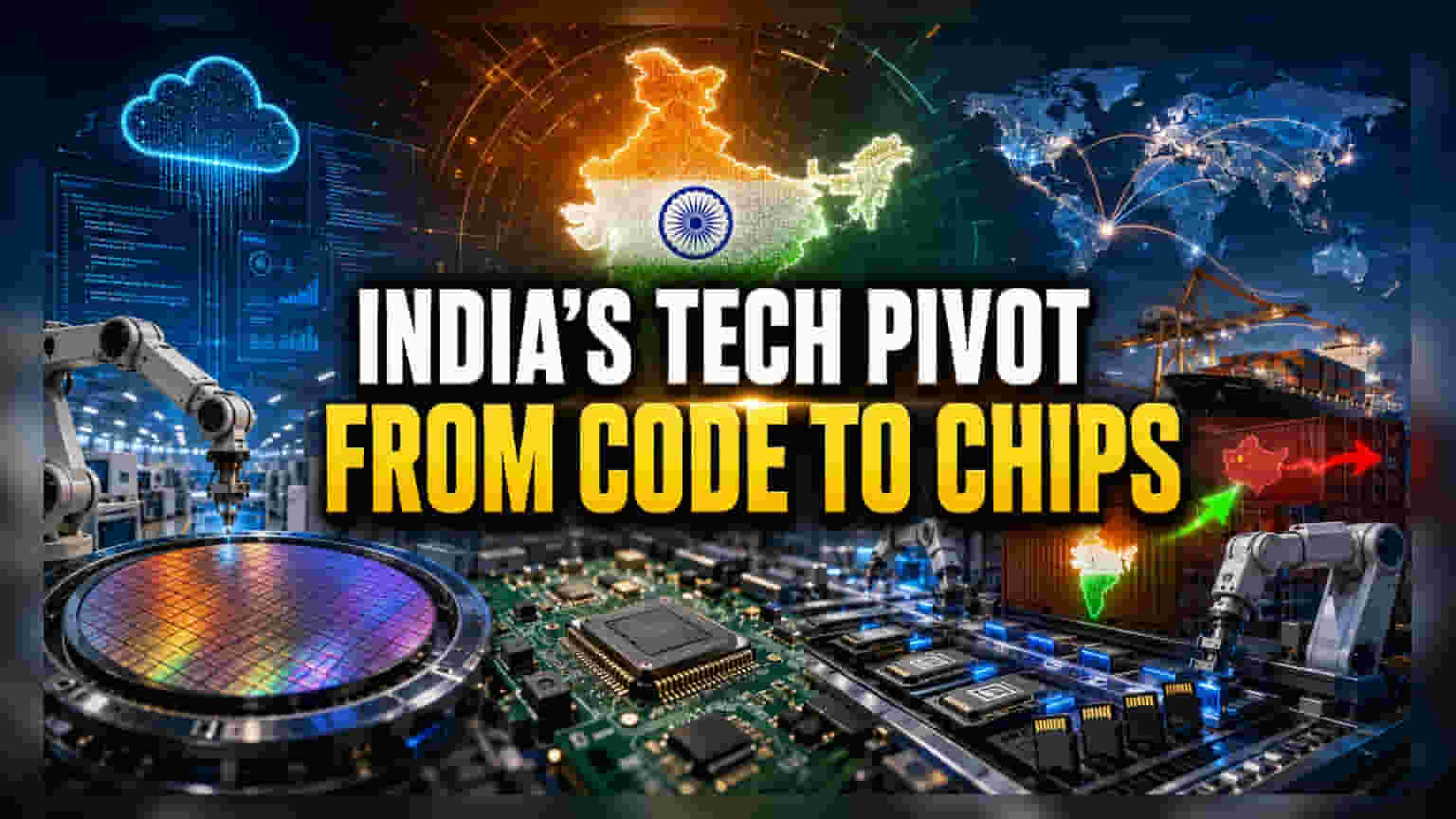


The Manufacturing Pivot
COMPUTEX 2026 served as a focal point for India’s recalibrated industrial strategy. For years, the country’s global tech identity was anchored in code and back-office services. However, the presence of manufacturers like Sahasra Electronics alongside software giant Zoho indicates a broadening of this identity. Sahasra’s focus on microSD solutions and international customer acquisition—targeting China, the US, and Europe—mirrors a wider shift toward securing a foothold in global electronics supply chains. This evolution is supported by increased FDI, with computer software and hardware attracting record inflows of $13.9 billion in FY 2025–26.
The Software-Hardware Convergence
Zoho’s expansion in Taiwan demonstrates the growing credibility of Indian business software in mature, hardware-centric markets. By positioning cloud-based services to meet the regional digital adoption needs of Taiwanese firms, Zoho is proving that Indian enterprises can compete on product quality rather than just labor cost arbitrage. Unlike Sahasra, which faces the arduous task of scaling physical infrastructure against established global peers, Zoho utilizes its status as a profitable, private entity to maintain long-term R&D autonomy, distancing itself from the volatile funding cycles that often plague venture-backed software rivals.
Structural Constraints and Risks
Despite the optimistic atmosphere in Taipei, the path toward becoming a semiconductor and electronics powerhouse remains fraught with structural hurdles. India’s electronics manufacturing ecosystem, while growing rapidly with over 300 production units, still lags in foundational infrastructure and process discipline compared to the decades-old ecosystems in Taiwan and South Korea. Recent data highlights that investors chasing AI-driven semiconductor gains have predominantly favored the robust, proven fabrication networks of East Asia, where market capitalization in the sector continues to outpace Indian counterparts. Furthermore, contractual bottlenecks and regulatory complexity remain significant risks that could impede the effectiveness of ambitious fabrication projects, such as those currently under development in Gujarat.
Future Trajectory
The integration of Indian firms into the global AI and hardware supply chain is increasingly tied to the 'China+1' supply chain realignment. With the government’s Semiconductor Mission 2.0 and sustained policy incentives, the focus has shifted from mere consumption to building a consequential node in the semiconductor value chain. Whether India can successfully transition from being a design-only economy to a manufacturing hub will depend on its ability to move beyond high-level MOUs and deliver operational results that meet the rigorous standards of global technology stakeholders.