

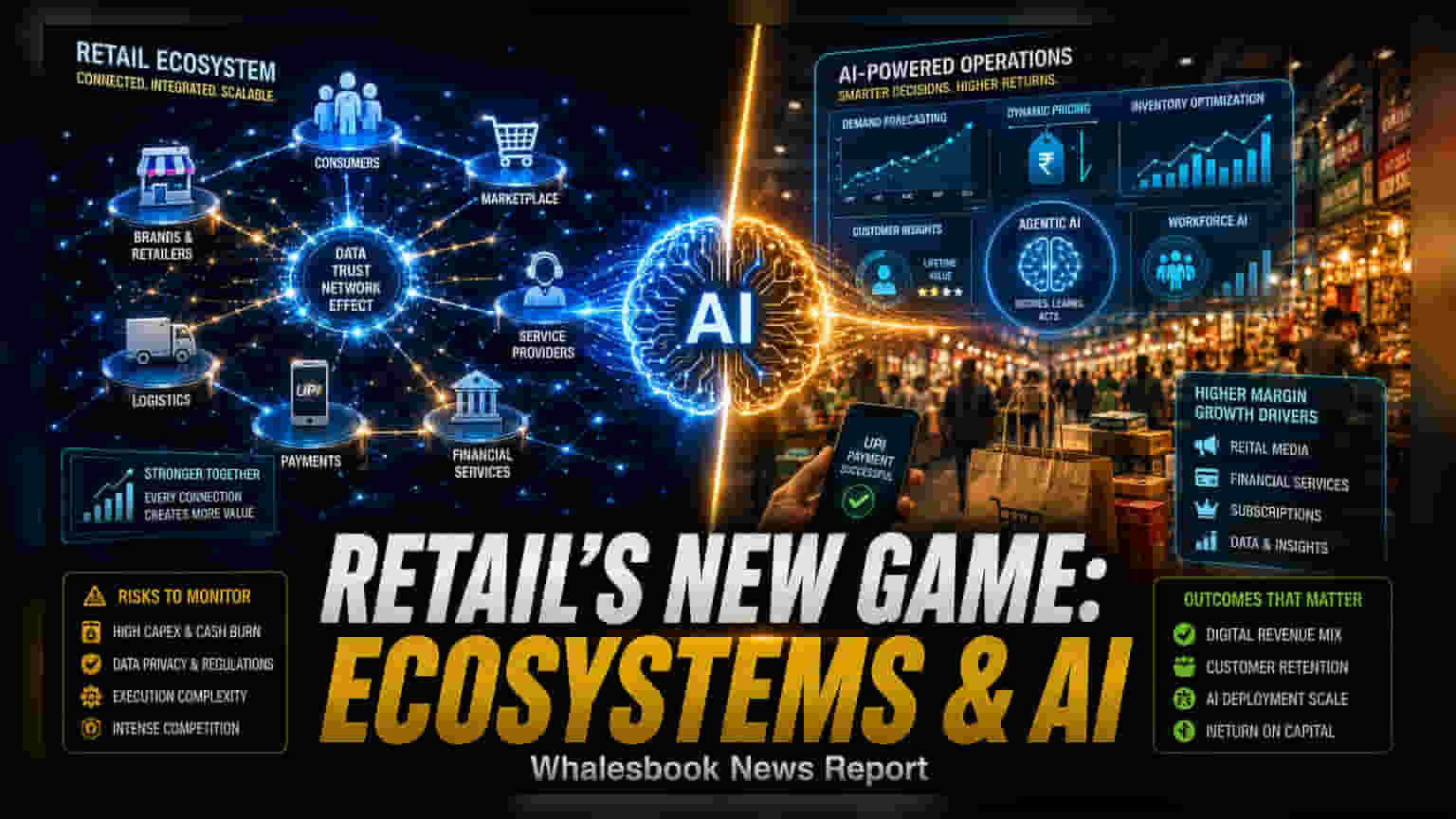
The Indian retail sector is moving from traditional store-based sales to complex, tech-driven ecosystem models. For investors, this represents a fundamental shift in how to evaluate company performance—prioritizing digital engagement, AI integration, and diversified service revenue over simple store counts and transaction volume. Understanding these metrics is now essential for long-term analysis.
The landscape of Indian retail is undergoing a significant transformation. Historically, investors evaluated retail companies based on simple metrics such as same-store sales, physical store expansion, and inventory turnover. However, the business model is shifting toward 'ecosystems,' where value is created not just by selling a product, but by orchestrating an integrated platform of brands, consumers, third-party sellers, and service providers.
The Shift to Ecosystem Business Models
Traditional retail focused on linear value chains—sourcing, distributing, and selling goods. Today, major players are building digital ecosystems that leverage India's advanced digital public infrastructure, such as UPI and Aadhaar. These companies are transforming into platforms where commerce, logistics, payments, and financial services converge. When a retailer integrates its loyalty program with its payment gateway, logistics partner, and third-party marketplace, it creates a self-sustaining cycle where each new participant increases the value of the network. This network effect is why companies are investing heavily in 'Super-App' strategies.
AI as the Core Operating System
For many retailers, artificial intelligence has moved beyond basic recommendation engines. Modern platforms now use AI across their entire supply chain, from predictive inventory stocking to dynamic pricing and workforce management. The industry is moving toward 'Agentic AI,' where systems make autonomous decisions to improve service efficiency. For investors, this means the quality of a company’s technology stack is becoming as important as its physical footprint. High-performing ecosystems are those that effectively use data to personalize experiences, which can lead to higher customer retention.
Diversification and Margin Profiles
One of the most important aspects of this transition is the diversification of revenue. Retailers are increasingly generating income from 'adjacent' sources such as retail media (advertising on their platforms), embedded financial services (lending, insurance), and subscription fees. These revenue streams often carry higher profit margins than the core business of selling physical merchandise. For instance, a platform that earns a commission from advertising or lending services is effectively leveraging its existing customer traffic, which can improve overall return on capital.
Risks for Investors to Monitor
While this shift offers growth, it introduces new risks that were less relevant in traditional retail. First, building these platforms requires massive upfront capital expenditure on technology and data infrastructure, which can pressure short-term cash flow. Second, as these companies collect vast amounts of consumer data, they face increasing regulatory scrutiny regarding privacy and data security. Third, there is the risk of execution; managing a complex ecosystem with multiple stakeholders is significantly harder than managing a retail store. If a company struggles to integrate these diverse services, it can lead to operational bottlenecks and higher costs without the promised revenue benefits.
Investors should look beyond revenue growth in quarterly filings. Key monitorables include the contribution of digital and non-merchandise revenue to the bottom line, the cost of customer acquisition, the degree of AI deployment, and the company's ability to maintain high data privacy standards while scaling its ecosystem. Success will likely depend on whether retailers can build enough trust to keep consumers, brands, and partners within their orbit, rather than just chasing one-off transactions.