 Whalesbook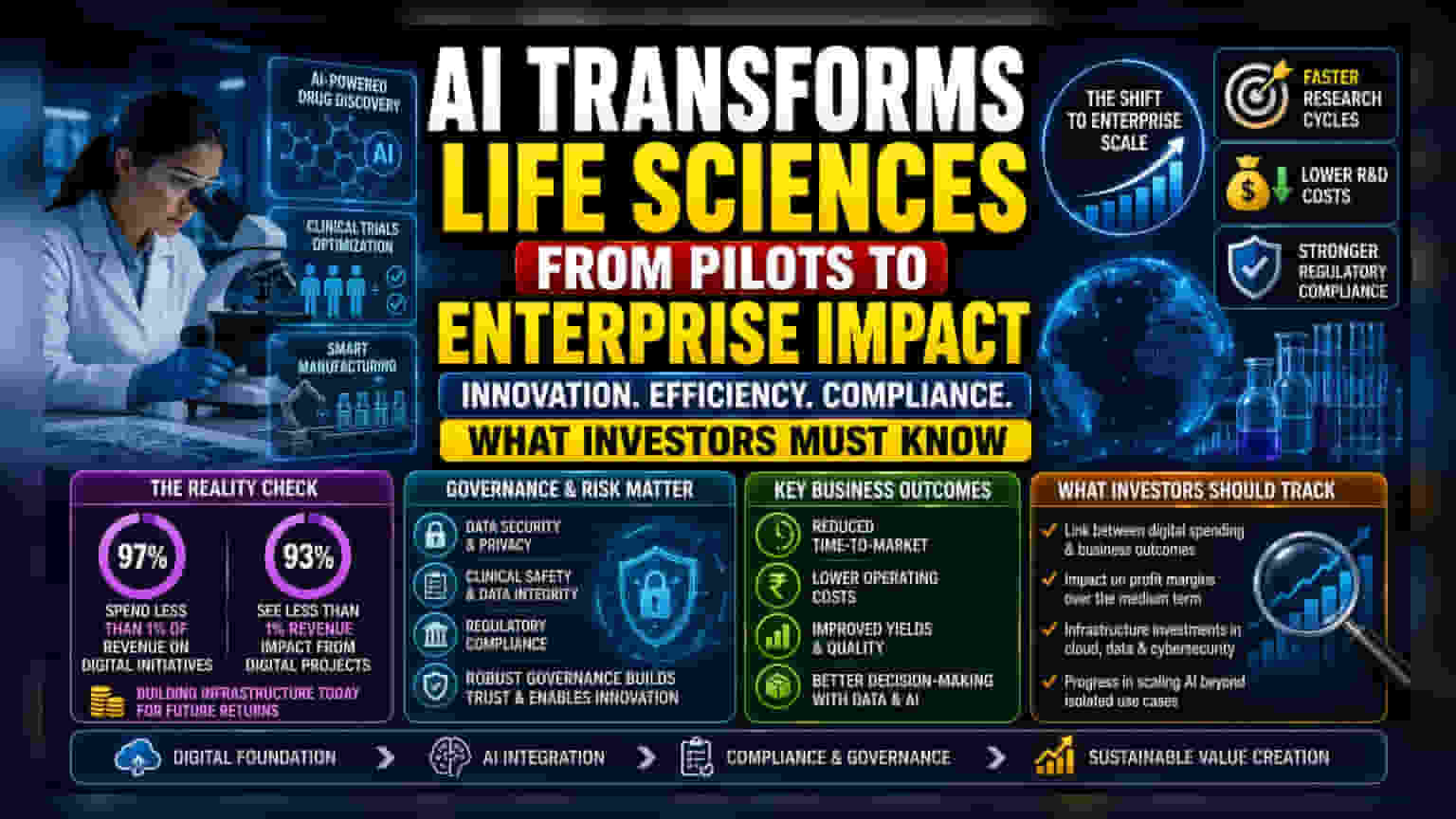


Indian life sciences companies are moving from experimental AI projects to large-scale adoption. While technology investment is rising, industry data shows that digital initiatives currently contribute less than 1% to annual revenue for most firms. Investors should monitor whether these upgrades in data and cloud infrastructure lead to improved profit margins and faster product development.
What Happened
Life sciences companies in India and globally are shifting their approach to artificial intelligence (AI). According to recent industry findings from KPMG, organizations are graduating from small, experimental pilot programs to integrating digital technologies across their core business operations. This move is designed to make research, manufacturing, and commercial processes more efficient. While AI is now being embedded into critical workflows like drug discovery and clinical trials, companies are emphasizing strict governance and regulatory compliance to manage the risks associated with this rapid transition.
The Shift to Enterprise-Scale
For years, many companies treated AI as an experimental tool to test capabilities. Now, the trend is moving toward what experts call enterprise-scale transformation. This means AI is being built into the backbone of the company rather than being used in isolated, small-scale projects. For Indian life sciences firms, this is a strategic necessity. The sector faces constant pressure to reduce the time it takes to bring new drugs to market, lower high research and development (R&D) costs, and navigate complex global regulatory requirements, such as those from the USFDA and other health authorities.
The Reality Check on Financial Returns
While the adoption of AI and digital tools is accelerating, there is a clear gap between technology deployment and immediate financial results. Data indicates that nearly 97% of surveyed organizations spend less than 1% of their annual revenue on digital initiatives. Furthermore, 93% of these companies report that these digital projects contribute less than 1% to their total annual revenue.
For investors, this highlights that the current phase of digital transformation is largely about building infrastructure—such as cloud systems and data management frameworks—rather than generating immediate, large-scale profits. The challenge for management is to move beyond just implementing technology and start demonstrating how these investments actually improve the bottom line or accelerate product launches.
The Governance and Risk Factor
Unlike technology or consumer-facing sectors, the life sciences industry must navigate intense scrutiny. Every AI-driven insight or automated process must comply with strict data security and clinical safety standards. This creates a dual burden: companies must innovate to stay competitive, but they must also spend heavily on robust governance, cybersecurity, and data protection to avoid regulatory penalties or reputational damage. This necessity for caution is why many firms prioritize building a solid data foundation before rushing into aggressive AI rollouts.
What Investors Should Track
As Indian life sciences companies continue this digital journey, investors may want to observe a few key indicators. First, track whether companies can link their digital spending to specific business outcomes, such as reduced time-to-market for new drug applications or lower operational costs in manufacturing. Second, monitor management commentary on how digital tools are impacting profit margins over the medium term. Finally, keep an eye on infrastructure spending—companies that successfully build modern, secure cloud and data environments are generally better positioned to scale their AI efforts without facing operational disruptions or cybersecurity issues later on.