

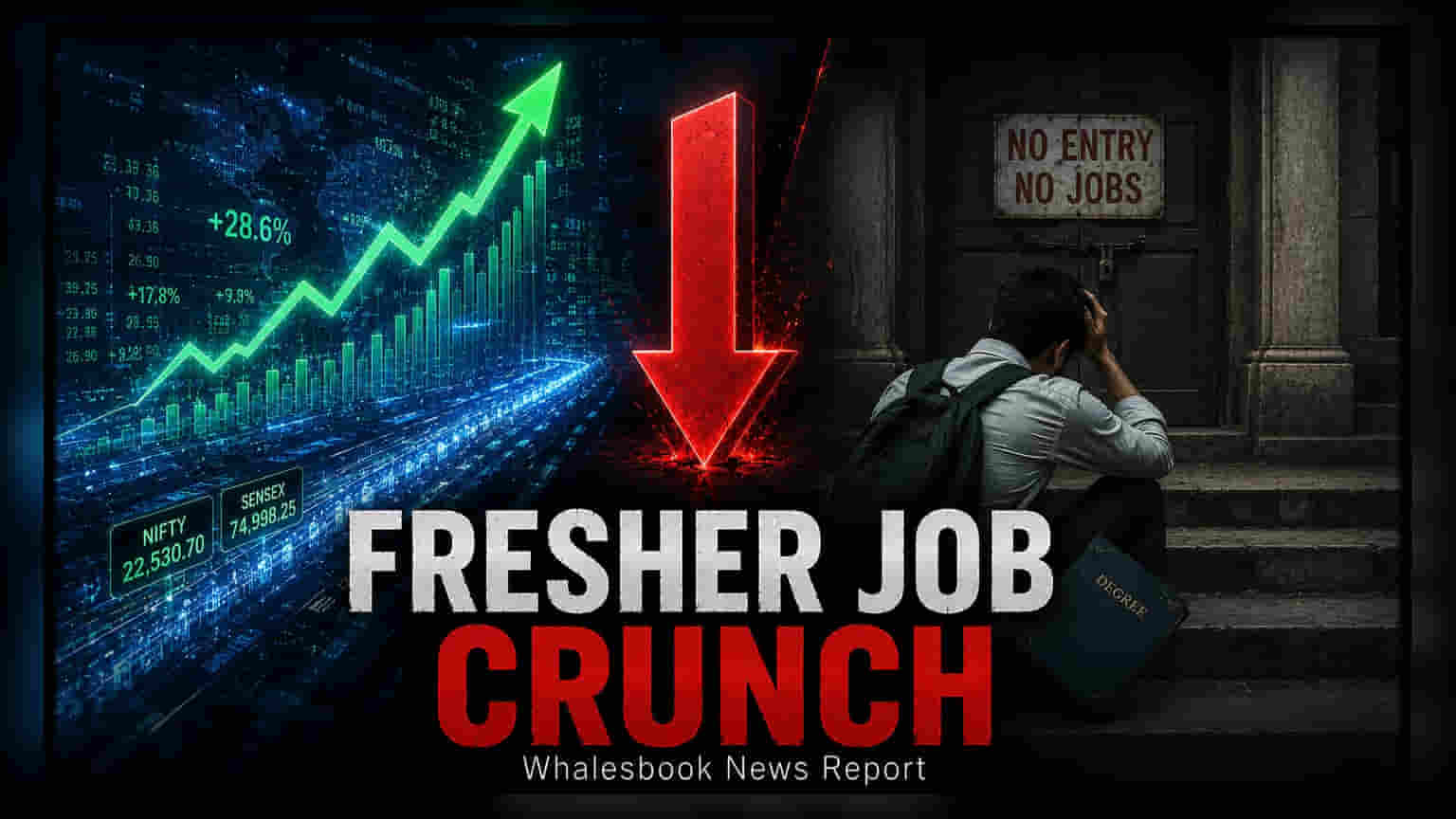
Despite a 10% rise in overall demand for tech talent, the IT sector’s reliance on entry-level hiring has dropped from 32% to 24%. Companies are prioritizing experienced professionals and AI-driven automation to improve immediate productivity. Investors should watch how this strategy impacts long-term talent pipelines and wage costs for skilled staff.
The Indian technology job market is undergoing a significant strategic transformation. While demand for technology professionals has increased by 10% over the past year, the traditional IT sector is no longer the primary engine for hiring fresh graduates. Recent data reveals a sharp contraction, with the IT industry’s share of fresher hiring falling from 32% to 24% year-on-year. This change indicates a deliberate move by corporations to prioritize hiring experienced talent over building a workforce from the entry level.
The Shift to Immediate Productivity
Companies are increasingly moving toward an experience-first hiring model. The primary driver behind this trend is the need for immediate billable output. Training fresh graduates takes time and resources, whereas experienced professionals can contribute to projects from day one. This shift is further reinforced by the integration of artificial intelligence. Studies, including findings from Cognizant and Pearson, indicate that AI systems can now handle approximately 37% of entry-level technical tasks. Consequently, companies are using automation to cover entry-level functions, reducing their reliance on bulk recruitment of graduates.
Competition from Non-Tech Sectors
While traditional IT giants are slowing down on fresher intake, tech talent is being absorbed by a broader range of companies. Banking, manufacturing, healthcare, and global capability centers (GCCs) are aggressively hiring technology professionals to drive their internal digital transformations. These companies are often competing for the same pool of talent that IT firms previously dominated, which increases the competitive pressure on recruitment costs. For investors, this redistribution of talent means that the battle for skilled employees is no longer confined to the IT sector alone.
The Rise of Specialized Roles
Entry-level hiring is also becoming highly specialized. The days of hiring generalists in bulk are fading, replaced by a demand for specific skills in AI, cybersecurity, and data science. AI-related roles now account for 4% of fresher hiring, up from 1% just a year ago. However, even these entry-level positions are becoming harder to secure. Many roles labeled as entry-level now require candidates to have at least 2-3 years of practical experience, a trend often referred to as experience creep. This shift has created a salary divide; while generalist roles face stagnation, specialized positions in high-demand fields command premium compensation packages.
Investor Monitorables
This transformation carries long-term risks. By reducing investment in fresh talent, the industry may face a future shortage of mid-level leaders, potentially leading to wage inflation for experienced staff as companies fight for a smaller pool of talent. Investors should monitor quarterly management commentary regarding hiring efficiency and workforce composition. Key metrics to track include whether companies can maintain profit margins by using automation to replace entry-level roles, or if the increased cost of hiring experienced professionals begins to pressure earnings.