

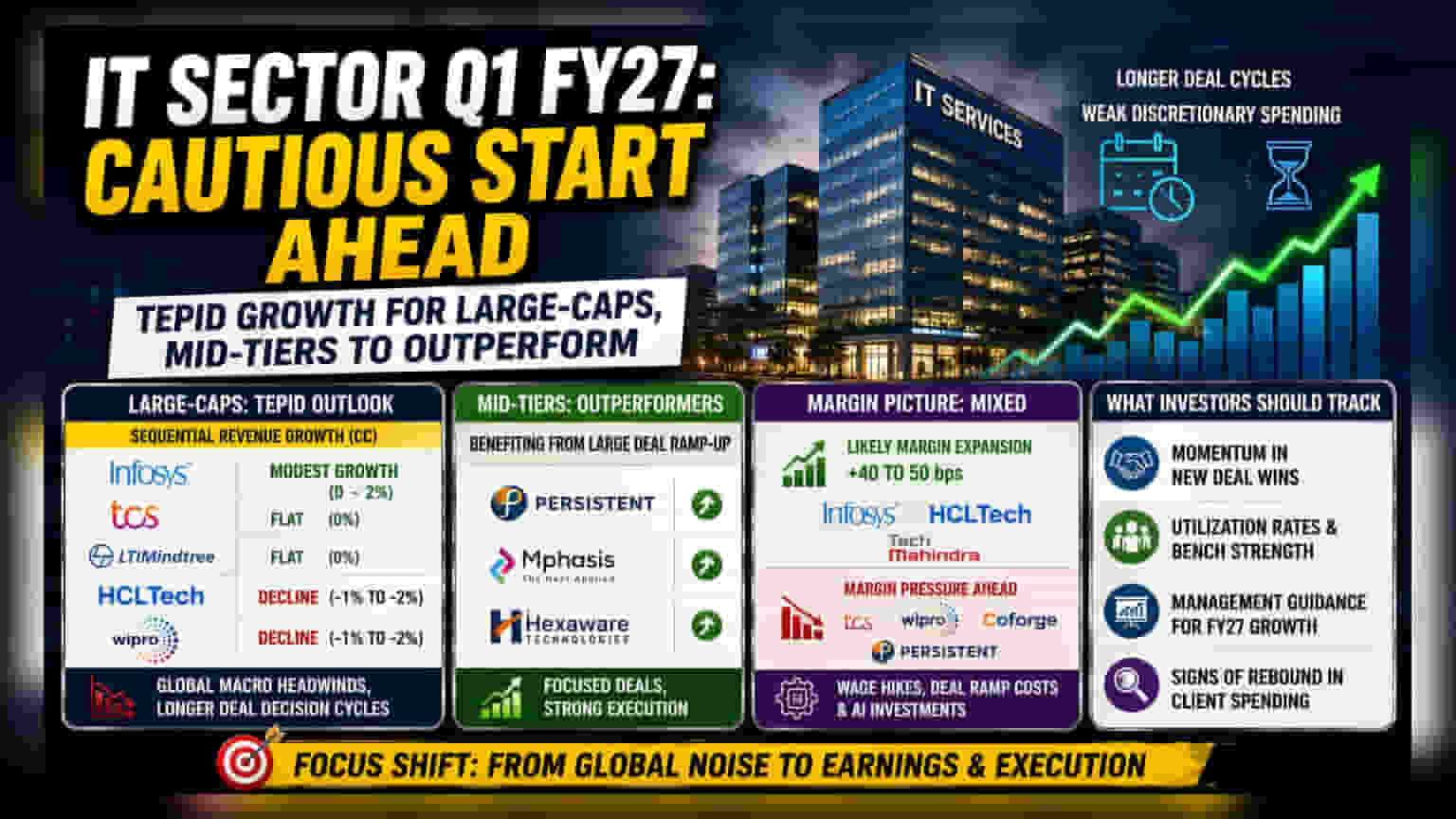
Motilal Oswal's latest preview projects a muted start to fiscal year 2027 for large Indian IT firms due to weak discretionary spending and macroeconomic pressure. While major players expect tepid revenue growth, mid-tier companies are showing resilience through successful deal execution.
What Happened
The Indian information technology sector is heading into the first quarter of fiscal year 2027 with a cautious outlook. A recent preview report by Motilal Oswal highlights that large-cap IT companies may face a period of tepid revenue growth. The sector is currently navigating a complex environment characterized by global macroeconomic instability, geopolitical tensions, and uncertainty regarding how artificial intelligence (AI) will affect future enterprise budgets. These factors are leading to longer deal decision cycles, where clients are taking more time to approve new projects or expand existing ones.
The Large-Cap Vs. Mid-Tier Story
The performance expectations for the first quarter are split between large and mid-sized companies. Large-cap firms are projected to report sequential revenue growth ranging from a 1.5% decline to a 2% increase in constant currency terms—a metric that measures growth by removing the impact of currency fluctuations, providing a clearer picture of actual business activity. Companies like Infosys are expected to see modest growth, while TCS and LTIMindtree might remain flat. Meanwhile, HCLTech and Wipro could face revenue declines, often linked to specific client challenges and slower project starts.
In contrast, mid-tier IT companies such as Persistent Systems, Mphasis, and Hexaware Technologies are expected to outpace their larger peers. This difference is often due to the nature of their business models; while large-cap companies are heavily dependent on broad enterprise spending—which is currently under pressure—mid-tier firms are frequently benefiting from the successful ramp-up of specific large deals they have secured in recent periods.
Understanding The Margin Picture
Profit margins for the sector present a mixed picture. IT services companies operate on a people-heavy model, meaning wage costs are a significant expense. Some companies, including Infosys, HCLTech, and Tech Mahindra, are expected to see a slight margin expansion of 40 to 50 basis points. This is usually achieved through improved operating leverage, which means the company is getting more work done with existing resources, or through cost-efficiency measures.
However, other firms like TCS face pressure from annual wage increases, which directly impacts profitability. Additionally, companies like Wipro, Coforge, and Persistent Systems may deal with margin pressure due to the costs associated with ramping up new deals and significant investments in AI technologies, which are necessary to stay competitive but can increase immediate operational costs.
What Investors Should Track
For investors, earnings previews serve as a guide to what the company management will discuss during the official results. When a report cites "weak discretionary spending," it means clients are hesitant to spend on non-essential, flexible projects. Investors should look for management commentary on whether these decision cycles are shortening or if the caution is persisting.
Key monitorables for the upcoming earnings season include the momentum of new deal wins, the actual utilization rates of staff (how many employees are billable versus on the bench), and specific guidance on revenue growth for the remainder of the fiscal year. Any signs of a rebound in client spending, particularly in sectors that have been cutting budgets, will be a crucial signal for the industry's recovery.