

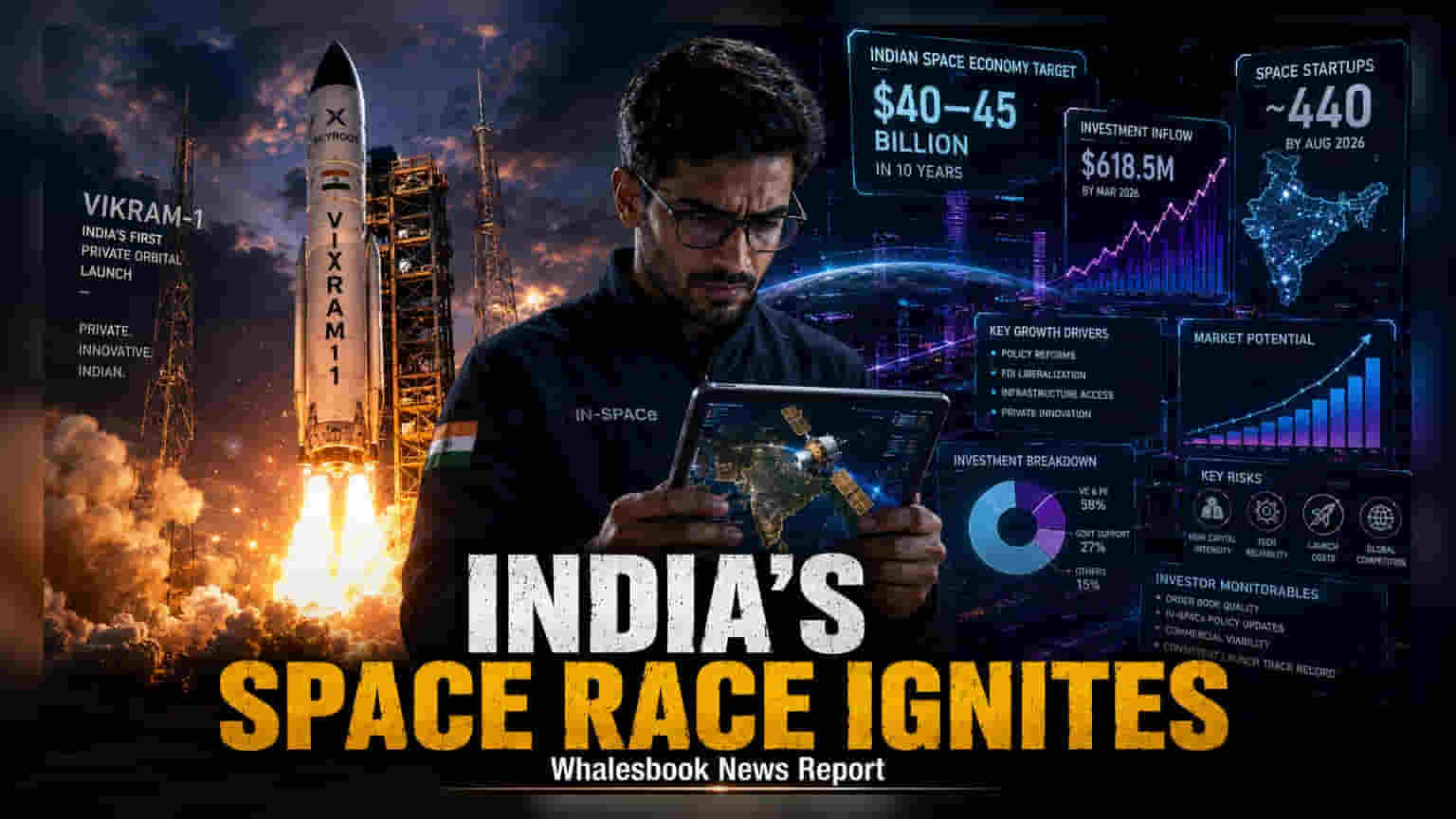
The Indian space economy is scaling up with over 440 registered startups and a $45 billion target by 2033, bolstered by the successful July 2026 launch of Skyroot Aerospace's Vikram-1. While momentum is high, most leading private space-tech companies remain unlisted, meaning direct stock exchange exposure is currently limited.
India's space sector reached a major milestone on July 18, 2026, when Skyroot Aerospace successfully launched its Vikram-1 rocket into orbit. This mission marked India's first privately developed orbital launch, signaling a shift in how the country manages space technology. Traditionally dominated by the Indian Space Research Organisation (ISRO), the sector is now witnessing a surge in private participation, with the number of registered space startups growing to approximately 440 by August 2026.
Investment and Market Potential
The Indian government has set an ambitious target for the domestic space economy to reach $40 billion to $45 billion within the next decade. Policy reforms, such as the Indian Space Policy 2023 and the liberalization of foreign direct investment rules, have been designed to speed up this growth. Private investment into these ventures reached $618.5 million by March 2026, with continued interest from venture capital and institutional investors. The government is also facilitating this by offering non-government entities access to ISRO’s infrastructure, satellite data, and testing facilities.
The Investor Reality Check
For retail investors looking for exposure to India's space story, the landscape is nuanced. While the headlines focus on high-profile private startups like Skyroot Aerospace, these companies are currently unlisted and are not traded on the NSE or BSE. This means investors cannot directly purchase shares in these specific firms through their trading accounts.
Investors who want exposure to this growth story often look at listed companies that operate in the broader aerospace and defense supply chain. These are typically businesses that manufacture components, specialized electronics, alloys, or ground support equipment for the sector. Unlike rocket-launch firms, these component suppliers often have diversified revenue streams, serving multiple aerospace programs rather than relying on the success of a single launch.
Risks and Future Monitorables
Building a space-tech business is highly capital-intensive and typically requires a long time before reaching profitability. There are significant risks, including the need for extreme reliability in technology, the high cost of launch operations, and intense competition from global players in the US and China. Commercial viability depends on a company’s ability to secure recurring contracts, which requires demonstrating that their launches or services are consistent and safe over time.
Investors tracking this sector should focus on the quality of order books for listed aerospace component makers and the long-term policy updates from IN-SPACe. The key monitorable remains whether these private players can transition from experimental missions to consistent commercial operations, which is essential to sustain the projected industry growth.