

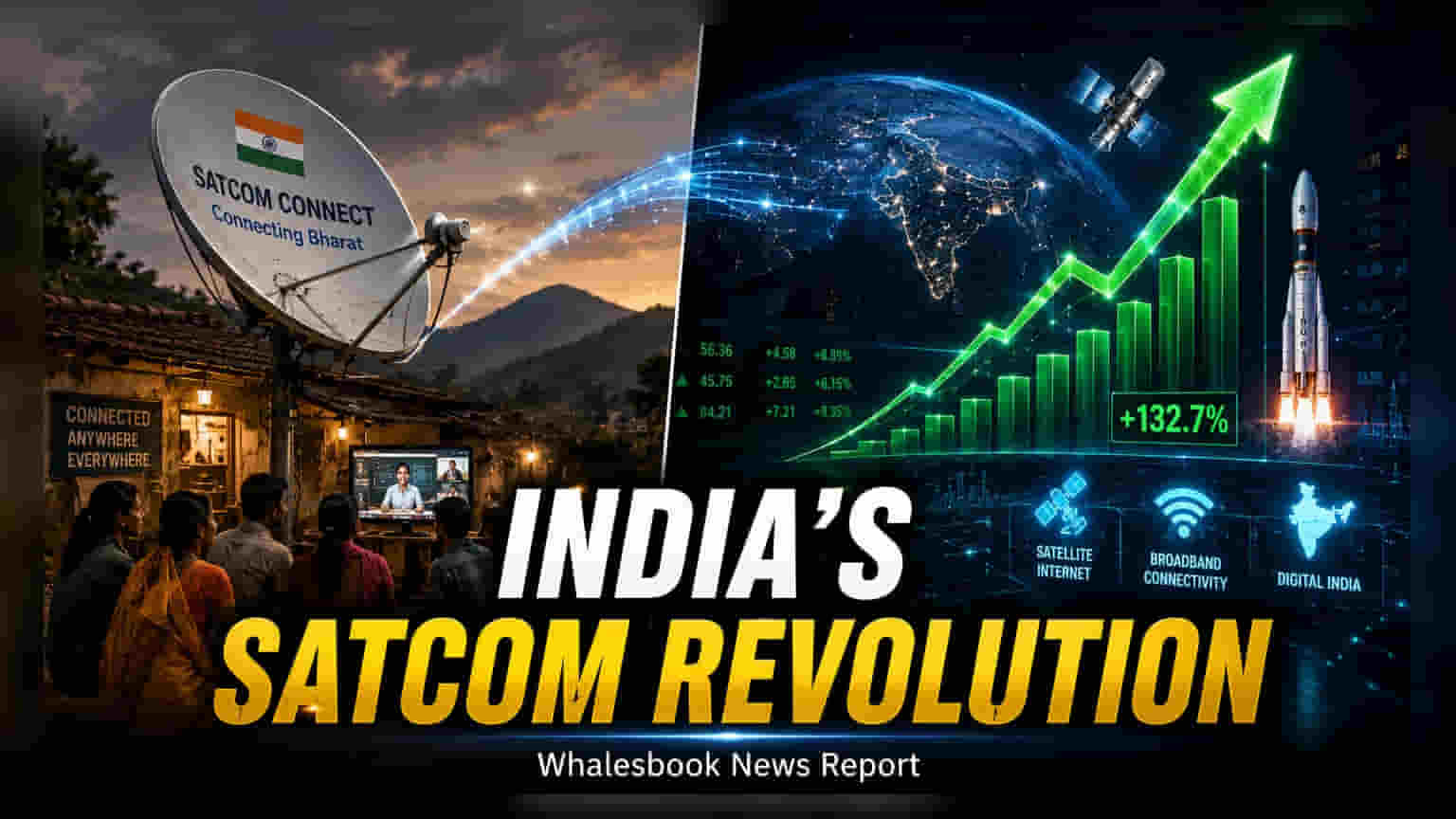
India’s space sector is set for rapid growth as satellite technology expands into remote connectivity and disaster management. The country's space economy is projected to reach over $45 billion by 2030, supported by a rise in private startups and regulatory reforms.
Detailed Coverage
India’s space sector is witnessing a significant shift, with satellite communications (Satcom) emerging as a key driver for digital connectivity. During the IAFI Space Policy Conference 2026 held on Wednesday, TRAI Chairman Anil Kumar Lahoti noted that the nation’s space economy, currently estimated at USD 8.4 billion, is on track to exceed USD 45 billion by 2030. This growth is expected to continue expanding significantly into the next decade as satellite technology becomes more integrated into the national infrastructure.
Expanding Beyond Terrestrial Networks
Satellite communication is viewed as a vital tool for bridging the digital divide, particularly in mountainous and remote areas where laying fiber-optic cables is physically difficult or cost-prohibitive. Beyond simple internet access, the technology provides a layer of redundancy for critical services. During natural disasters or emergencies, when traditional ground-based networks are often disrupted, satellite links offer a resilient communication path. This capability is increasingly relevant for sectors such as maritime operations, aviation, and the expanding Internet of Things (IoT) network, which requires constant connectivity for devices across the country.
Private Sector Participation and Policy Trends
Government-led reforms have encouraged a surge in private sector interest, with the number of space-focused startups in India growing from just one in 2014 to over 400 by 2026. This increase in private participation is a core component of the government's strategy to foster innovation. The Telecom Regulatory Authority of India has signaled its focus on creating agile policy frameworks that support non-geostationary orbit (NGSO) constellations and high-throughput satellite services. These advancements are designed to make satellite-based internet services more efficient and affordable, potentially allowing them to complement existing terrestrial networks rather than compete directly with them.
Strategic and Economic Considerations
For investors, the growth of the space economy involves tracking how these regulatory frameworks evolve to handle satellite spectrum allocation and licensing. While the long-term projections are optimistic, the sector's success will depend on the actual speed of infrastructure deployment and the ability of private ventures to achieve commercial viability. The move toward higher-value space products and services is a shift for a sector that was historically dominated by government research. Investors may monitor future licensing updates, spectrum auction news, and the operational timelines of satellite constellations as indicators of how quickly this market will mature.