

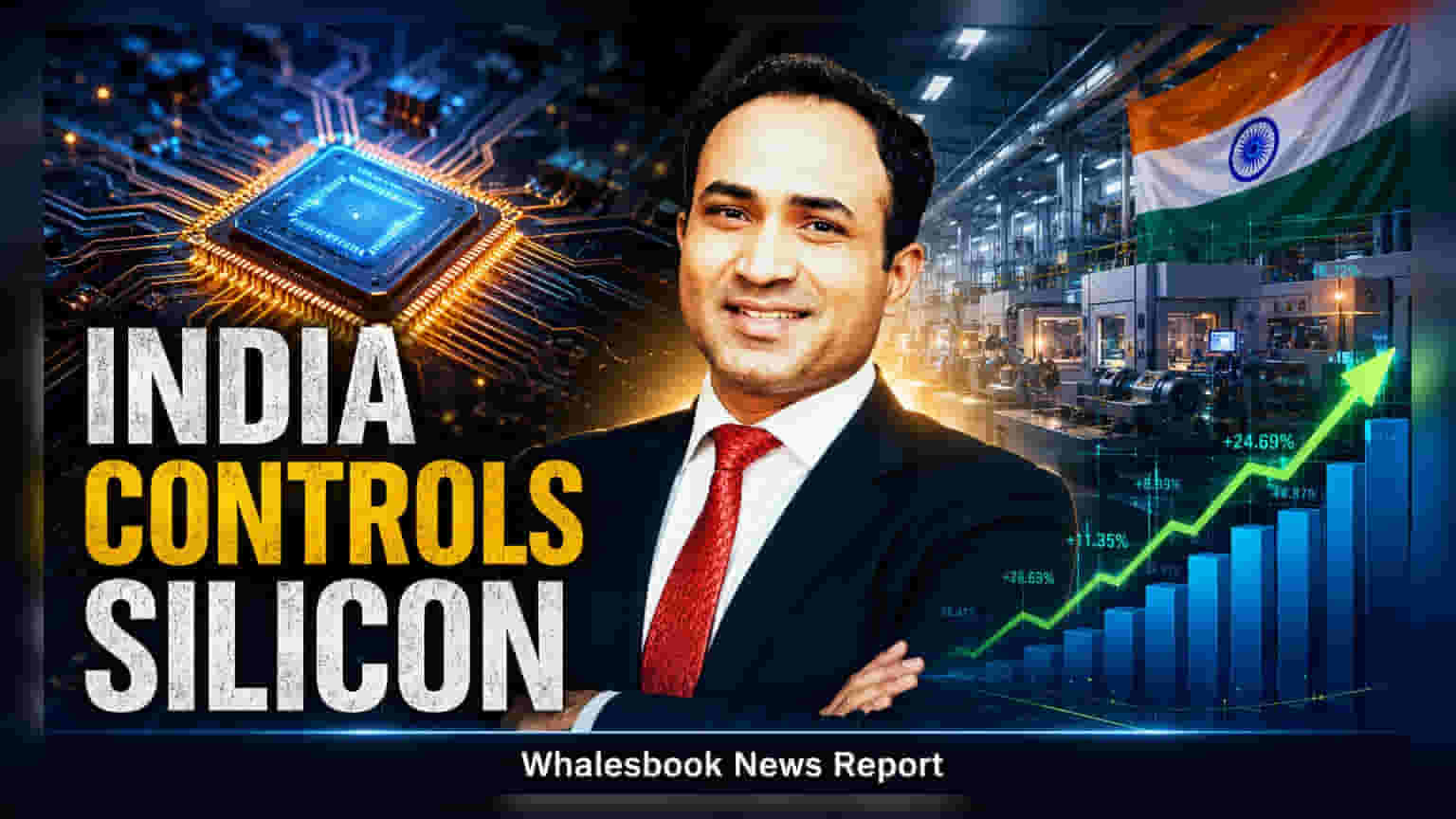
The Union Cabinet has approved ₹1.27 lakh crore for the second phase of the India Semiconductor Mission to accelerate domestic chip manufacturing. This funding aims to drive ₹4 lakh crore in investments and target a production value of ₹2 lakh crore. The initiative emphasizes building a local supply chain through MSMEs and developing a skilled workforce for the sector.
The Union Cabinet has officially greenlit the second phase of the India Semiconductor Mission, committing ₹1.27 lakh crore to reduce the nation's reliance on imported chips. This policy move is designed to shift India from a consumer of semiconductor technology to a manufacturer, with the government aiming to catalyze a total investment of ₹4 lakh crore across the industry. The program targets a production output of ₹2 lakh crore over its tenure, focusing on areas like chip design, fabrication, advanced packaging, and specialized material development.
Speaking at the Semiconductor India 2026 conference, Madhvendra Singh, CEO of the Electronics Sector Skills Council of India (ESSCI), highlighted that controlling the silicon supply chain is a strategic necessity for national security. While large-scale fabrication units often capture media attention, Singh noted that the long-term success of the sector depends heavily on the participation of grassroots enterprises and small businesses. These smaller units are essential for providing the precision components, testing services, and packaging capabilities needed to support larger manufacturing facilities.
Scaling Workforce and Industry Capacity
India has already secured approximately $20 billion in total investments for its semiconductor sector. To meet the projected domestic demand, which is expected to reach $130 billion by 2030, the government is prioritizing talent development alongside infrastructure. The current roadmap estimates a requirement for roughly 400,000 highly skilled professionals, in addition to a broader workforce trained to handle complex supply chain and equipment operations.
The financial allocation under the second phase is expected to bridge the gap between capital availability and operational execution. By subsidizing R&D, equipment procurement, and infrastructure, the mission aims to lower the barrier to entry for domestic players. Investors should note that the success of this mission will depend on the speed of project commissioning and the ability of the private sector to move beyond assembly and into higher-value chip design and manufacturing.
Investor Monitorables for the Semiconductor Sector
The most important factor for investors to track in the coming quarters is the rate of project implementation and the actual utilization of these funds by companies. While government incentives provide a strong supporting factor, the semiconductor industry is highly capital-intensive with long lead times for setting up manufacturing facilities. Future updates from the government regarding specific sub-sector allocations, the pace of land acquisition for new plants, and the involvement of private sector firms in the India Semiconductor Mission will be key indicators of progress. Additionally, companies involved in electronic components, specialized materials, and testing services may see more immediate benefits as the ecosystem begins to localize its supply chain requirements.