

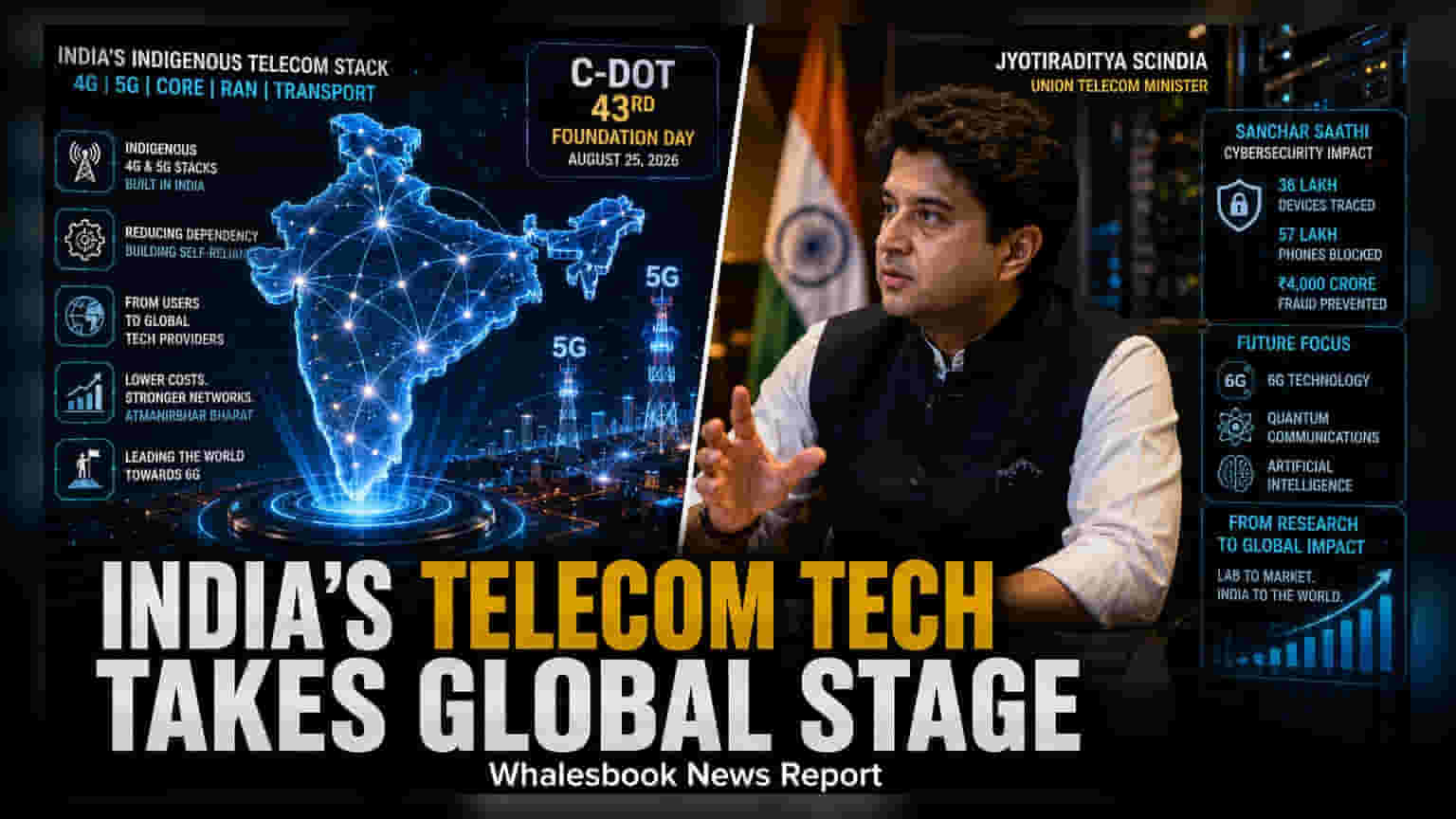
Union Telecom Minister Jyotiraditya Scindia highlighted India's transition from technology importer to global contributor during the 43rd Foundation Day of the Centre for Development of Telematics (C-DOT). With a focus on indigenous 4G/5G stacks and future 6G technology, the initiative signals a major push to reduce reliance on global vendors and strengthen the domestic digital ecosystem.
The Centre for Development of Telematics (C-DOT) celebrated its 43rd Foundation Day on August 25, 2026, setting a clear vision for India's future in the global telecommunications sector. Union Telecom Minister Jyotiraditya Scindia emphasized that India is moving away from being a nation that relies on global technology to one that provides solutions the world can rely on. This shift marks a strategic evolution from domestic self-reliance to active global contribution.
At the core of this transition is India’s success in developing indigenous technology stacks for 4G and 5G networks. By building these systems locally, India has joined a small group of nations capable of creating advanced telecom infrastructure independently. This move is significant for the domestic telecom ecosystem, as it provides a path to reduce dependency on foreign equipment vendors and lowers the long-term cost of network infrastructure.
While C-DOT is a government research organization and not a listed company, its innovations have a direct impact on the wider Indian stock market. The move toward 'made-in-India' telecom gear creates opportunities for private companies that partner with state institutions to scale, manufacture, and maintain these technologies. Investors in the telecom equipment, IT services, and cybersecurity sectors should monitor how quickly these indigenous solutions are adopted by telecom operators across the country.
The government also showcased the success of the Sanchar Saathi application, which has become a key tool for cybersecurity. By tracing nearly 36 lakh lost or stolen devices and blocking 57 lakh phones, the platform has reportedly prevented financial fraud worth approximately ₹4,000 crore. This demonstrates the commercial potential for cybersecurity and fraud-prevention tools in an increasingly digitized economy, which remains a high-growth segment for many technology firms.
Looking ahead, the focus is shifting toward 6G technology, quantum communications, and artificial intelligence. However, the success of these initiatives will depend on the transition from laboratory research to large-scale market application. Scaling indigenous technology to compete with established global giants is a complex task that requires strong manufacturing partnerships and continuous investment in hardware and software development.
For investors and market observers, the next steps will involve tracking the speed at which these new technologies are deployed in live networks. Increased government grants for R&D and new contracts awarded to private partners for manufacturing and deploying C-DOT’s innovations will be key indicators of how effectively this indigenous tech push is strengthening the broader digital economy.