

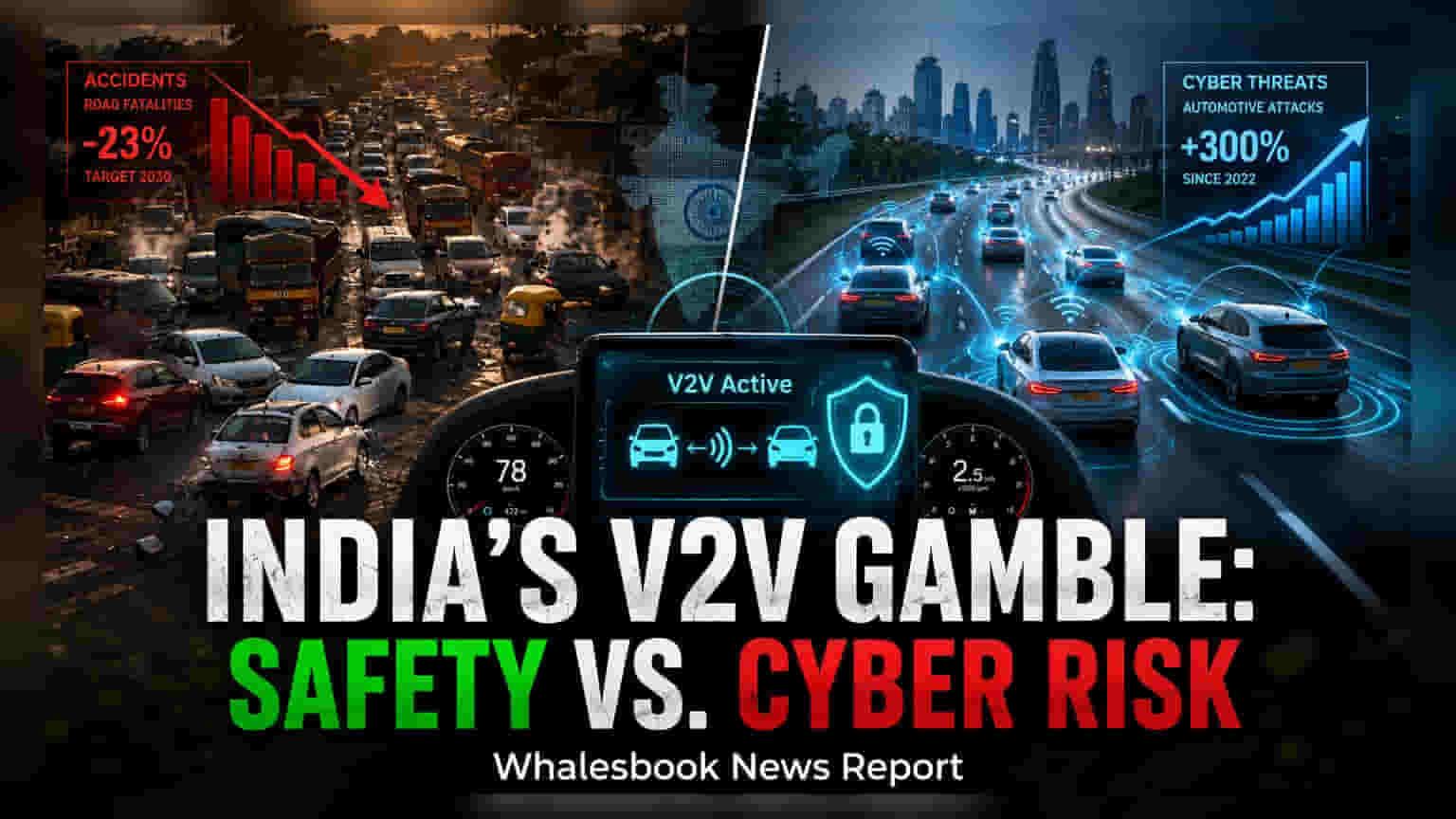
The Ministry of Road Transport and Highways has released a draft mandate requiring new vehicles to have Vehicle-to-Vehicle communication systems by October 2028. This move aims to improve road safety through real-time data sharing, though it brings significant implications for technology adoption costs, cybersecurity standards, and the automotive software ecosystem.
The Ministry of Road Transport and Highways (MoRTH) has introduced a draft notification that could fundamentally reshape road safety technology in India. The proposal mandates that all new vehicles—spanning two-wheelers, three-wheelers, passenger cars, and goods carriers—be equipped with Vehicle-to-Vehicle (V2V) communication systems. According to the draft, this requirement becomes mandatory for vehicles manufactured on or after October 1, 2028. For those choosing to install the system earlier, voluntary adoption can begin on October 1, 2027, provided the units comply with the new AIS-230 technical standard.
How the Technology Works
Unlike systems that rely on existing cellular networks, V2V technology uses short-range radio signals to exchange real-time data between vehicles. This includes critical information such as speed, braking status, position, and direction. By operating in the dedicated 5.875–5.925 GHz frequency band—which the Department of Telecommunications has cleared for licensing exemptions—the system is designed to function independently of internet connectivity. The goal is to provide drivers with early warnings about hidden hazards or potential collisions, theoretically enabling accident prevention rather than just crash protection.
Impact on the Automotive and Tech Sector
This move acts as a structural catalyst for automotive software and engineering firms. Companies involved in Advanced Driver Assistance Systems (ADAS) and connected mobility, such as KPIT Technologies and Tata Elxsi, are expected to play a crucial role in developing and integrating these technologies for original equipment manufacturers (OEMs). As the industry shifts toward higher safety standards, the demand for embedded software, reliable sensor integration, and compliant onboard units is likely to grow. However, this transition also presents a challenge for vehicle manufacturers. The requirement to integrate hardware onboard units will necessitate changes in production lines and could potentially increase the final price for consumers, especially in the cost-sensitive two-wheeler and economy car segments.
Cybersecurity and Adoption Risks
While the technology offers safety benefits, it introduces new vulnerabilities. A nationwide network of communicating vehicles creates a broader surface for potential cyberattacks. The AIS-230 standard explicitly includes requirements to address these cybersecurity threats, but the success of the initiative will depend on how effectively manufacturers and tech providers can build and maintain these protections.
Another significant challenge is the network effect. V2V technology is only as effective as the number of vehicles using it; if only a small percentage of cars on the road are equipped with the system, the overall safety impact may be limited. The industry will also need to manage supply chain and integration risks during the two-year window before the mandate takes full effect. As the proposal is currently in the draft stage and open for public comment, investors and manufacturers will be tracking the final notification to see if the timeline or technical requirements undergo any adjustments.