 Whalesbook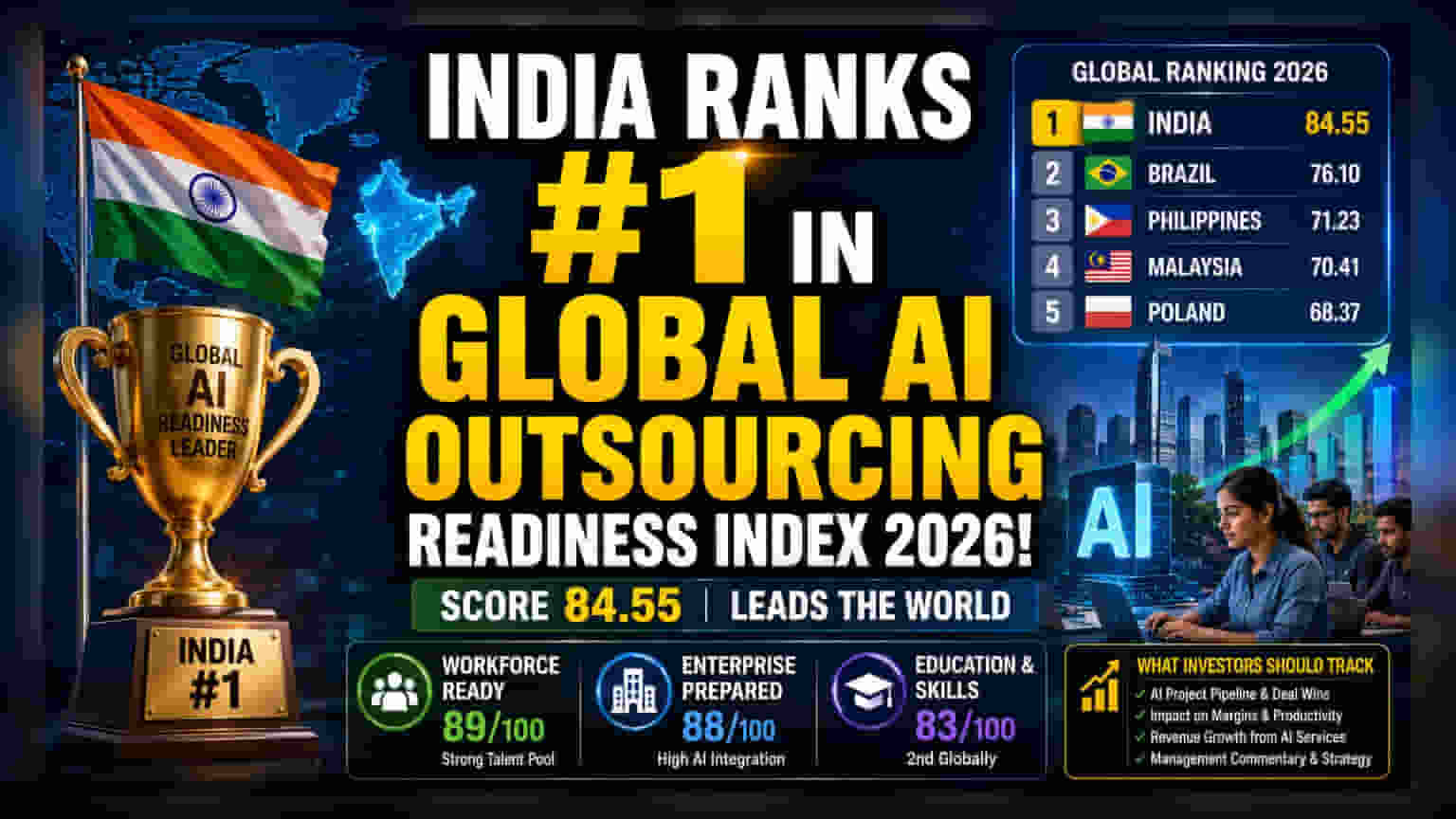


India has secured the top position in the 2026 Global Outsourcing AI Readiness Index with a score of 84.55. This validation of India's tech workforce and enterprise preparedness strengthens the investment case for the country's IT services sector. However, investors should monitor how companies convert this readiness into revenue, especially as AI adoption creates both growth and pricing pressures.
What Happened
India has been ranked first in the 2026 Global Outsourcing AI Readiness Index, a report published by Ataraxis. The country achieved a composite score of 84.55, which measures how well a nation is prepared to support the global artificial intelligence and services industry. This ranking separates India from other key outsourcing destinations by a clear margin, with Brazil taking the second spot with a score of 76.10.
The index evaluates countries based on several critical pillars. India performed particularly well in workforce readiness, scoring 89 out of 100, which reflects the scale and quality of its technology-focused talent pool. In enterprise preparedness, which measures the integration of digital and AI capabilities within local organizations, the country scored 88. Regarding education and skills, India secured second place with a score of 83, trailing slightly behind Malaysia.
Why This Matters For Investors
For investors in the Indian technology sector, this index serves as external validation of the country's competitive position. Major Indian IT service providers are currently transitioning from traditional application maintenance and coding work to newer areas like generative AI and large language model development. A high readiness score suggests that these companies have the local talent and infrastructure to lead this shift without needing to rely entirely on offshore resources.
However, market readiness does not automatically translate into profit growth. The challenge for Indian IT firms lies in execution. Investors should consider that while the country has the talent, the actual financial impact will depend on how successfully these firms can train their massive workforce on new AI tools and integrate them into existing client projects at scale.
Peer and Sector Context
The gap between India and its competitors is notable. The score of 84.55 against Brazil's 76.10 indicates that India retains a strong structural advantage. Within the South Asian region, the disparity is even wider, with Pakistan, Nepal, and Bangladesh scoring significantly lower. This suggests that for global clients looking to outsource high-end AI work, India remains the most stable and capable destination in the region.
Despite this, global IT spending is sensitive to macroeconomic conditions in the United States and Europe, which are the largest markets for Indian service providers. Even with top-tier readiness, a slowdown in client IT spending or a shift in corporate budgets can overshadow the country's operational advantages. The index confirms the supply-side strength, but the demand side remains subject to global economic trends.
The AI Paradox and Business Risks
The central risk for investors to watch is the 'automation paradox.' While the index celebrates India’s AI readiness, AI adoption poses a structural challenge to the traditional Indian IT billing model. Most large IT companies bill clients based on 'person-hours'—the number of hours employees spend on a task. If AI tools significantly increase worker productivity, they may complete projects faster, potentially reducing the total billable hours and pressuring revenue growth.
Furthermore, wage inflation remains a reality in the tech sector. As global companies increase their investment in AI, the demand for specialized talent in India rises, which can increase employee costs. Companies that cannot pass these higher costs to their clients through higher billing rates may see their profit margins come under pressure. Investors should be mindful that high readiness scores do not protect against the cyclical ups and downs of the global technology spend.
What Investors Should Track
The most important monitorable is how IT companies reflect their AI strategy in quarterly earnings reports. Look for specific metrics on the number of projects involving generative AI, the impact of AI on margins, and management commentary on whether AI is driving new revenue or merely replacing older, low-margin business. Tracking these details will provide a clearer picture of how India’s industry-wide readiness is being converted into actual shareholder value.