

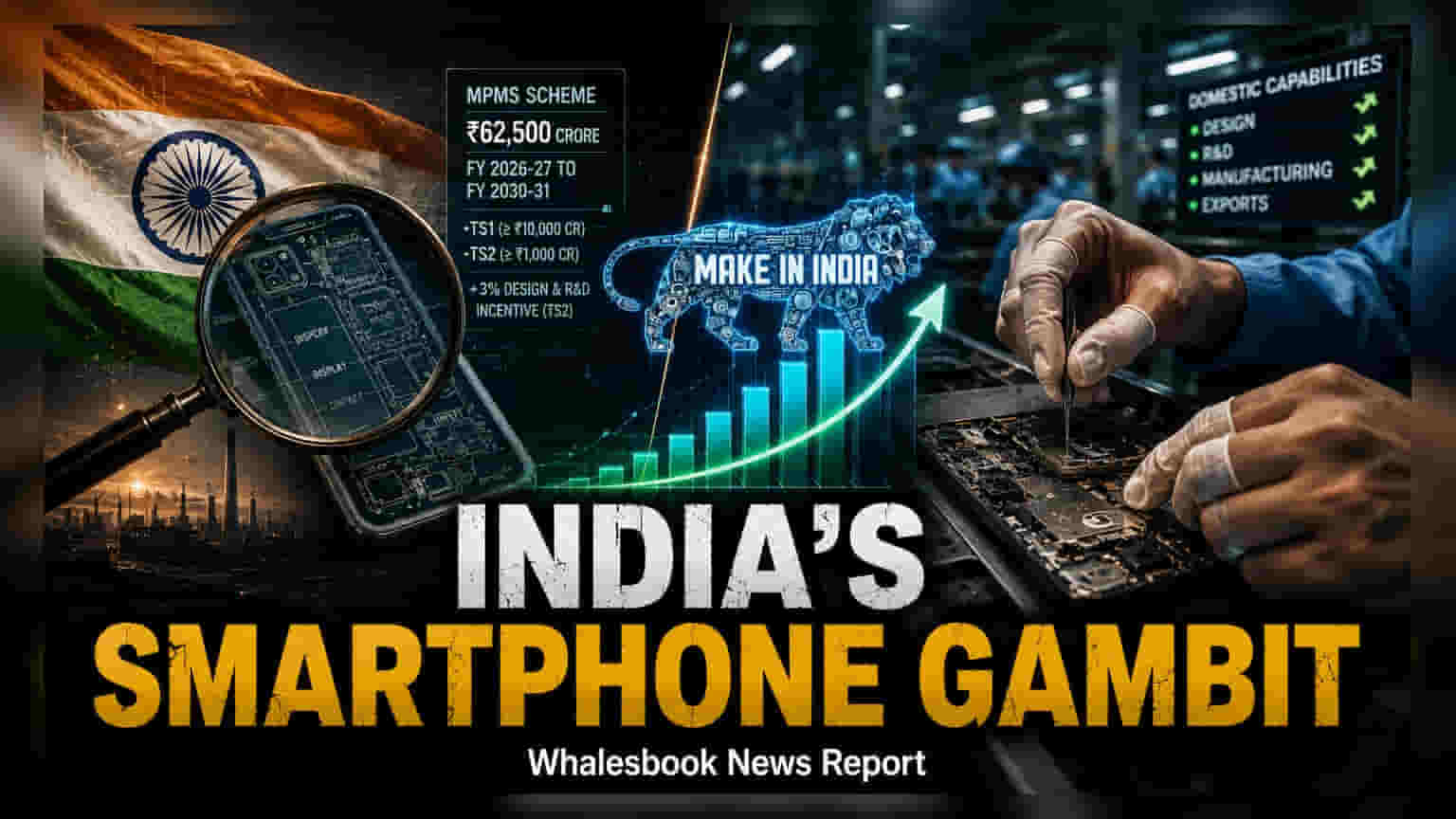
The government has notified the Mobile Phone Manufacturing Scheme (MPMS) to drive domestic electronics production over the next five years. With ₹62,500 crore in total support, the policy creates specific incentives for Indian-owned brands to build local R&D and design capabilities. Companies like Dixon Technologies, Amber Enterprises, and Lava International are evaluating the program.
The Ministry of Electronics and Information Technology (MeitY) has officially notified the Mobile Phone Manufacturing Scheme (MPMS), a strategic initiative designed to strengthen India's position in the global electronics value chain. With a budgetary outlay of ₹62,500 crore, the scheme will run for five years, covering the period from FY 2026-27 to FY 2030-31. This policy serves as a successor to the previous production-linked incentive programs, shifting the focus toward deep-rooted domestic capability building.
The scheme is structured into two distinct segments to cater to different parts of the manufacturing ecosystem. The first, TS1, is focused on large-scale manufacturers and requires a minimum annual turnover of ₹10,000 crore to qualify. The second segment, TS2, is tailored specifically for homegrown Indian smartphone brands, with a more accessible turnover threshold of ₹1,000 crore. To qualify under this homegrown category, companies must demonstrate genuine Indian ownership, with at least 51% stake held by Indian citizens, and ensure that their intellectual property, design rights, and trademarks are managed locally.
Financial incentives are tiered to encourage higher-value operations. Manufacturers can receive incentives ranging from 2.25% to 5% on net annual sales. Crucially, Indian brands participating in the TS2 segment are eligible for an additional 3% bonus incentive if they can prove significant investment in indigenous design and research and development (R&D). This design-linked incentive is a core component of the government's strategy to move beyond simple assembly and toward genuine technological independence.
Several domestic companies, including major contract manufacturers and handset players such as Dixon Technologies, Amber Enterprises, Lava International, and NxtQuantum Shift Technologies, are currently evaluating the scheme to determine their potential participation. For these firms, the decision hinges on whether their existing cost structures and R&D pipelines can align with the government’s stringent criteria for 'genuine' Indian design.
Investors should note that while the financial support is significant, the path to success for Indian smartphone brands remains challenging. The domestic market is currently dominated by established international players such as Vivo, Oppo, and OnePlus, which have spent years building robust distribution networks, marketing infrastructure, and consumer trust. These global brands possess massive scale and significant R&D budgets that local firms will struggle to match in the short term.
Another significant risk factor is the inherent difficulty of developing smartphone design and R&D capabilities from scratch. Building a brand that can compete with global technology leaders requires not just capital, but a long-term commitment to innovation and brand perception management. Furthermore, the margin pressure in the smartphone sector is high, and any failure to effectively integrate domestic components or meet sales targets could impact profitability for participating companies. The ultimate impact of this scheme on shareholder value will depend heavily on the ability of these domestic firms to scale their operations and gain meaningful consumer traction over the next five years.