

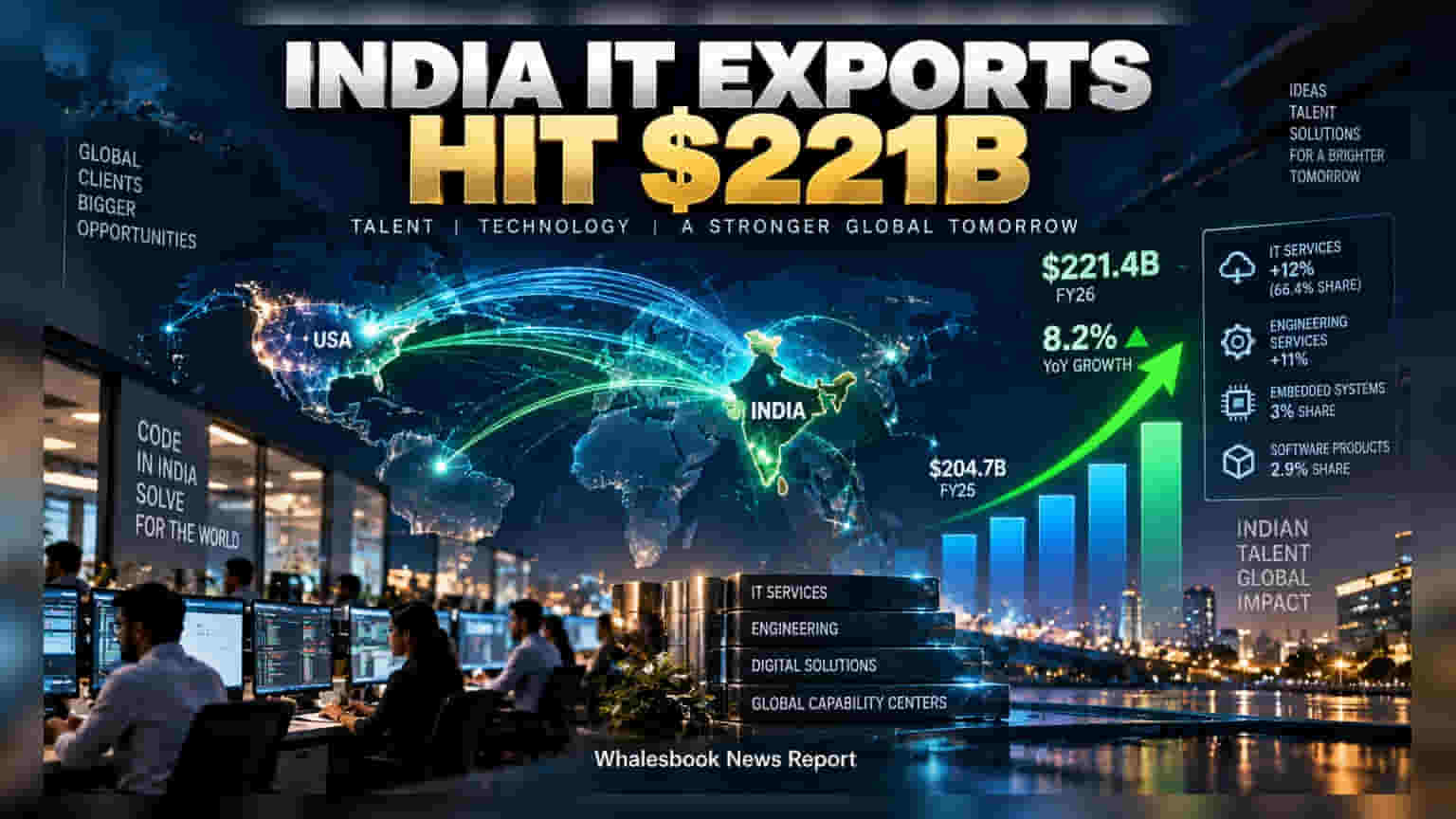
India’s software exports grew to $221.4 billion in FY26, an 8.2% increase from the previous year. While core IT and engineering services led the growth, the software product segment saw a contraction. Investors should note the sector's heavy reliance on the US market and the shifting demand toward specialized engineering and design services over traditional software product models.
India’s IT export sector recorded a total of $221.4 billion in the fiscal year 2026, rising from $204.7 billion in the previous year. Data released by the Reserve Bank of India shows an 8.2% annual growth rate. This figure is a critical metric for investors as it tracks the health of the primary revenue source for India's major information technology companies.
Engineering and IT Services Growth
The growth was largely fueled by core IT services and engineering design. IT services, which remain the largest part of the export basket, grew by 12% and now account for 66.4% of total exports. Engineering services also performed well, growing by 11%. This shift suggests that Indian firms are becoming more involved in high-value work, such as product design and electronics, which now make up 4.3% of the total export mix.
The rise of Global Capability Centers has been a key supporting factor. These centers, which are offices set up by global companies in India, are helping to absorb demand even as traditional IT budgets in some areas remain tight. Embedded systems, which involve designing specialized tech for hardware like cars and manufacturing equipment, also saw their share of exports rise to 3%.
Risks and Market Concentration
Despite the overall growth, there are areas of concern for investors. The software product development segment saw its share of the export basket fall from 3.3% to 2.9%. This contraction is partly linked to the rapid adoption of artificial intelligence and changes in how software is delivered and sold. Investors may want to watch if this trend continues to affect the revenue and profit margins of companies that have traditionally relied on these product segments.
Geographic concentration remains a significant factor to consider. The United States continues to be the largest market, receiving $119.7 billion in software services, which is 54.1% of India’s total exports. While the U.S. remains the primary engine for this industry, any slowdown in the U.S. economy or sudden cuts in their technology spending could directly impact the majority of these export earnings. Meanwhile, Europe saw steady growth in absolute terms, but its relative share in India’s export composition slipped slightly. Investors will likely monitor how Indian IT firms manage this heavy geographic dependency and whether they can successfully pivot toward the growing demand for specialized engineering and embedded solutions.