

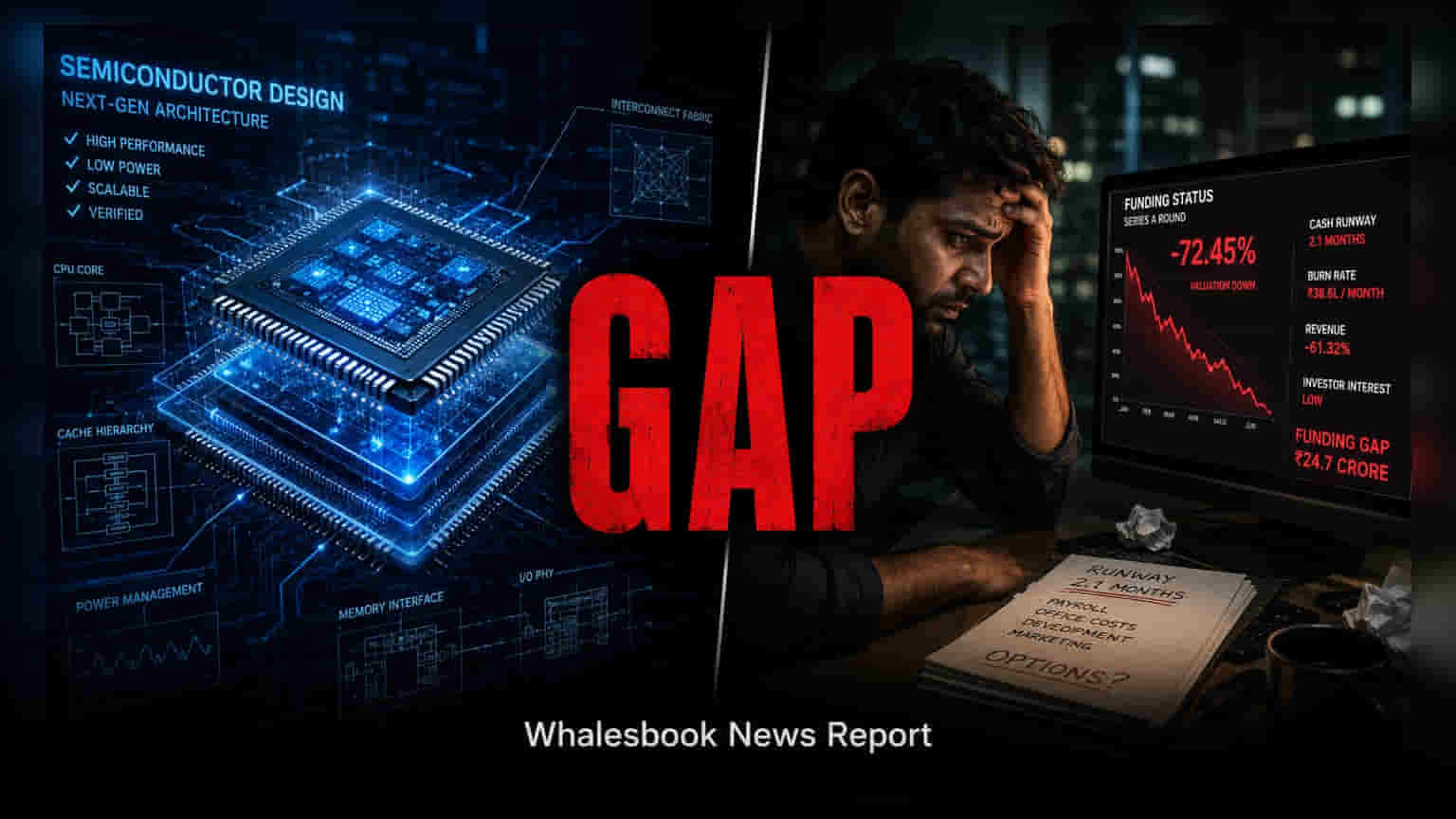
India’s semiconductor startups are thriving in design, achieving key milestones like successful tape-outs, but they face a major hurdle in securing capital for commercial manufacturing. While early-stage funding is active, the high costs of moving from prototype to mass production are creating a bottleneck. Investors are becoming more selective as the capital required for full-scale fabrication often exceeds the limits of standard venture capital models.
India’s semiconductor startup sector is currently caught between two very different realities: a surge in successful chip design and a growing difficulty in funding the expensive process of mass production. Government support schemes, particularly the Design Linked Incentive (DLI) initiative, have successfully encouraged startups to create designs. Recent successes, such as the first-pass silicon achievement by Aheesa Digital Innovations for its 'VIHAAN' networking chip, highlight the country's growing technical capability.
However, these design wins are just the first step. Moving from a successful design—known in the industry as a 'tape-out'—to a product available for sale requires significant money. This includes costs for manufacturing, packaging, testing, and getting certified by customers. While the sector raised $61.9 million in the first half of 2026, reaching over 80% of the total funding from the previous year, this capital is heavily weighted toward early-stage ventures.
The Growth-Stage Bottleneck
There is a clear 'funneling' effect occurring in the market. Since 2023, data shows a high number of seed and angel funding deals, but this activity significantly drops off when startups reach the Series A or growth stage. Investors are finding it challenging to back companies that need the massive amounts of capital required to build production lines or book capacity at fabrication plants.
For many hardware startups, traditional venture capital models—which often prefer software companies with lower capital needs—are not always a perfect fit. Scaling up requires tens of millions of dollars to test and refine chips before they can be sold in high volumes. Without this growth-stage funding, many companies struggle to bridge the gap between their working prototypes and a fully commercial product.
Government Strategy and Future Outlook
Recognizing these challenges, the government launched the Semicon 2.0 program in July 2026. With an outlay of ₹1,27,500 crore, this policy aims to expand support beyond just design. It focuses on areas like advanced packaging, compound semiconductors, and the tools needed for fabrication, which are essential parts of the supply chain that startups often struggle to access.
For investors and industry followers, the situation is complex. While design talent is rising, the road to becoming a commercial semiconductor manufacturer is filled with operational and financial risks. These include dependence on global supply chains for specialized materials, intense competition from established global players, and the difficulty of maintaining consistent product quality at scale. The ability of these companies to successfully move their designs into high-volume manufacturing remains the primary monitorable for the sector’s long-term sustainability.