

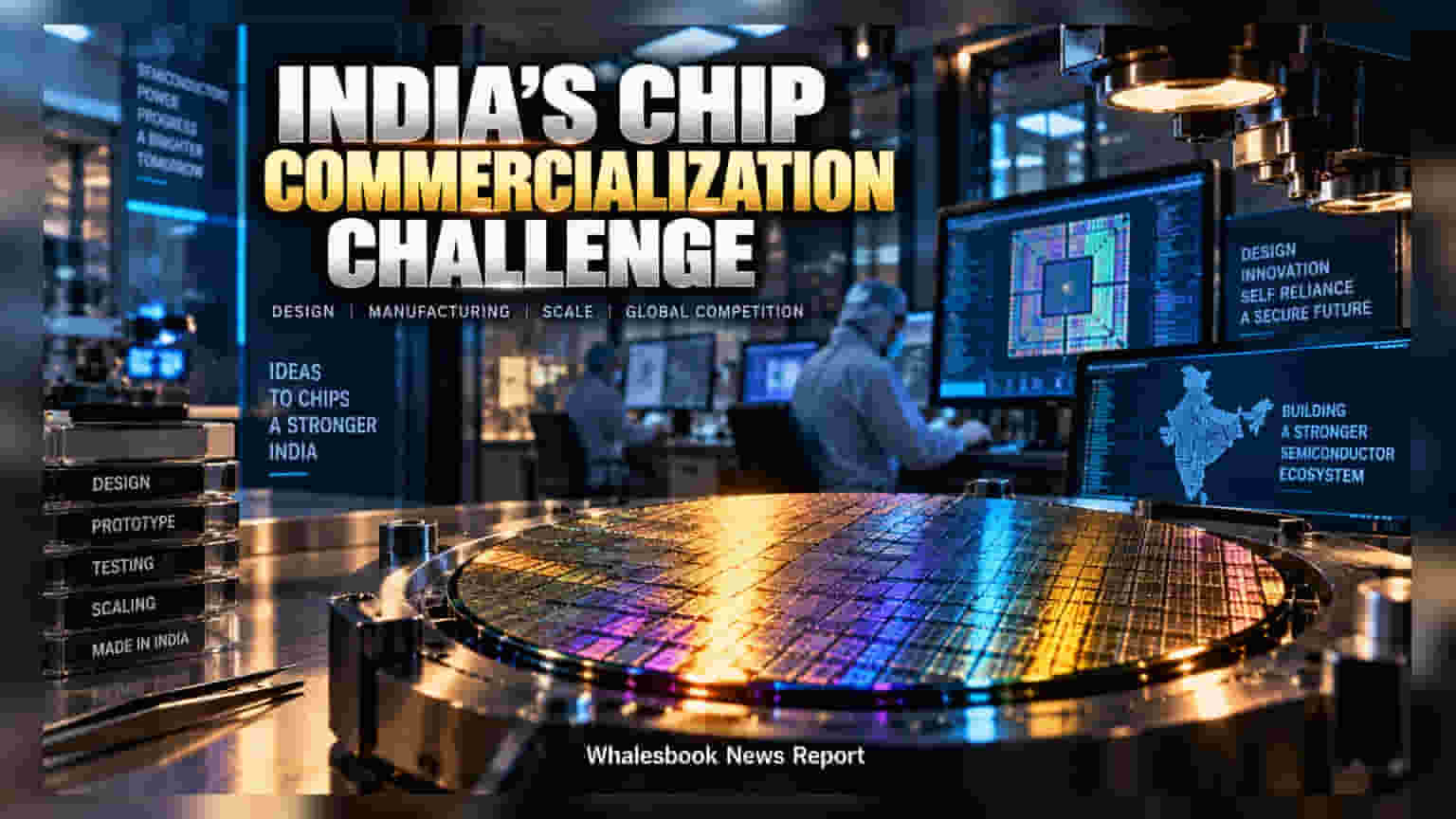
India’s semiconductor design ecosystem has expanded with government support, but startups now face a difficult path to commercial scale. Competing with global manufacturers on price remains a major challenge, with domestic adoption in security and defense becoming a key factor for success.
India’s semiconductor sector has seen significant progress since the government launched the Design Linked Incentive (DLI) scheme in 2021. With over 100 startups now active and dozens of projects receiving backing, the industry has successfully moved past the initial phase of concept and design. However, a recent analysis from Cadence Design Systems indicates that the industry has reached a crucial point where moving from design to a commercially viable product is proving difficult.
The primary challenge for Indian firms is a significant cost disadvantage. Established global semiconductor companies operate using older factories and processes that have already been paid off, or fully depreciated. This allows these global players to set prices that emerging Indian firms struggle to match. For a new company, the initial cost of developing and testing new silicon is high. Without the benefit of massive, global-scale production, these companies find it hard to offer competitive pricing.
This creates a difficult cycle for domestic entrants. To lower their prices, these companies need high sales volumes. However, to get those high volumes, they first need to be price-competitive, which is nearly impossible without existing scale. Breaking this cycle requires a mix of strategic government support and a push for domestic adoption. The security and surveillance sectors, where the government is increasingly asking for native, India-made chips, may provide the initial market demand needed to support these local firms.
Regarding the design process itself, new technology is playing a major role. Companies like Cadence are using advanced artificial intelligence tools to automate repetitive design tasks and catch errors early. This helps engineers fix potential problems before they occur, speeding up the development time. While these tools make the work more efficient, they do not remove the need for human expertise. Modern chip designs are complex, and the industry view is that human intuition remains essential for the final product, meaning AI serves more as an assistant rather than a replacement for designers.
For investors and market participants, the next phase for the Indian semiconductor story is no longer just about design grants or new company registration. The focus is shifting to whether these firms can transition into high-volume manufacturing or find sustainable markets for their designs. Investors may monitor updates on domestic demand in strategic sectors like defense and security, as well as policy adjustments that aim to help startups overcome the pricing disadvantage against global giants.