

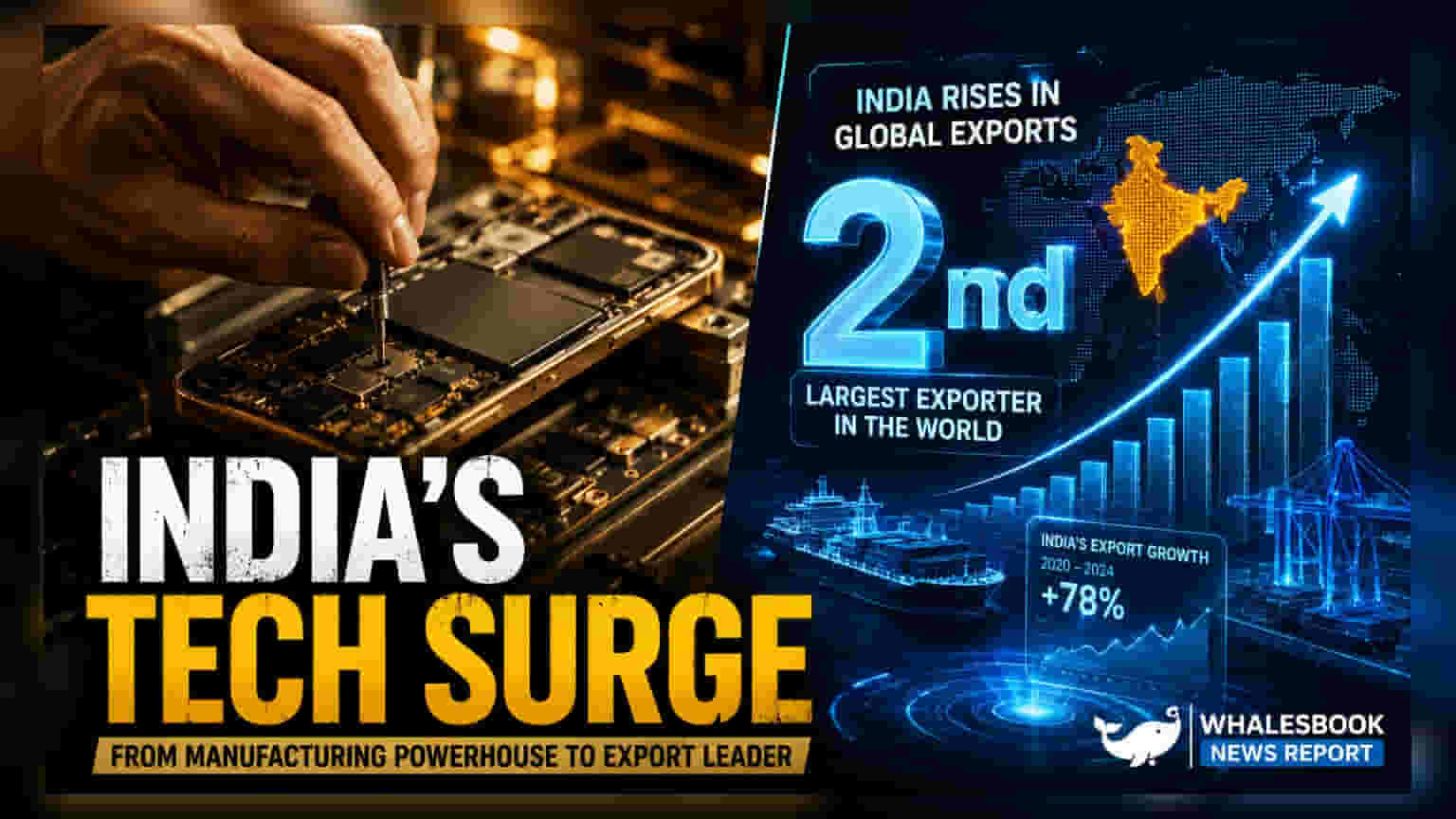
India has climbed to the position of the world’s second-largest mobile phone manufacturer and exporter. This milestone highlights the country's growing focus on building an end-to-end electronics and semiconductor ecosystem. For investors, this shift suggests potential long-term opportunities in companies involved in electronics manufacturing, component supply, and semiconductor services.
What Happened
Prime Minister Narendra Modi announced that India has officially become the world’s second-largest mobile phone manufacturer and exporter. This milestone was highlighted during the inauguration of the CG Semi Outsourced Semiconductor Assembly and Test (OSAT) facility. This achievement is a key indicator of the progress made under the 'Make in India' initiative, which aims to transition the country from a final-assembly hub to a comprehensive provider of electronics and semiconductor products.
Building the Electronics Value Chain
The government is focusing on creating an end-to-end value chain, which means moving beyond simple assembly to include chip design, local fabrication, and advanced packaging. By establishing facilities like the new OSAT plant, India is attempting to reduce its dependence on imported components and move toward higher-value manufacturing. The government has framed this as a long-term roadmap intended to support the broader goal of building a robust technology ecosystem.
Semiconductor Ecosystem Development
The Semicon India programme is the core driver of this strategy. The government is actively incentivizing companies to set up chip-related facilities within the country. The recent dispatch of the first locally manufactured semiconductor chips for export to Japan serves as a proof-of-concept for the country's technical capabilities. The administration’s focus is now on scaling these operations through various production-linked incentive schemes that encourage both domestic and international companies to invest in local production.
Risks and Execution Challenges
While the growth in manufacturing output is significant, investors should consider the challenges inherent in the semiconductor and electronics space. Building a high-end semiconductor ecosystem is capital-intensive and requires long-term commitment. One major risk is the 'execution risk,' where projects face delays due to the high technical complexity and the need for a skilled workforce. Additionally, global demand cycles for electronic devices and intense international competition in the semiconductor market can influence the profitability and capacity utilization of these new facilities. Companies in this space may also face pressure if they cannot compete on costs with established manufacturing hubs like Vietnam or China.
What Investors Should Track
For those looking at the electronics and semiconductor sector in India, the most important monitorables include the commissioning timelines of announced OSAT and fabrication facilities. Investors should watch for evidence of actual revenue generation from these high-tech plants, rather than just project announcements. Additionally, government updates regarding the availability of skilled labor, improvements in local component supply chains, and the participation of major global electronics brands in India’s manufacturing ecosystem will be vital signs of the industry's health.