

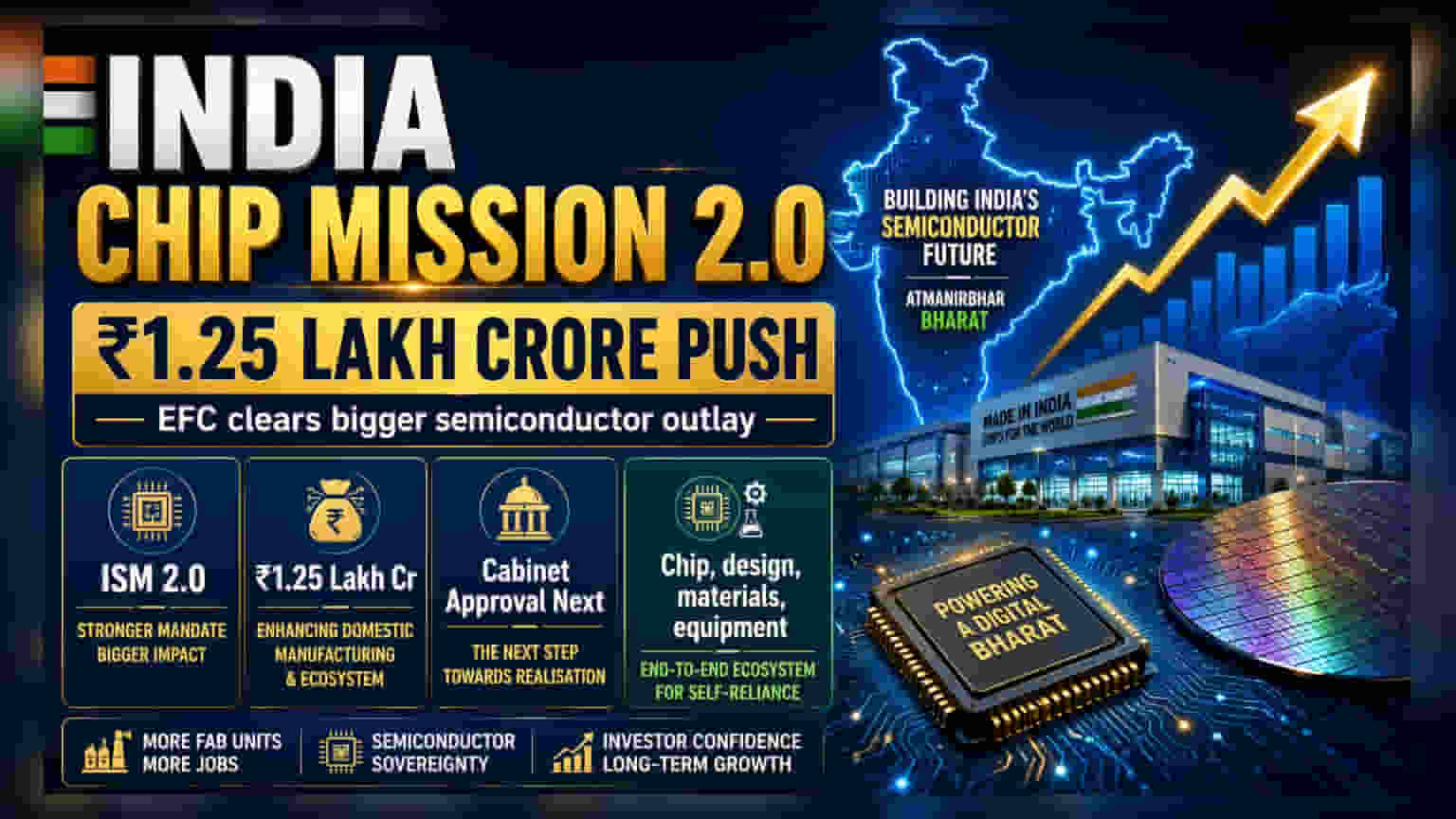
The Finance Ministry’s Expenditure Finance Committee has greenlit a ₹1.25 lakh crore outlay for the second phase of the India Semiconductor Mission (ISM 2.0). This major funding boost aims to deepen domestic chip manufacturing, design, and supply chain capabilities. The proposal now heads to the Union Cabinet for final approval, marking a significant step in India’s push to become a global chip-making hub.
What Happened
India has taken a significant step toward boosting its semiconductor ecosystem with the Finance Ministry’s Expenditure Finance Committee (EFC) clearing an outlay of ₹1.25 lakh crore for the second phase of the India Semiconductor Mission (ISM 2.0). This financial allocation is designed to accelerate the development of the nation's chip-making capabilities, expanding the scope beyond what was achieved in the first phase. The proposal will now be sent to the Union Cabinet for final approval.
This funding represents a substantial increase over the ₹76,000 crore allocated for ISM 1.0, which focused on establishing the initial foundation for semiconductor fabrication, assembly, and design in India.
Why This Matters For The Ecosystem
While the first phase of the mission concentrated on creating the basic building blocks of the semiconductor industry—such as getting the first fabrication and assembly plants approved—the new phase aims for deeper integration. ISM 2.0 is expected to expand support beyond just manufacturing to include the production of essential semiconductor equipment, specialized raw materials, and the strengthening of indigenous chip design capabilities.
By focusing on these upstream and downstream components, the government aims to create a more resilient and self-reliant supply chain. This is crucial as semiconductors are the backbone of modern electronics, powering everything from automobiles and mobile phones to advanced defense and AI-related systems.
Market Reaction
Following reports of the EFC’s approval, shares of companies involved in the semiconductor and electronics manufacturing services (EMS) space saw positive movement on the markets. Investors reacted to the anticipation of increased opportunities as these firms look to participate in the expanded government incentive programs.
Stocks including CG Power and Industrial Solutions, Kaynes Technology India, and MosChip Semiconductor Technology witnessed upward movement, reflecting investor optimism regarding the potential for new contracts, infrastructure development, and subsidy-backed projects. Other players in the EMS and component ecosystem, such as Dixon Technologies, Syrma SGS Technology, Cyient DLM, and Avalon Technologies, also maintained positive traction during Wednesday's trading session.
Risks And The Road Ahead
While the funding approval is a positive step, investors should keep in mind that the proposal is still pending final clearance from the Union Cabinet. Semiconductor manufacturing is a highly capital-intensive and technologically complex business. Setting up fabrication plants (fabs) and maintaining operational excellence requires long-term capital commitment, specialized talent, and constant innovation.
Furthermore, the success of companies in this sector will depend on their ability to navigate execution risks, such as timely project completion, managing project costs, and competing with well-established global players who have decades of expertise. The final benefit to any individual company will depend on the specific incentives offered under ISM 2.0 and the company's own ability to scale its capacity.
What Investors Should Track
Investors may keep an eye on the following developments in the coming months:
- Final Cabinet Approval: The official notification and the exact terms and conditions of the ISM 2.0 scheme will clarify which sub-sectors (materials, equipment, design) receive the most support.
- Project Execution: As new projects under ISM 2.0 are announced, tracking the construction progress, timeline for commercial production, and actual capital spending by companies will be vital.
- Order Book and Partnerships: Monitoring announcements from companies regarding new technology tie-ups, manufacturing orders, and supply chain partnerships will provide insight into how effectively they are leveraging these government incentives.