

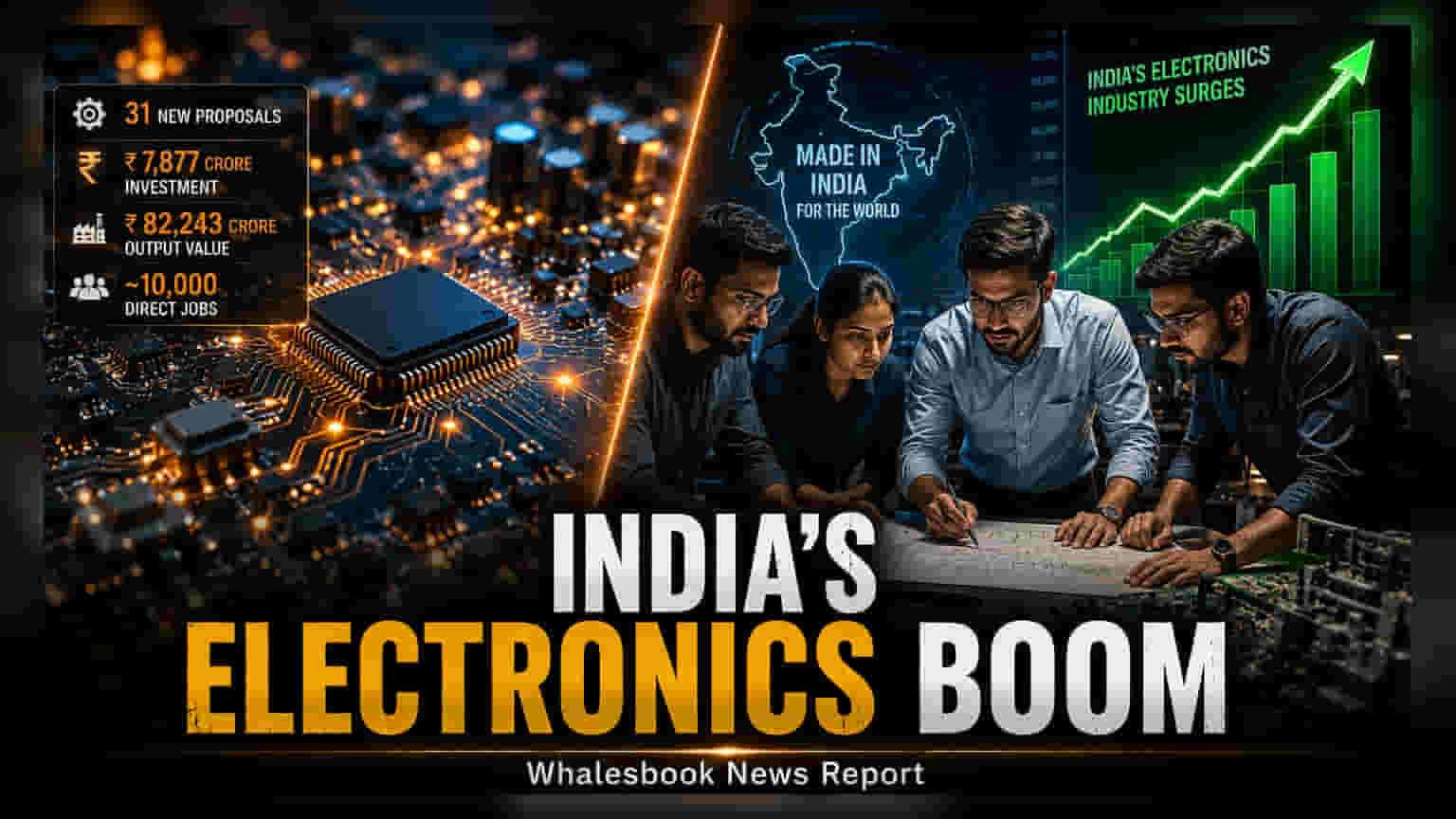
The government has cleared 31 new electronics manufacturing proposals with a total investment of Rs 7,877 crore. Major players including Kaynes Technology, Dixon Technologies, Wipro, and Motherson are set to expand domestic component production. For investors, the focus remains on the timely execution of these projects and the ability of companies to scale production in a competitive sector.
The Indian government has given the green light to 31 new manufacturing proposals under the Electronics Components Manufacturing Scheme (ECMS), drawing an investment of Rs 7,877 crore. This latest round of approvals aims to deepen the domestic electronics supply chain, with projects spanning 10 states. The government expects these new facilities to generate an output value of Rs 82,243 crore and create nearly 10,000 direct jobs.
Expanding the Component Ecosystem
This move marks a significant milestone for the ECMS, which has now approved 106 proposals in total. The cumulative committed investment under this scheme has reached Rs 69,548 crore, surpassing the government's original target of Rs 59,350 crore. By localizing the production of essential parts like printed circuit boards, camera modules, and electronic enclosures, the policy aims to reduce India’s reliance on imports for these critical inputs.
Key companies involved in this latest phase include Kaynes Technology, Dixon Technologies, Wipro, and Motherson. Among the notable specific commitments, Wipro Global Engineering and Electronic Materials has pledged an additional Rs 1,033 crore toward manufacturing copper-clad laminates, a vital material for circuit board production. This brings the company's total investment commitment under the scheme to Rs 1,533 crore. Facilities for several of these companies are already in advanced stages, with operations expected to commence in the next two to six months.
Investor Context and Risks
While the expansion of manufacturing capacity is a positive step for long-term growth, investors should consider the challenges ahead. The electronics manufacturing services (EMS) sector is highly competitive, and maintaining profit margins is crucial. As companies ramp up their new production lines, they face the challenge of operational execution—ensuring that they can quickly reach full capacity while integrating into global supply chains.
Furthermore, the sector is sensitive to broader economic trends. A slowdown in consumer spending on end-user products, such as smartphones or IT hardware, could reduce demand for these components, indirectly affecting the manufacturers. Investors may track the actual commissioning dates of these plants and the pace at which these new facilities begin contributing to revenue. The key monitorable over the coming quarters will be how efficiently these firms can navigate raw material costs and competition to protect their bottom line.