 Whalesbook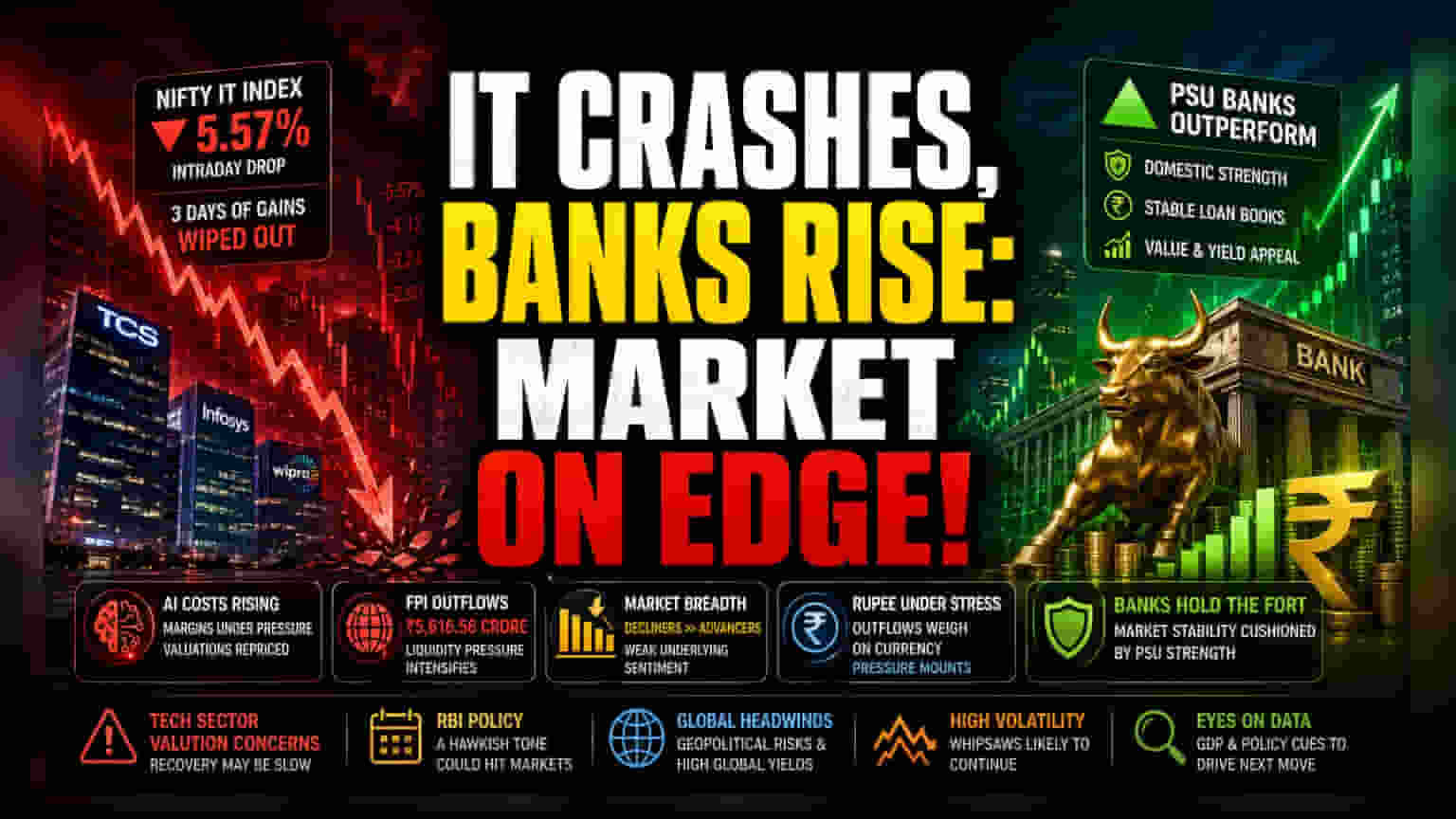


The Valuation Correction
The abrupt reversal in the Indian technology sector signals more than just profit-taking; it highlights a critical reassessment of margin sustainability in an AI-heavy operational environment. The 5.57% collapse in the Nifty IT index effectively nullified the sector's performance trajectory from the previous three sessions. While headlines point toward a generalized selloff, the underlying catalyst appears to be a systemic anxiety regarding the cost of integrating artificial intelligence tools into existing software maintenance contracts. The massive erosion of market capitalization underscores that institutional portfolios were heavily over-allocated to IT, leaving them vulnerable to any negative sentiment shift.
The Banking Buffer
Market stability during the session was maintained almost exclusively by the banking sector, where public sector lenders outperformed their private counterparts. This divergence is telling, as it suggests a shift in risk appetite toward entities with heavy domestic loan books that are insulated from the global volatility affecting IT exporters. While private banks remained range-bound, the aggressive buying in PSU stocks acted as a structural support system, preventing a full-scale liquidity drain from the broader market. This rotation into value-oriented banking assets suggests that domestic institutional investors are prioritizing yield and balance sheet stability over growth-heavy tech valuations as uncertainty builds around upcoming macroeconomic data.
Structural Risks and the Bear Case
The current market posture reveals a fragile equilibrium. Foreign portfolio investors withdrew Rs 5,616.56 crore, a move that places significant pressure on the rupee and further restricts domestic liquidity. When coupled with the narrowing market breadth, where declining stocks significantly outnumbered advancers on the BSE, the index performance appears artificially bolstered by a few large-cap banking heavyweights. Historical patterns suggest that when IT sectors lead the downside on valuation concerns rather than earnings misses, the recovery is often prolonged and characterized by high volatility. Furthermore, with the Reserve Bank of India looming over the policy horizon, any hawkish signal regarding inflationary pressures could exacerbate the existing trend of FPI outflows, particularly if global yields remain attractive relative to domestic returns.
The Outlook
Market participants are now fixated on upcoming GDP prints and central bank commentary to gauge if the current sector rotation is a temporary defensive play or the beginning of a larger multi-month trend. Brokerage sentiment indicates that while the banking sector may hold current levels, the upside is capped by persistent geopolitical and currency-related headwinds. Until the tech sector establishes a technical floor, the broader indices are likely to experience continued whipsaw movements, driven by high-frequency adjustments rather than fundamental shifts in corporate demand.