

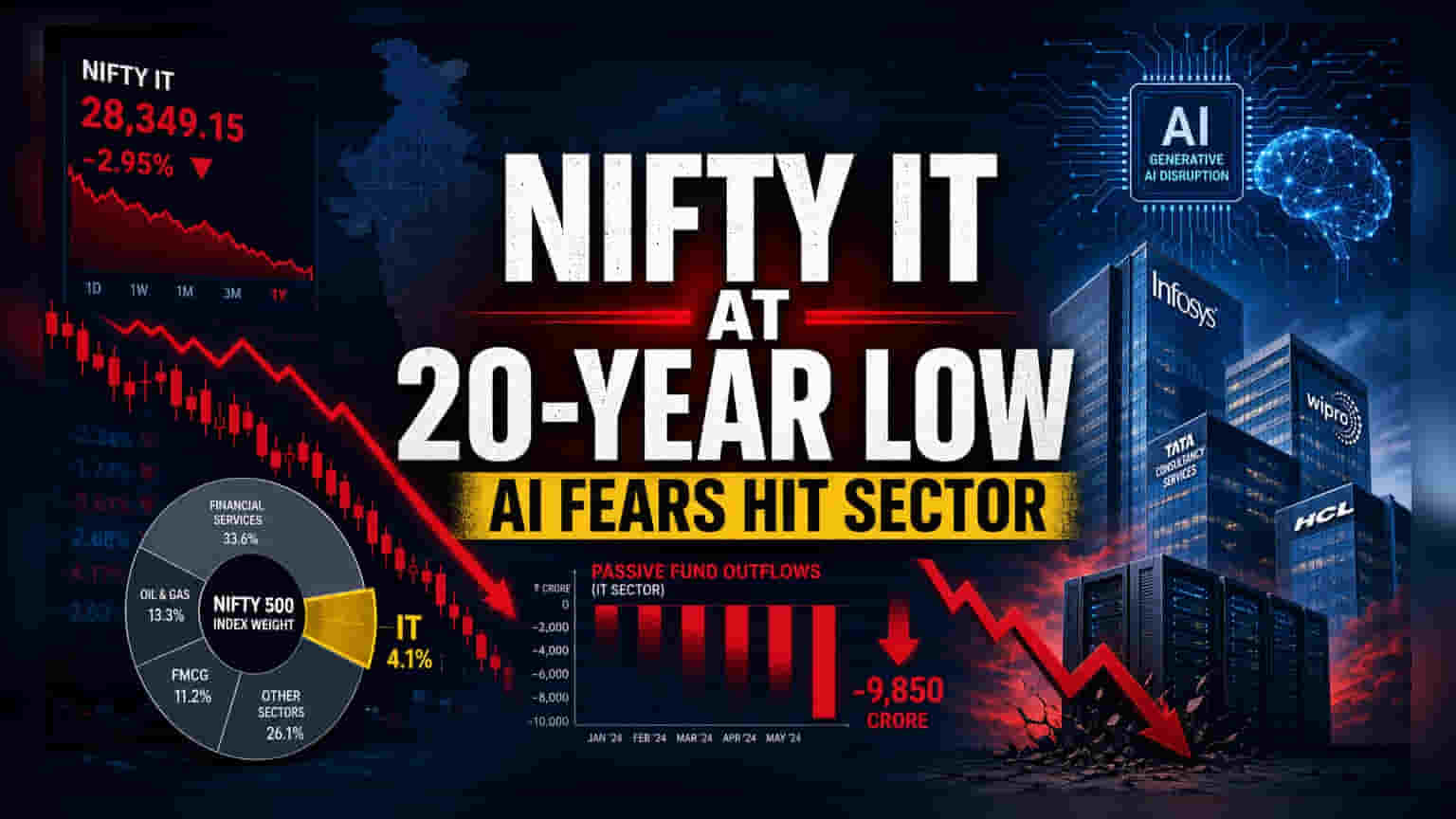
IT stocks now make up less than 7.6% of the Nifty 50, the lowest weighting in two decades. This drop, caused by a 29% year-to-date decline in the IT index, is forcing passive funds to reduce their holdings in major technology companies, further impacting capital flows.
What Happened
The Indian information technology sector has seen its influence on the benchmark Nifty 50 index drop to its lowest level in over 20 years. The combined market value of major IT firms now accounts for less than 7.6% of the Nifty 50. This is a sharp decline from the past, when the sector’s weightage occasionally climbed above 20%.
This shift is not just a statistical change; it reflects a period of prolonged weakness for technology stocks in the Indian market, as investors reassess the future of the traditional outsourcing model.
Why Passive Fund Flows Matter
To understand why this weightage drop matters, one must look at how passive funds work. These funds—such as index funds and ETFs—are designed to replicate the Nifty 50 index. When a sector’s weight in the index falls, these funds must automatically sell shares of companies in that sector to match the new, lower weighting.
The math here is significant. Passive funds currently manage around ₹5 trillion. At the current lower weighting, these funds hold roughly ₹350 billion in IT stocks. If the sector had maintained its historical peak, these funds would likely be holding about ₹1 trillion. This effectively means that lower index weighting results in less capital flowing from passive investors into major IT companies.
The AI Disruption Fear
The primary driver behind this selloff is a growing concern over generative artificial intelligence. For decades, the Indian IT sector has relied on a business model built on massive scale—hiring thousands of engineers to write code and manage processes for global clients.
Investors fear that AI tools can now perform many of these tasks faster and more cheaply, potentially threatening the long-term revenue growth and profit margins of established IT services companies. While management teams at companies like TCS, Infosys, and Wipro have often spoken about the opportunities AI brings for productivity, the market has clearly focused on the risks to their traditional service contracts.
IT Sector vs The Broader Market
The performance gap between IT stocks and the rest of the market has been stark. While the broader Nifty 50 index has faced a decline of 9% this year, the Nifty IT index has plunged 29%. This massive underperformance indicates that the market is applying a significant discount to the sector compared to other industries like banking, manufacturing, or consumption.
What Investors Should Watch
For investors, the immediate monitorables are not just stock price movements but the actual impact of AI on financial results. Key things to track include:
- Revenue Growth Trends: Are companies signing new deals that offset potential losses in traditional services?
- Profit Margins: Can IT firms maintain their high profit margins even as they spend more on AI adoption and training?
- Client Commentary: What are global clients saying about their IT budgets and their willingness to shift work toward AI-led solutions?
- Index Rebalancing: Further reductions in the sector's weightage could lead to continued selling pressure from index-tracking funds, which remains an important technical factor to monitor.