

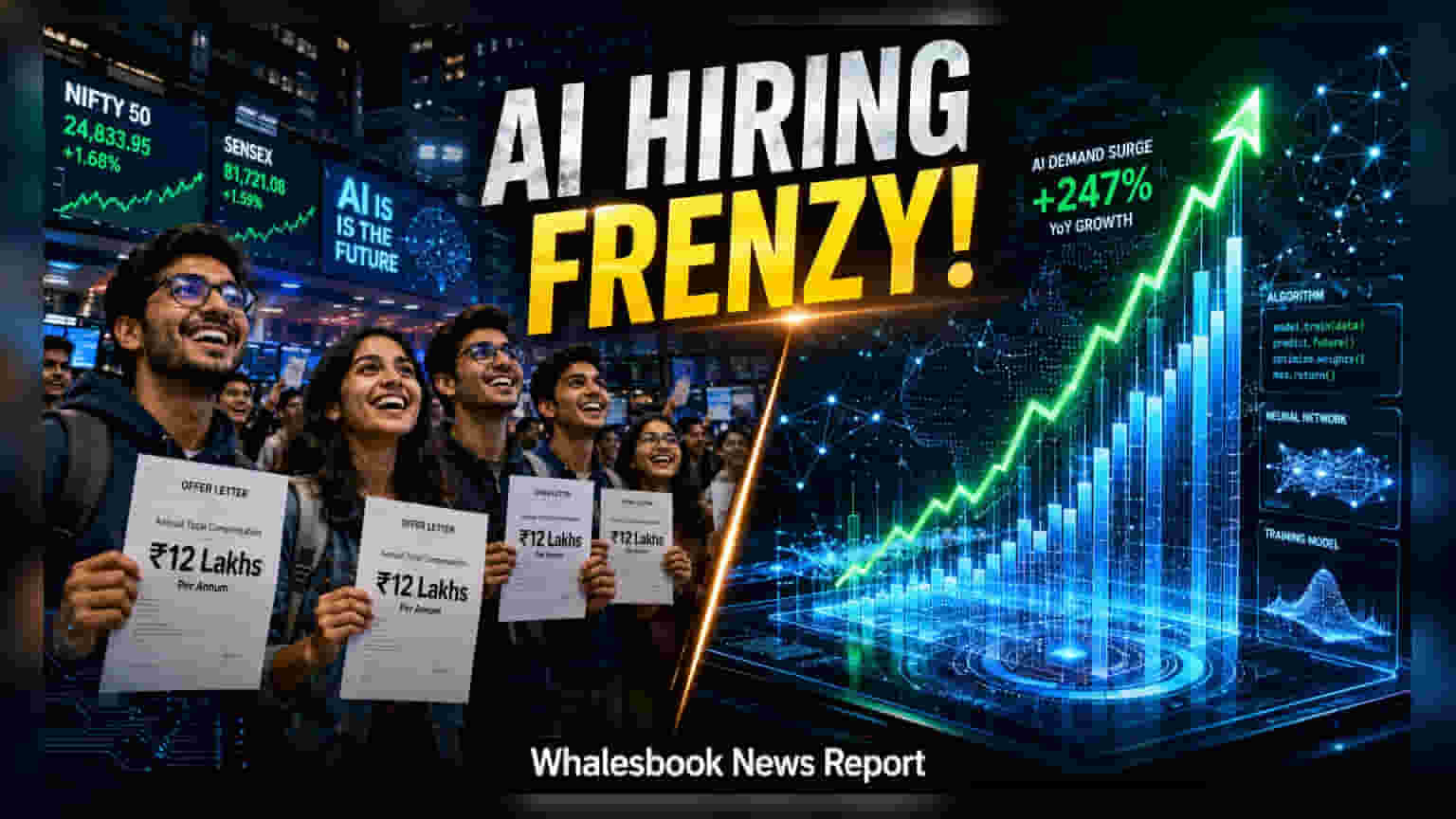
Indian IT companies are offering higher starting packages of ₹7–12 lakhs for graduates with AI and digital skills, moving away from traditional entry-level roles. This shift reflects a strategic push toward automation and high-value project delivery as standard coding tasks become increasingly automated.
The Indian IT services sector is undergoing a shift in its recruitment strategy for the 2026 placement season. Companies are increasingly moving away from the traditional ₹3–4 lakh annual package structure for entry-level roles, favoring instead a new tier of 'Digital' and 'Prime' positions that offer between ₹7 lakh and ₹12 lakh. This trend is driven by the rapid integration of artificial intelligence, which is reducing the demand for junior roles focused on manual coding and testing.
Strategic Shift Toward Specialized Talent
For major players like Tata Consultancy Services (TCS), this transition is visible in their hiring mix, where a significant portion of offers—nearly 65%—is now directed toward these higher-value roles. Similar trends are emerging at other major IT service organizations, including Infosys and Cognizant. These firms are prioritizing candidates with specific expertise in areas such as cloud computing, analytics, digital operations, and AI. By focusing on graduates who can work alongside AI tools rather than performing tasks that AI can automate, companies are aiming to improve project efficiency and move up the value chain.
This change is being reflected in campus recruitment drives at institutions like Rajalakshmi Engineering College, Gokaraju Rangaraju Institute of Engineering and Technology, and Hindustan Institute of Technology and Science. Recruiters are no longer looking for generalists but are instead hunting for 'smart' freshers capable of adapting to complex technological demands early in their careers.
Investor Monitorables: Margins and Productivity
For investors, this shift in hiring strategy carries implications for corporate financial performance. While companies are paying higher salaries to entry-level recruits, the intended offset is a significant increase in productivity. If IT firms can successfully replace bulk, lower-end coding work with high-value AI-integrated solutions, it could support operating margins over the long term. However, the risk lies in the execution. If the productivity gains from AI tools do not materialize as expected, or if firms are unable to command premium pricing for these 'digital' services, the higher wage bill could put pressure on profitability.
Furthermore, the phasing out of traditional entry-level roles creates a new challenge for the industry's talent pipeline. Smaller IT firms or those that rely on volume-based, legacy business models may find it difficult to compete for this specialized talent, potentially leading to a bifurcation in the industry. As the 2026 placement season continues, investors should look for management commentary in future earnings calls regarding the 'Digital' and 'Prime' hiring mix, the actual utilization rates of these new recruits, and whether this strategy is translating into improved revenue per employee.