

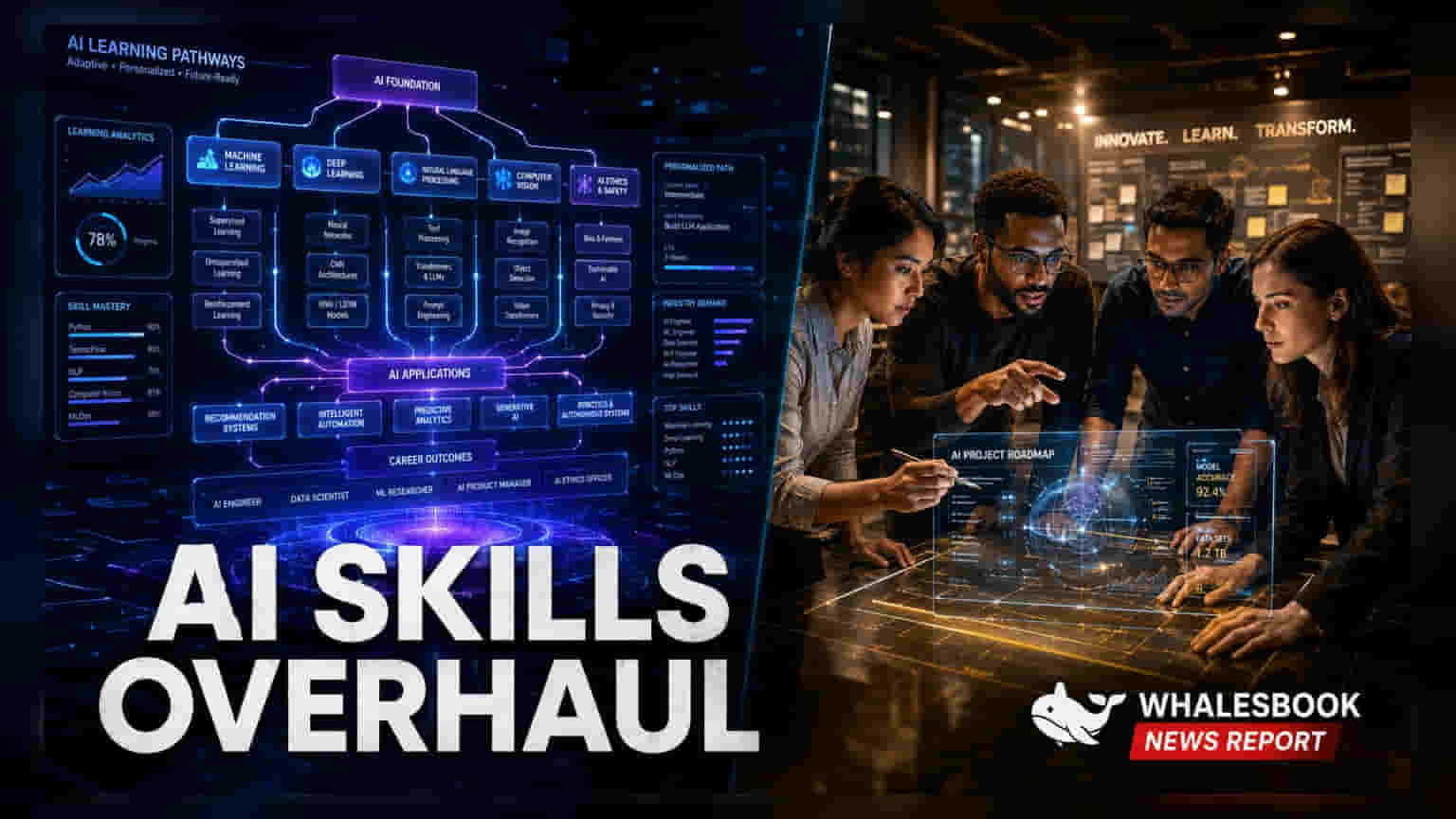
Major IT companies including Cognizant and UST are updating employee training to focus on AI skills, shifting toward personalized learning ecosystems. For investors, this move is crucial for managing talent costs, maintaining project delivery speed, and improving profit margins as client requirements for AI capabilities intensify.
What Happened
Major IT services players, including Cognizant and UST, are significantly changing how they train their employees. Instead of using traditional, static learning modules, these firms are adopting enterprise learning platforms like Percipio. This shift follows similar moves by other industry leaders, such as Tata Consultancy Services (TCS), which has reoriented its internal 'Wings' platform to prioritize an AI-first curriculum. The goal is to move away from relying on a single content provider and instead build comprehensive ecosystems that combine certifications, skill assessments, and personalized learning paths.
The Business Logic Behind AI Upskilling
For IT investors, this transition is more than just an HR update; it directly impacts the company's financial health. Recruiting external talent with specialized artificial intelligence skills is expensive and highly competitive. By aggressively upskilling their existing workforce, companies aim to reduce their dependence on expensive lateral hiring. If these firms can successfully bridge the skill gap internally, they can protect their profit margins and reduce the costs associated with talent acquisition and onboarding.
Why Investors Care About Learning Platforms
In the current market, IT companies are often judged on their ability to deliver projects using the latest technologies. Clients now demand AI-ready teams as a baseline requirement for new contracts. A robust internal learning platform acts as a business advantage by ensuring that a large portion of the company's workforce is ready for deployment on high-value projects. When employees are upskilled effectively, firms can keep their utilization rates high and respond faster to client requirements, which is a key metric for long-term revenue growth.
Risks and Execution Challenges
While the push for AI readiness is necessary, it comes with risks. The primary concern is the return on investment for training programs. There is an execution risk that employees, once trained in high-demand AI skills, may leave for competitors, essentially turning the company's investment into a benefit for others. Additionally, companies face the challenge of content fatigue. As technology evolves rapidly, keeping training material updated and ensuring that it actually leads to measurable project outcomes is a difficult task. Investors should note that if these platforms do not lead to improved project delivery efficiency, the money spent on these systems will simply add to the company's overhead costs.
What To Monitor Next
Investors should track how these companies report the success of their upskilling initiatives. Key monitorables include employee utilization rates, the time it takes to staff new AI projects, and management commentary on the effectiveness of these platforms in reducing attrition. In future quarterly results, analysts may look for evidence that these AI-readiness programs are contributing to better project margins or helping the company win more complex deals compared to competitors who may be slower to adapt their training strategies.