

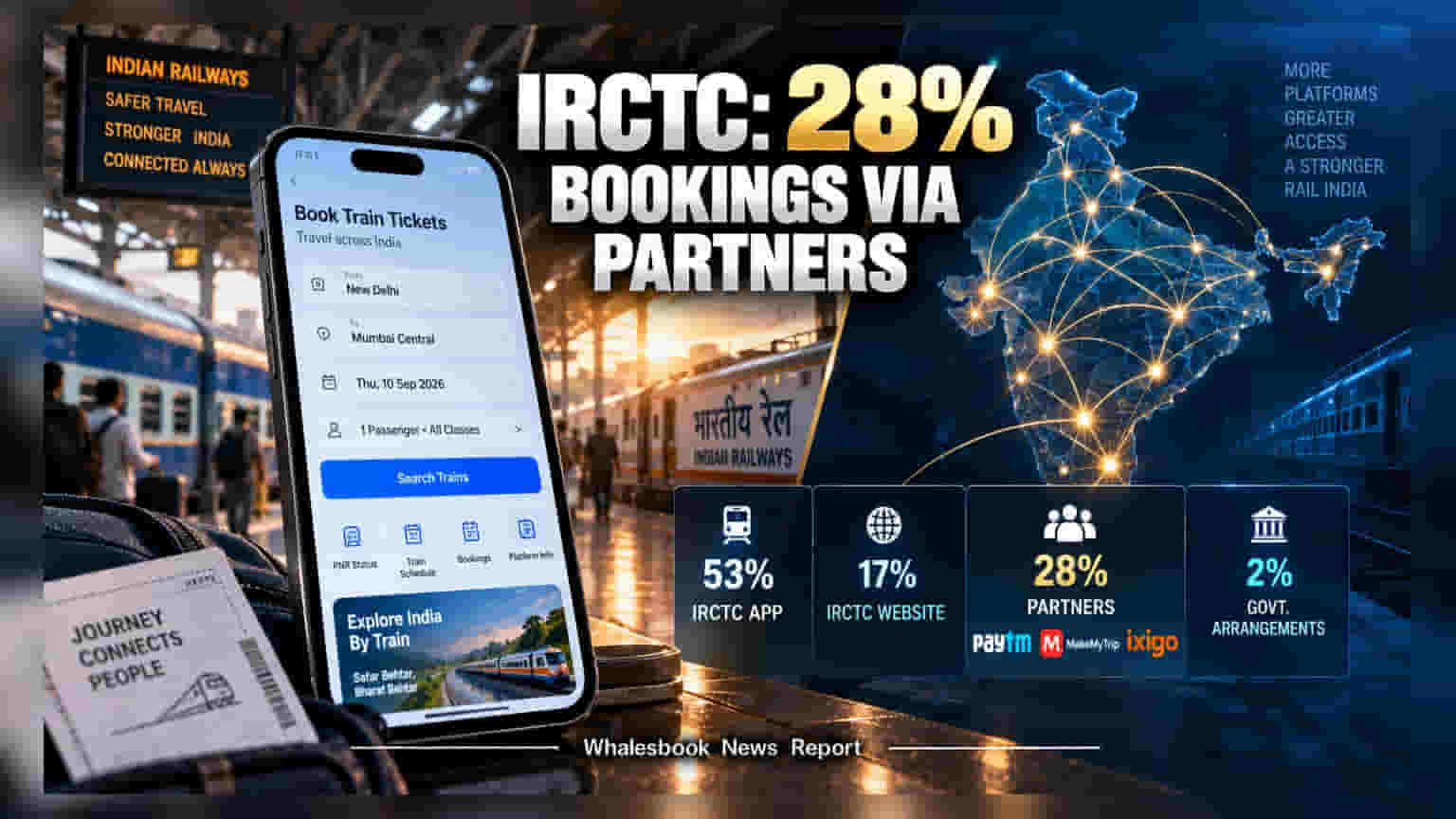
New data from IRCTC confirms that 28% of online rail tickets are processed by partners like Paytm and MakeMyTrip, while its own app handles 53%. This distribution mix is essential for the company as it tries to expand beyond core ticketing. Despite steady traffic, IRCTC faces margin pressure, reporting flat profits in its latest quarterly results.
Official figures from the Indian Railway Catering and Tourism Corporation (IRCTC) show that 28% of all online rail tickets are now booked through third-party business associates. While the company’s own Rail Connect mobile application remains the primary booking channel with a 53% share, the remaining 19% of traffic is split between the IRCTC website at 17% and various government arrangements at 2%. This network of partners, which includes platforms like Paytm, MakeMyTrip, and ixigo, provides a vital distribution layer that helps maintain high volume across the railway system.
The strategy of using third-party partners allows IRCTC to tap into the large user bases of these digital gateways. For companies like One97 Communications, the owner of Paytm, this integration is part of a larger ecosystem of financial and travel services. Paytm recently reported a 45% year-on-year increase in its UPI Gross Transaction Value for the June quarter, reflecting high user engagement that helps sustain the demand for these rail booking services.
Financial performance in the first quarter of fiscal year 2027 shows a mixed picture. IRCTC reported revenue of ₹1,370 crore, which is an 18.1% increase compared to the previous year. However, net profit remained flat at ₹330 crore. A key factor behind this was margin pressure, with the company recording an EBITDA margin of 28.17%. This pressure stems from higher operational costs, including increased spending on catering services and infrastructure investments needed to support its digital systems.
Investors are keeping a close watch on these margins as the ticketing business faces a structural reality: high market penetration. With IRCTC holding a dominant 89% market share in reserved railway ticket bookings, the room for significant growth in this specific segment is limited. To generate future growth, the company is attempting to pivot toward a broader digital gateway model. This involves expanding into hospitality, tourism packages, travel insurance, and local mobility solutions.
While the company is virtually debt-free and maintains a strong market position, the transition to these new, higher-value revenue streams will be the critical challenge. Shareholders may want to monitor how effectively the company can grow its non-fare business while managing the rising costs in its established catering and ticketing operations. The company's upcoming annual general meeting on September 29, 2026, may provide further management commentary on these diversification efforts.