

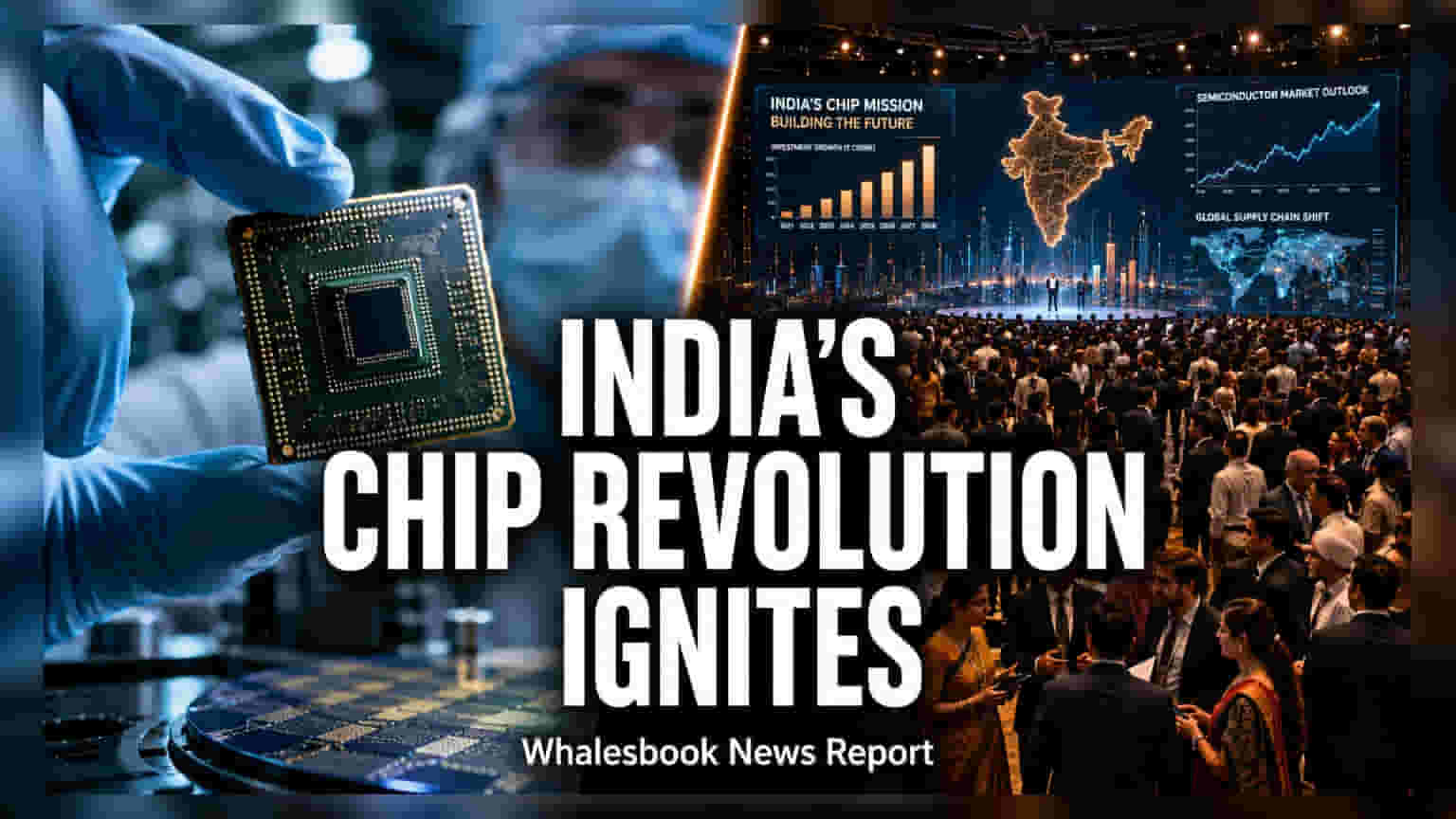
IIT Madras will host the third Digital India RISC-V Symposium in Chennai on August 1-2, 2026, to advance domestic semiconductor design. The event brings together government officials, startups, and industry leaders to strengthen India's indigenous chip ecosystem. Investors monitoring the semiconductor space may track outcomes related to RISC-V adoption and emerging domestic hardware partnerships.
Detailed Coverage
The Indian Institute of Technology, Madras (IIT-Madras) is preparing to host the third Digital India RISC-V (DIR-V) Symposium on August 1-2, 2026. Taking place at the IIT Madras Research Park in Chennai, the event is a joint initiative involving the Ministry of Electronics and Information Technology (MeitY) and RISC-V International. This gathering reflects a structured effort to enhance India's self-reliance in semiconductor technology through the use of open-source RISC-V architecture.
Strategic Focus on Indigenous Chip Architecture
The symposium focuses on building a domestic supply chain for high-performance silicon. By prioritizing the RISC-V architecture—an open-standard instruction set—India aims to reduce dependence on proprietary international technologies. For the technology sector, this represents a shift toward developing indigenous hardware for embedded systems, AI, and cybersecurity applications. Industry leaders and policymakers will gather to discuss how these innovations can be scaled for both domestic needs and international exports.
Implications for the Tech Ecosystem
For investors and market observers, the symposium serves as a pulse check on the speed of India's semiconductor mission. While the government has introduced various incentives under the Semicon India program to attract large-scale fabrication units, the focus here is on the design and software layer of the semiconductor value chain. The participation of startups and established industry players indicates a push to integrate Indian designs into global supply chains.
Successful adoption of these technologies could eventually benefit domestic electronics manufacturing companies by lowering costs associated with licensing foreign chip architectures. However, the sector remains in its early stages of development. Key monitorables for the industry include the translation of these research-level collaborations into commercial chip designs, the availability of specialized talent, and the ability of domestic startups to secure long-term manufacturing partnerships.
Attendees at the symposium will see demonstrations of AI hardware and processor designs, which provide a practical view of the current technical progress in India's semiconductor research. Investors following tech hardware stocks may track any announcements regarding new collaborations or technology transfer agreements that emerge from these discussions, as these often signal the maturity of the local chip design ecosystem.