 Whalesbook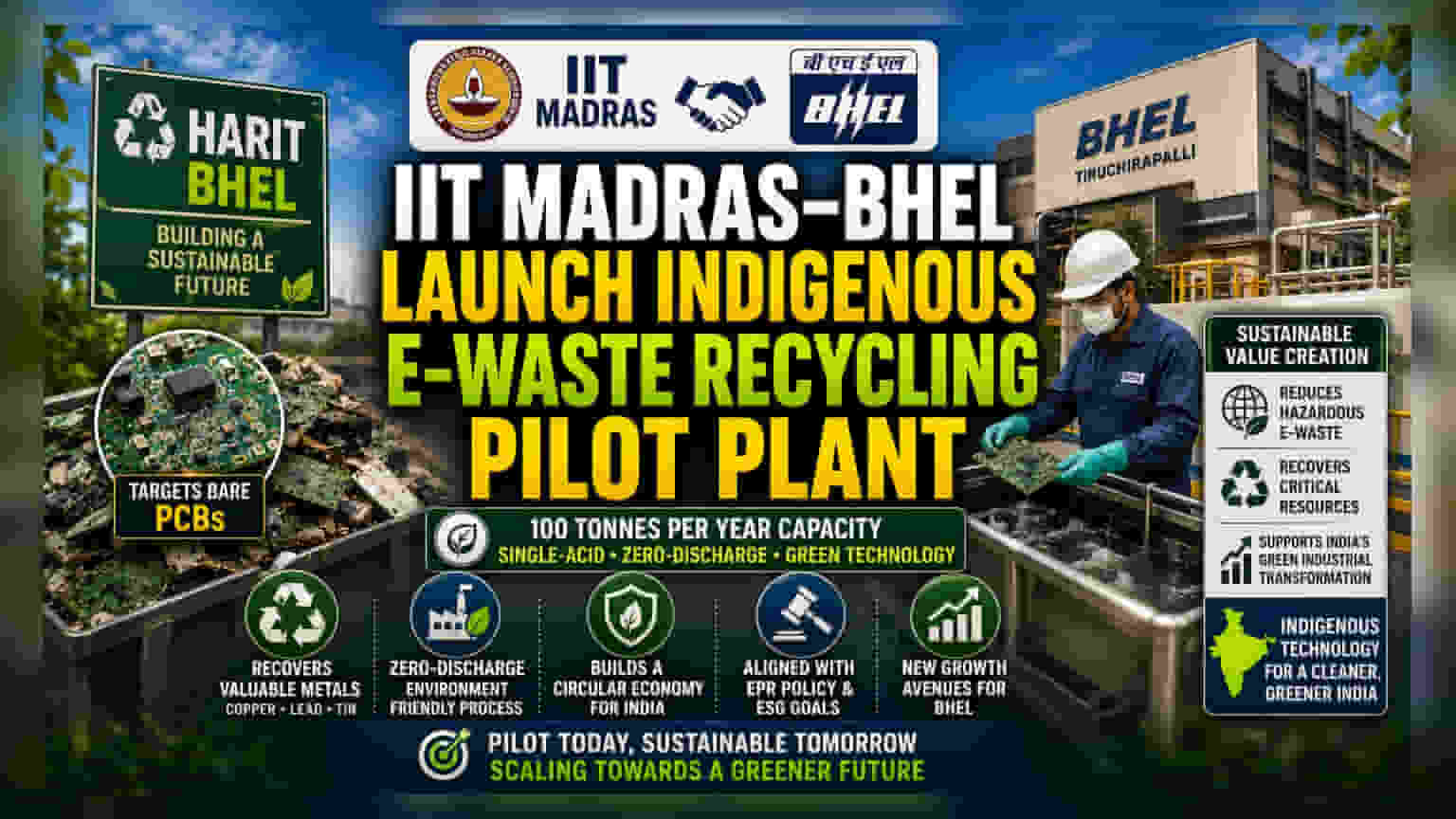


IIT Madras and Bharat Heavy Electricals Limited (BHEL) have launched a pilot plant in Tiruchirapalli designed to process 100 tonnes of e-waste annually. This initiative focuses on recovering valuable metals like copper, lead, and tin from Printed Circuit Boards using a sustainable, zero-discharge process. The project marks a significant step in BHEL's 'Harit BHEL' green energy initiative, aiming to address India's growing e-waste challenge while promoting circular economy practices.
What Happened
The Indian Institute of Technology (IIT) Madras, in collaboration with Bharat Heavy Electricals Limited (BHEL), has successfully launched an indigenous pilot plant for e-waste recycling. Located at the BHEL facility in Tiruchirapalli, the plant is designed to process 100 tonnes of electronic waste annually. The facility specifically targets bare Printed Circuit Boards (PCBs), which are among the most hazardous components in discarded electronics. By employing a unique, single-acid, zero-discharge process, the technology aims to recover valuable metals—such as copper, lead, and tin—in an environmentally friendly manner, avoiding the contamination risks associated with traditional recycling methods.
Why This Matters For Investors
For investors monitoring BHEL, this project serves as a strategic marker of the company's commitment to its 'Harit BHEL' initiative. As industrial giants face increasing pressure to adopt ESG (Environmental, Social, and Governance) standards and comply with stricter e-waste management rules, BHEL’s foray into green technologies is a notable pivot. The initiative demonstrates the company’s focus on diversifying its technological capabilities beyond traditional power equipment, positioning itself to potentially capitalize on the growing demand for circular economy solutions in India.
The Bigger Business Context
India currently generates millions of tonnes of e-waste annually, and this volume is projected to grow significantly as digital infrastructure expands. The market for e-waste management is evolving rapidly, driven by the government's Extended Producer Responsibility (EPR) policy, which mandates that producers take responsibility for the lifecycle of their products. By demonstrating scalable, indigenous recycling solutions, BHEL is exploring new avenues for resource recovery and waste management, which could become increasingly relevant as regulatory compliance for large industrial players tightens. The collaboration effectively bridges the gap between academic research and commercial application, turning laboratory-proven concepts into functional infrastructure.
How Investors May Read This
Investors may view this development as an early-stage exploration rather than a major immediate revenue driver. Because the facility is currently a pilot project, the primary focus for stakeholders will be on how efficiently the process scales and whether the company can eventually integrate such technologies into broader commercial waste management operations. The key monitorable will be the transition from pilot-scale success to industrial-scale implementation. Success in this area could enhance BHEL's image as a sustainability-focused leader, which is increasingly important in attracting long-term institutional capital.
What To Watch Next
Going forward, the focus will remain on the project's operational milestones, specifically its ability to maintain the 'zero-discharge' standard at higher processing volumes. Investors should monitor any management commentary regarding the potential commercialization of this technology or its integration into BHEL’s wider services. Additionally, the broader regulatory environment, particularly any updates to EPR mandates or government support for domestic recycling technologies, will play a crucial role in determining the future viability and expansion of such green initiatives.